Sheinbaum Denies Censorship With Guidelines on Audience Rights: ‘There Has Never Been More Freedom’
This article by Anahí Del Ángel originally appeared in the July 30, 2026 edition of Contralínea, a Mexican investigative journalism magazine.
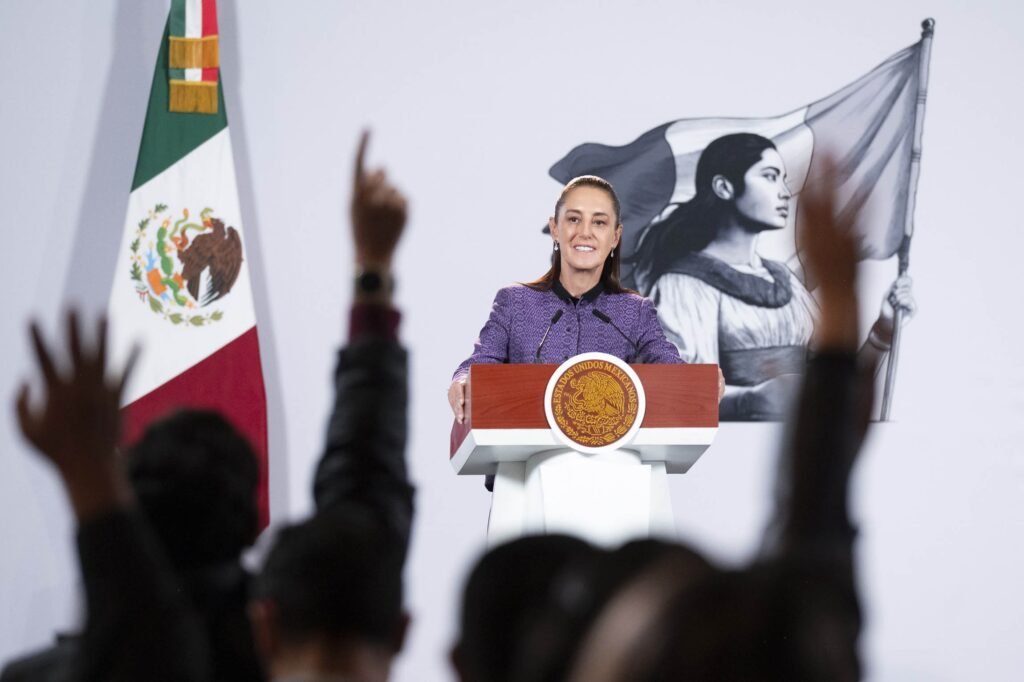
The guidelines to protect audience rights do not represent an attempt at censorship by the federal government, but rather are part of legislation previously agreed upon with the Chamber of the Radio and Television Industry (CIRT), in addition to the fact that the project is still in public consultation, clarified President Claudia Sheinbaum, who maintained that “there has never been more freedom of expression than now.”
During her morning press conference at the National Palace, the president rejected the warnings about supposed censorship.
“Now that the guidelines come out they say there is censorship; besides, they have not been published, they have been published for public consultation, they can still be modified if there is any discussion.”
Likewise, she spoke out against the accusations toward her administration about a strategy to control the content of the media.
“It is one thing that we disagree with what they publish, and here we exercise the right of reply, and it is a very different thing what was done in the past, when they would talk by phone with the owners and tell them: ‘fire this host because he is speaking badly of me,’ or they would call the office of the social communication coordinator and offer them funds to change their editorial line,” she emphasized.
As an example that there is no threat to freedom of expression in the country, the head of the federal Executive indicated that there are media outlets that criticize her government permanently without any pressure existing.
“There is a television station that dedicates itself 24 hours to speaking badly of the government; there are broadcasters that may have a somewhat plural program there, but their hosts or someone else speaks badly of the government. When have we sought their censorship? When have we asked for a host to be removed?” she questioned.
In addition, she defended the space of the presidential press conference for responding to various matters of national interest and for combating disinformation. “Here we give our version because, if the Mañanera did not exist, then we would not have the right of reply, because when one asks a media outlet –even though it is the law– to publish a reply in the same size or with the same amount of time, it does not do so, so we have the Mañanera to debate, discuss, put forward our points of view, and defend the project of nation that we represent.”
Sheinbaum Pardo affirmed that the mañaneras also serve to generate direct communication with the citizenry and to report on the government’s actions without intermediaries. She reiterated that “there is no censorship nor will there be censorship, because it is our conviction.”
She recalled that the recognition of audience rights did not arise with her government, but rather has been a subject of discussion in Mexico for several years, and is part of international standards. “The right of audiences was not invented by us, it has been discussed for years in Mexico […] many journalists and many people defended it.”
She explained that the legislation provides for each radio or television company to designate a person in charge of receiving the audiences’ complaints regarding the right to information.
Regarding the sanctions foreseen in the legislation, she acknowledged that the matter remains under analysis as part of the public consultation, and argued that there will be no restrictions on freedom of expression. “From the government, in no way, never. How could they think that we are going to want to censor? If we had wanted to censor, we would have already done it, because the instruments exist, even the legal interpretation, but we are never going to do it because we do not believe in it out of conviction.”
-
AMLO Warns of the Rise of Neofascism: “It’s Not the Right, nor the Far Right”
Returning in a video from his La Chingada ranch, he presented his new book, Pueblo, dedicated to Sheinbaum, whom he called the world’s best President.
-
Sheinbaum Mocks Calderón: “It Would Be a Gem for Him to Talk About Democracy”
She suggested he explain his security chief García Luna, now serving 38 years in a US prison, and why homicides doubled during his term.
-
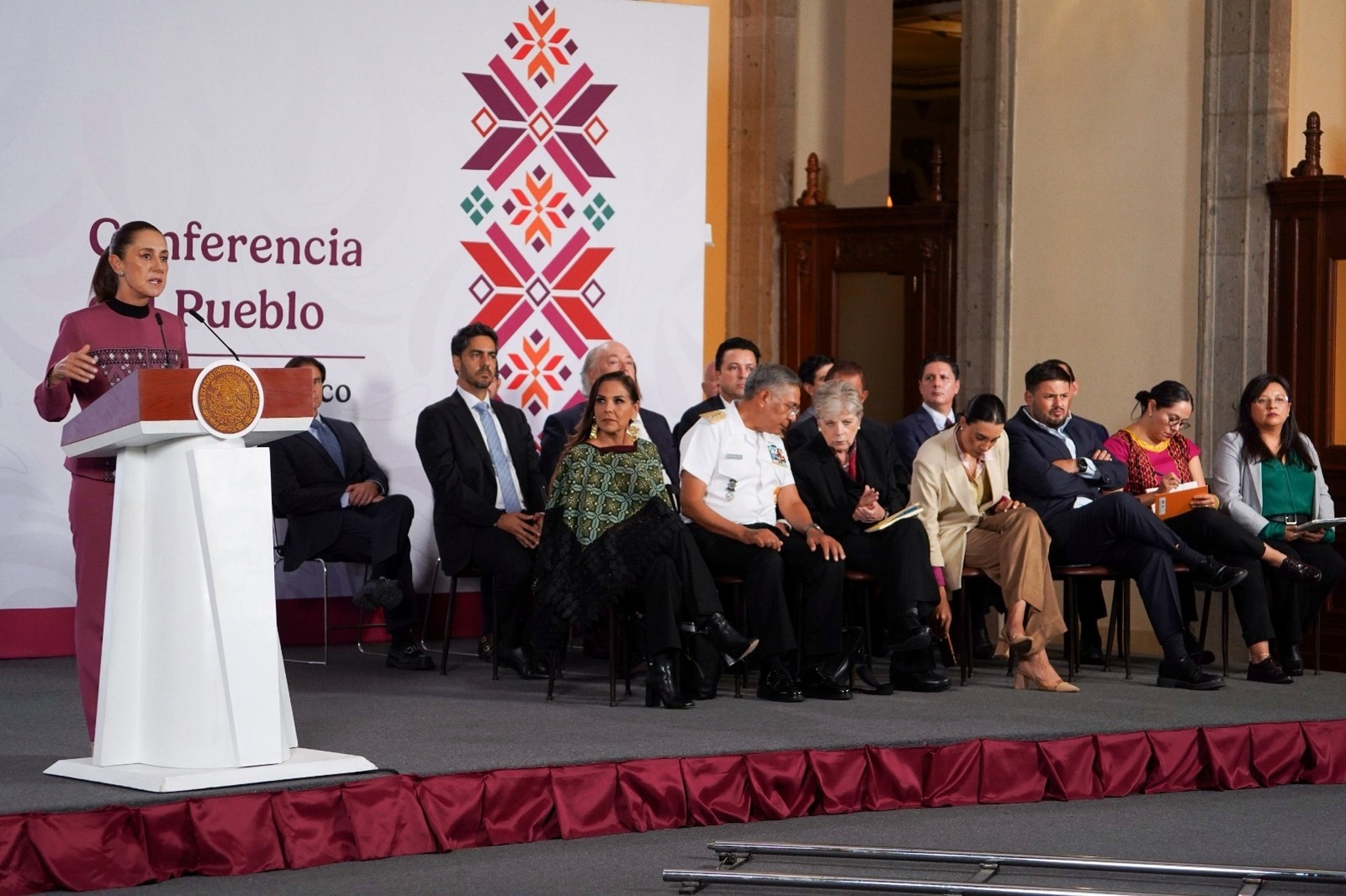
People’s Mañanera September 30
President Sheinbaum’s daily press conference, with comments on housing, the environment, water, single nationality, Calderón, and the Lie Detector.