Mexico’s Financial Sector Is a Shackle on Development
This article by Mario Campa originally appeared in the August 26, 2026 edition of SinEmbargo, a Mexican digital news outlet.
In recent days, a rockstar of economic theory and analysis, Mariana Mazzucato, sparked a healthy controversy. She questioned, in a constructive vein, the architecture of Plan México. The academic and consultant argues that the proper execution of an industrial policy—which she supports in general terms—depends largely on public investment, today constrained by republican austerity. While she places fiscal and monetary policy in the basket of responsibility, she devotes an extensive section to the role of the financial system in national development. In short, today the sector is a shackle. The diagnosis, a mere starting point, adds to the debate over the urgency of shaking up Mexico’s finances. Ultimately, the financial system’s hard-won stability is not enough.
One side of Mazzucato’s critique of the sector is well known: the excessive concentration of commercial banking. Two Spanish banks, BBVA and Santander, hold more than 35 percent of the system’s assets. That capture keeps credit from flowing to businesses and households, given the generous fees in the form of rents. A report by Condusef (2018) found that fees account for 40 percent of BBVA’s and Santander’s total income in Mexico, while at the parent companies the equivalent figures hover around 20 percent. That lucrative passivity conditions the rest of the economy. Without sufficient and widespread credit, investment and consumption are condemned to lethargy.
By contrast, the B-side of the record Mazzucato plays is under-diagnosed: the scrawny development banking. In Mexico, kept at a distance from households in order to prioritize businesses (Nafin, Bancomext) and governments (Banobras), the narrow presence of this crucial pillar for middle-income countries fails to fill the gaps left by commercial banking. As Mazzucato rightly notes, development banking in Mexico lacks a robust first-tier presence, subsidizes commercial banking when it acts only as a portfolio risk mitigator, and creates no synergies among institutions that ought to be complementary.
Several factors explain the financial hyper-concentration and the malnutrition of development banking. Of particular weight are the PRI-era financial crises that pushed the system toward nationalizations, bankruptcies, and bailouts such as Fobaproa-IPAB. Those episodes fed users’ distrust, cemented regulators’ conservative approach, and eased the entry of foreign controllers that forged an oligopoly.

Mario A. Campa Molina is a political and industrial economist, a graduate of Columbia University's MPA program (2013–2015). He is a columnist and panelist for various media outlets and a contributing editor.
-
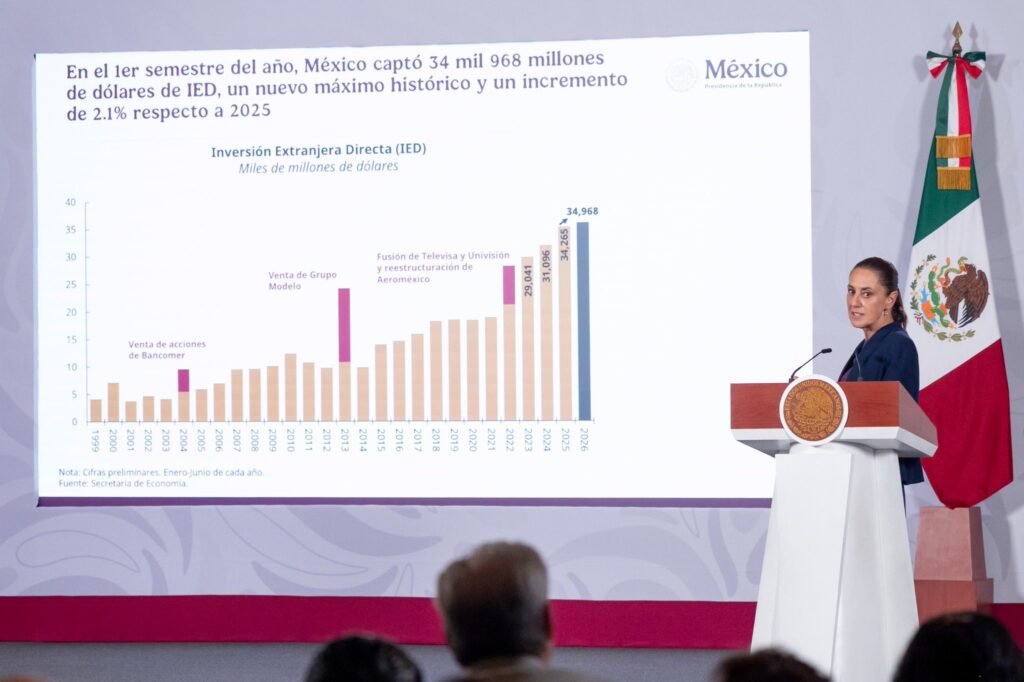
Foreign Direct Investment in Mexico Reaches Record of $34.968 Billion in First Half of 2026
Sheinbaum framed the record as proof the economy is holding firm despite forecasts of weaker growth, alongside a peso at 16.97 to the dollar.
-
People’s Mañanera August 27
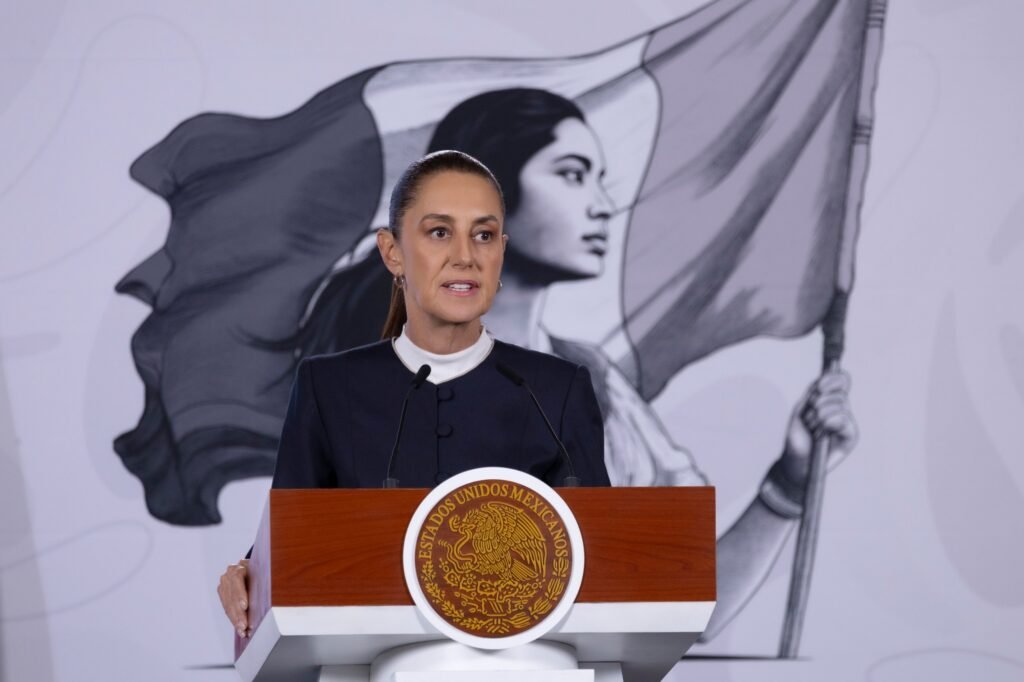
President Sheinbaum’s daily press conference, with comments on national sovereignty, Cabeza de Vaca, migrant protection, Somos México, La Derecha Diario, and audience rights.
-
Juan Manzo Will Ask the FGR to Take Over the Case of Carlos Manzo’s Murder
Juan Manzo says he was surveilled for widow Grecia Quiroz, who he claims would fund the suspects’ defense with public money.