
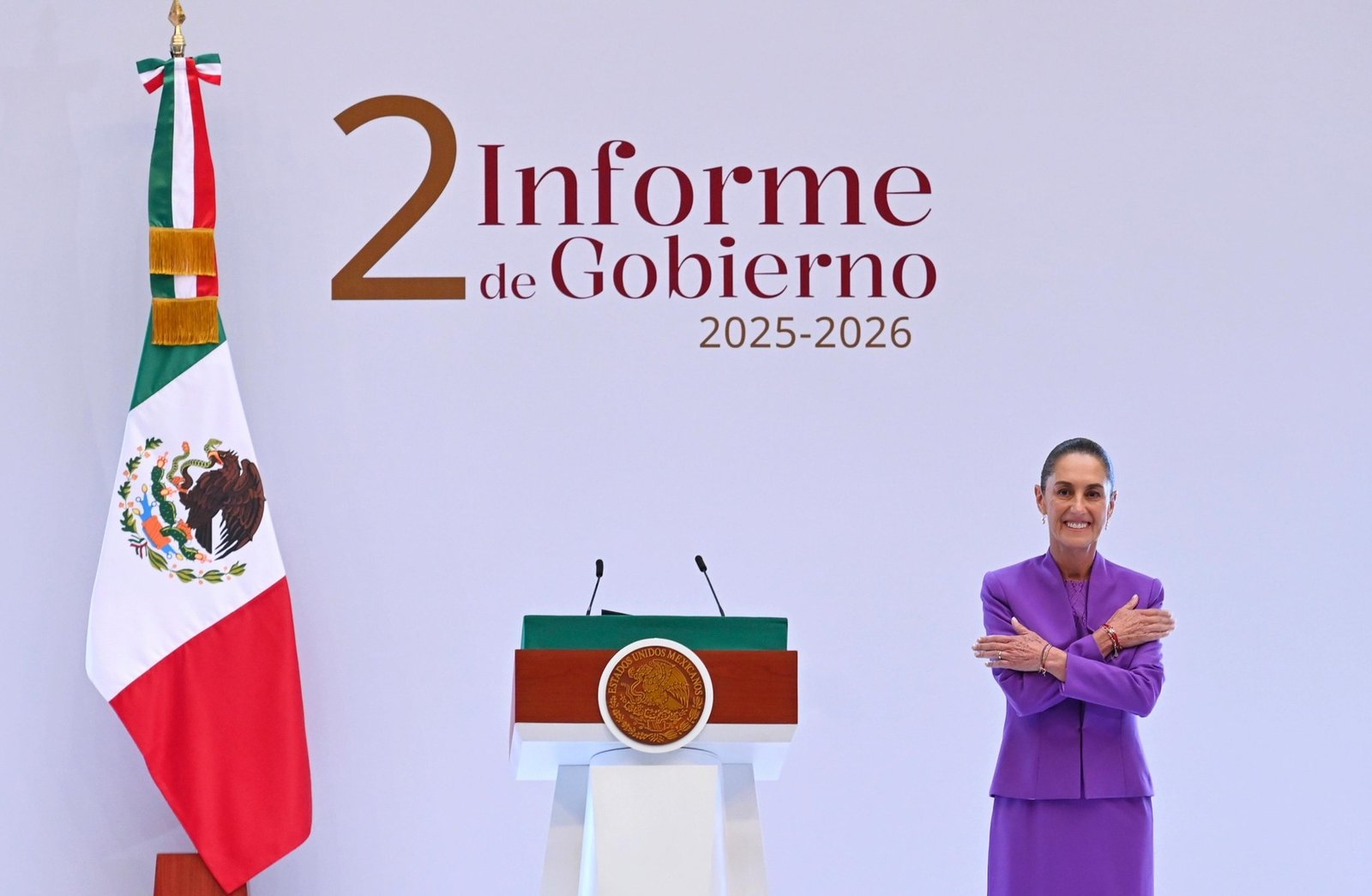
President Claudia Sheinbaum’s Second State of the Nation Address
This is the full English translation of the stenographic version of the Second State of the Nation Address delivered by Mexican President Claudia Sheinbaum Pardo at the National Palace in Mexico City on September 1, 2026. The original Spanish transcript was published by the Office of the Presidency of Mexico (Presidencia de la República). The English translation is by Mexico Solidarity’s Pedro Gellert.
Good morning, everyone. Welcome to all of you, and welcome to those listening from afar. Thank you very much.
I appear before the people of Mexico almost two years after taking office as President of the Republic. I do so with the certainty that we are transforming the country’s public life. Every advance, every decision, and every effort has the same purpose: to ensure that well-being reaches everyone.
I am convinced that Mexico is moving along the path of Shared Prosperity, with independence, freedom, and great dignity.
We have governed with honesty and republican austerity. We are clear that public resources belong to the people and must be used for their benefit.
Public servants have an obligation to conduct ourselves with intense responsibility, but at the same time, with simplicity and humility.
For many years, while millions of Mexican women and men worked every day to get ahead, the government became increasingly distant from the people, from their needs, and from their reality. Public resources were used for extravagance and luxury, and government was conducted for the benefit of only a few. That ended with the arrival of the Fourth Transformation, and I want to say this clearly: it must continue that way.
Economic power was separated from political power, and we govern honestly.
Today there is a different relationship between the government and the people. We are a government that is present in every corner of the country, that travels the length and breadth of Mexico, that listens, responds and provides accountability of its actions.
During these 23 months in office, we have frugally spent every peso. We have not purchased luxury vehicles or allocated public resources to unnecessary expenses. The salaries of the highest-ranking public officials have not increased. In addition, we have reduced current government spending by 200 billion pesos (US$11.76 billion) compared with 2024, without affecting essential areas of government activity.
These savings have enabled us to improve conditions for the lowest-paid public employees, as well as to increase the salaries of teachers by 10 percent in 2025 and by 9 percent in 2026.
We have also guaranteed the creation of 30,000 new places in the National Guard, security services, healthcare, education and three new Well-Being Programs.
These results would not have been possible without efficient and honest tax and government revenue collection.
In 2025, Federal Government revenue reached a historic figure of almost 6.05 trillion pesos (US$355.65 billion). This represents 487 billion pesos (US$28.65 billion) more than in 2024.
By the end of August 2026, tax and government revenue collection was already 149 billion pesos higher than during the same period in 2025.
Public resources translate into Well-Being Programs, schools, hospitals, housing, highways, water infrastructure, trains, and security.
At least three days a week, we travel throughout the country to listen to, respond to, and inform the people.
During these 23 months, we have traveled 84,407 kilometers by air and 20,000 kilometers by land, visiting communities and regions in all 32 states of the Republic. That is equivalent to circling the Earth 2.6 times.
We have held 475 morning presidential press conferences, known as the “Mañaneras”, as a permanent exercise in information, dialogue, debate and the right of reply.
We govern by promoting and guaranteeing the exercise of freedoms and democracy. The people are not repressed, and the power of the State is not used to silence those who think differently.
Freedom of expression and the right to demonstrate are fully respected.
Public institutions spring from the will of the population. Today, the Judicial Branch is also elected by the people, and mechanisms have been established to guarantee audience rights in the mass media.
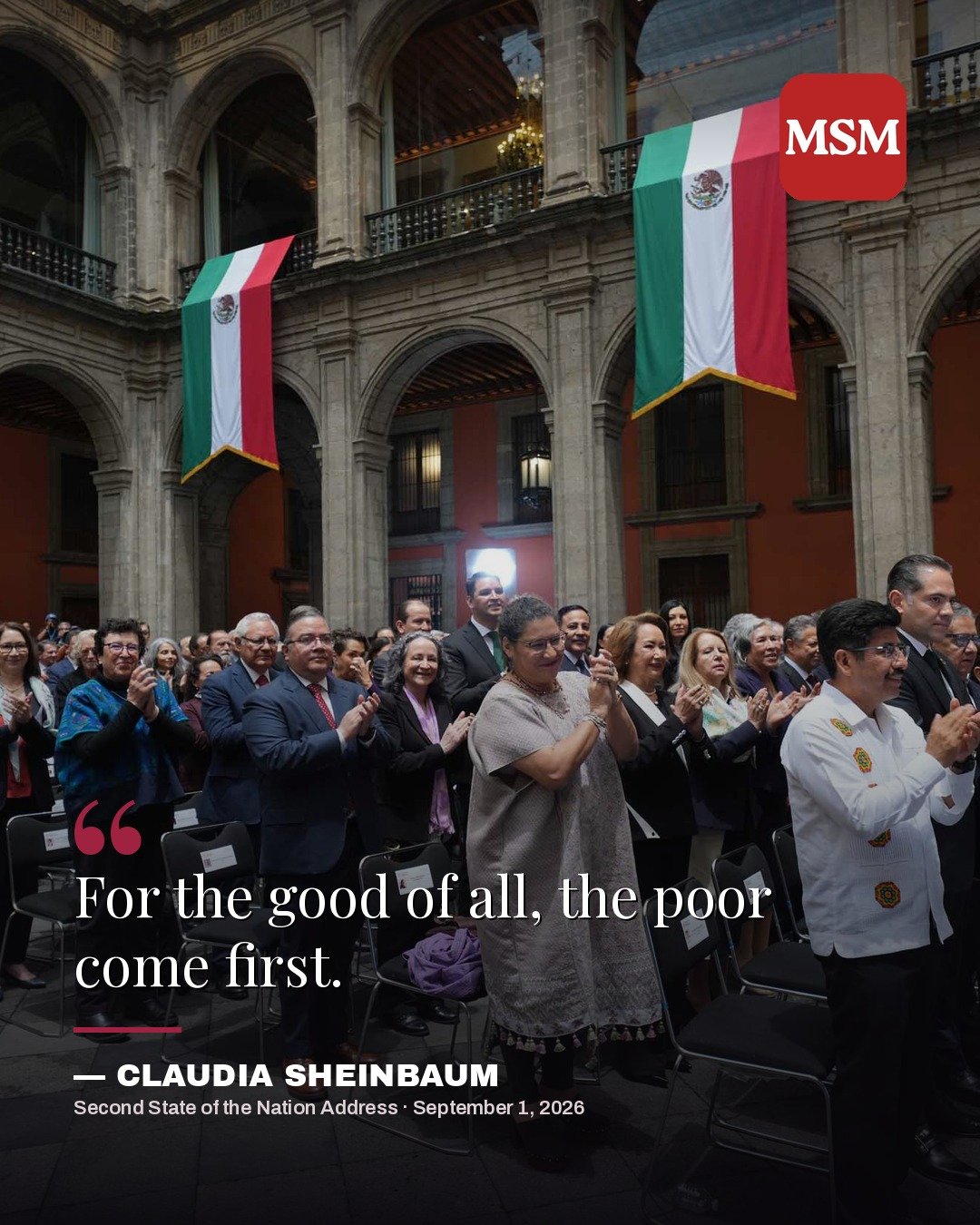
This represents a transformation in the way public power is understood and exercised: a government that works for everyone. But we maintain the guiding principle of Shared Prosperity—or, put another way: “For the good of all, the poor come first.”
Mexican Humanism and the Moral Economy begin with a simple idea: the economy must serve the people, and this can only be achieved through honesty.
We cannot simply wait for the benefits of economic growth to reach every family on their own. From our perspective, the State has a guiding responsibility: to plan and promote development, guarantee social rights, strengthen a fair distribution of wealth, and fortify strategic sectors, while at the same time guaranteeing a market economy.
That is why, after 36 years of impoverishment and increasing inequality, since 2019, Mexican workers have been experiencing a period of renewed progress on the labor front.
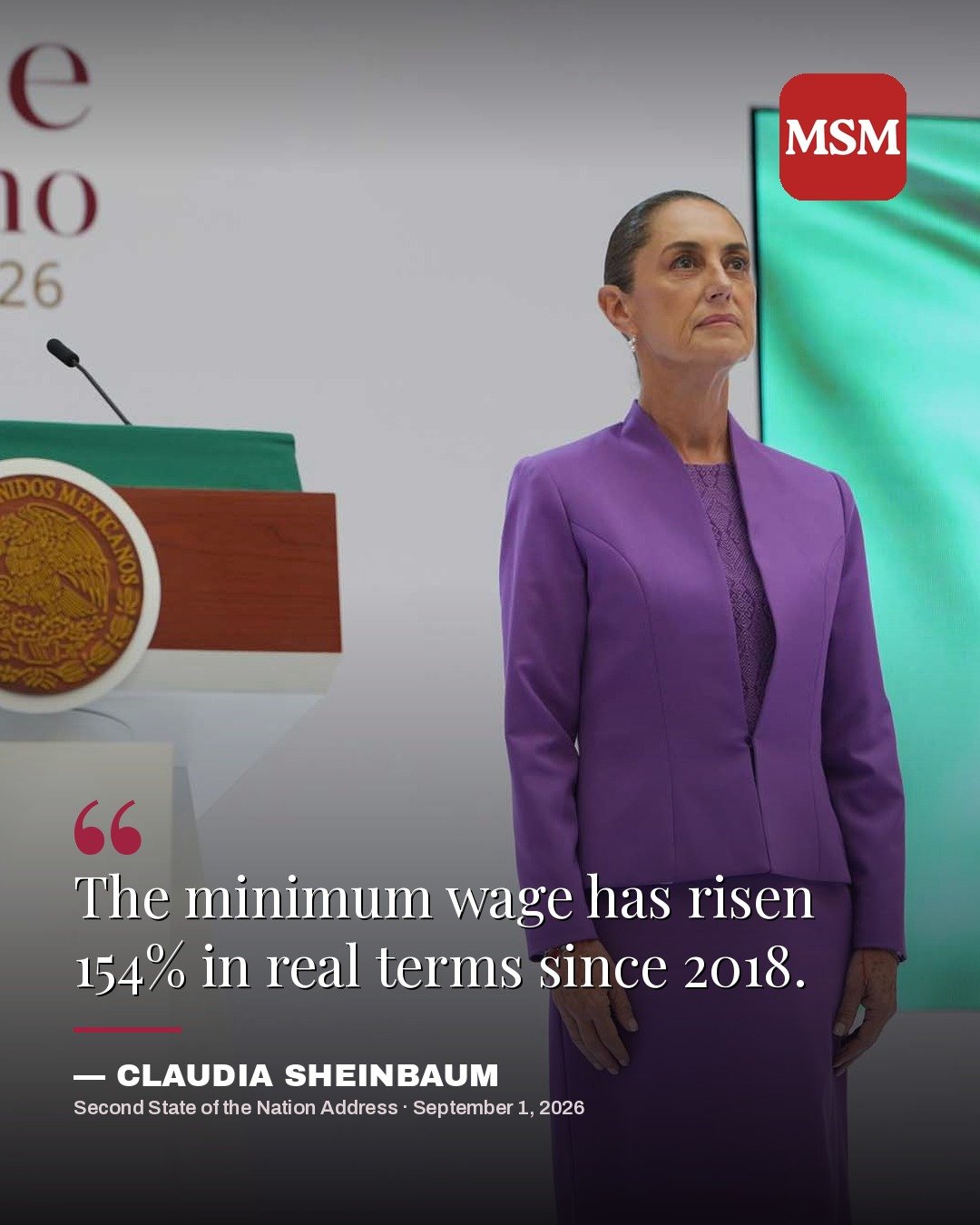
The monthly minimum wage rose from 2,800 pesos (US$164.71) in 2018 to 9,582 (US$563.66) pesos in 2026—an increase of 154 percent in real terms.
Along the northern border, the minimum wage has reached 13,409 pesos (US$788.78) per month. The average wage in the formal economy reached a record high of 20,212 pesos (US$1,188) per month, the highest level ever recorded.
Thanks to this, labor poverty in 2026 is at its lowest recorded level since 2005.
Digital platform workers now have Social Security and Healthcare coverage and receive profit-sharing payments.
The labor certification program for exports of agricultural products guarantees social security/healthcare and wages for agricultural day laborers, and begins operating this September.
The reform gradually reducing the workweek was approved, so that by 2030 it will decrease to just 40 hours per week.
During these almost two years in office, we have faced difficult international situations, marked by changes in the U.S. government’s tariff policies. In particular, tariffs on vehicle, steel, and aluminum exports and their derivatives, as well as the war in Iran—which drove up international oil prices—have created difficult circumstances for our country and for the entire world. Even under these difficult conditions, the Mexican economy remains stable and continues to advance.
The following are several indicators that demonstrate this:
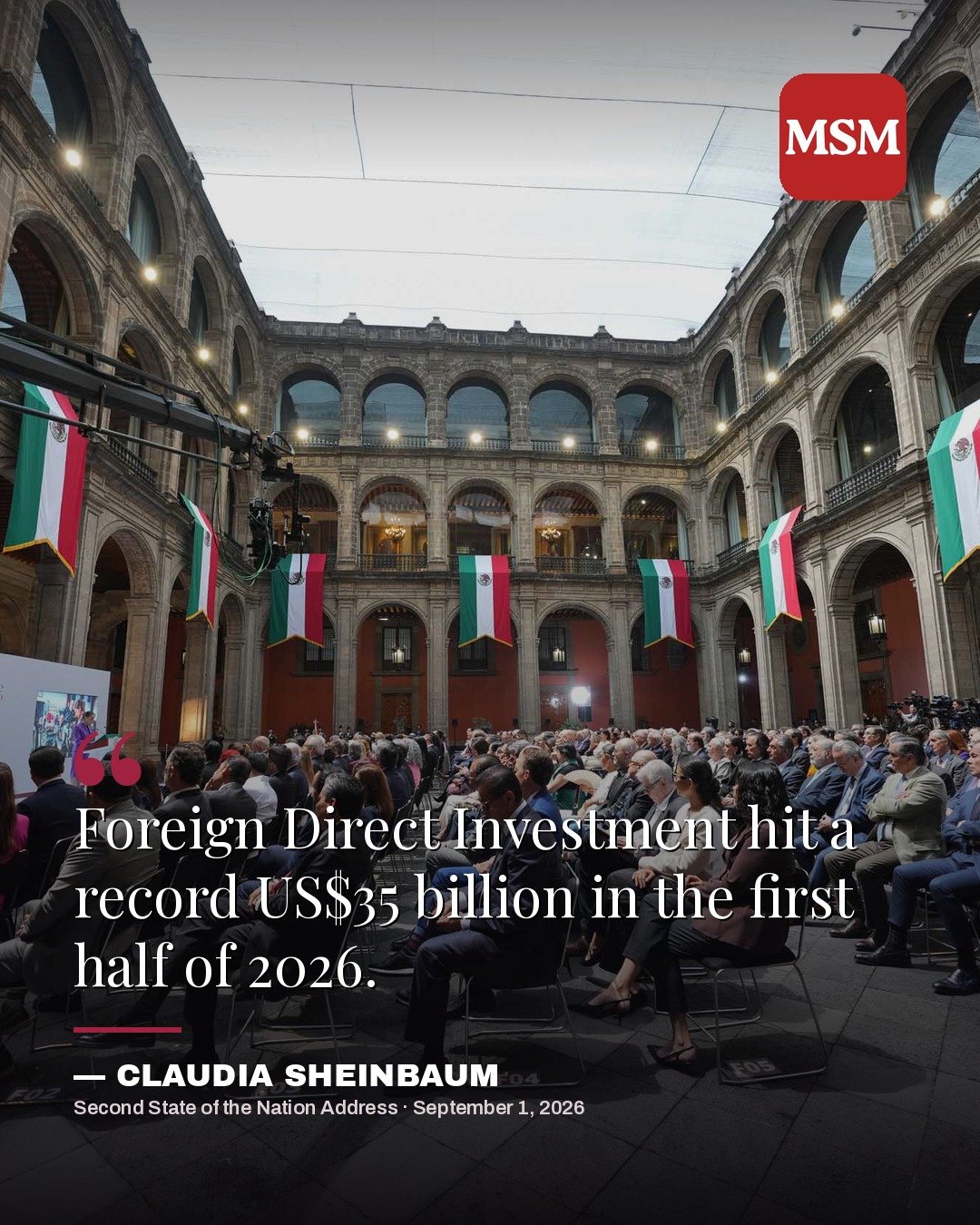
Foreign Direct Investment reached a record in the first half of 2026, totaling US$35 billion. This represents growth of 12 percent compared with the same period in 2024.
In the second quarter, Mexico’s GDP grew by 1.4 percent compared with the immediately preceding first quarter, and by 1.9 percent in relation to the second quarter of 2025.
The employed population topped 60 million, with a corresponding unemployment rate of just 2.7 percent. By the end of August, excluding digital platform workers, 86,765 formal jobs had been created compared with the end of July of this year.
Inflation is declining, thanks to fuel price incentives and agreements between the private sector, the social sector and the government to counter inflation and the high cost of living.
The price of regular gasoline and diesel has not increased. And 24 products in the basic food basket have fallen in price by 12 percent in real terms.
The peso is strong, remaining at around 17 pesos to the dollar, making it one of the world’s most appreciated currencies.
For the second consecutive year, the trade balance is positive.
We received 51.1 million international travelers during the first half of 2026, a 7.7 percent increase compared with the same period the previous year.
Some 6.6 million cruise-ship visitors arrived, 15.2 percent more than the previous year, while their spending increased by 18.7 percent.
In a few days, we will present the new Fiscal and Budget Package for 2027. It will be a responsible proposal that, while guaranteeing gradual fiscal consolidation, maintains investment and well-being, healthcare and education.
The Investment Law was recently approved, allowing us to accelerate public and mixed investment during the second half of 2026 in order to strengthen infrastructure and national development.
It is important to establish a premise: restoring the State’s guiding role does not signify abandoning fiscal discipline, nor does it mean assuming that development depends exclusively on greater public spending. It means maintaining solid public finances that expand investment capacity without jeopardizing macroeconomic stability, while at the same time guaranteeing rights, promoting development, distributing wealth, and strengthening energy sovereignty.
For decades, a model prevailed that reduced the State’s participation in the economy and transferred strategic decisions to the private sector through privatizations and concessions.
We all know that this model failed to provide well-being.
Today, the State is recovering its guiding role in planning development, infrastructure, and strategic sectors, intelligently using financial instruments to expand investment without surrendering public control. That is what we mean by “mixed investment.”
At the beginning of the administration, we presented Plan México, whose goal is to produce more for domestic consumption, substitute imports, and strengthen and diversify foreign trade.
Two decrees providing incentives for private investment were issued, particularly for 25 Economic Development Hubs for Well-Being, 10 of which are already being developed.
Twenty-five of the 100 industrial parks we announced as our goal are already operating.
We also created the Office of the Presidency for Investment Promotion, which includes a one-stop service that approves paperwork procedures within a maximum of 60 days. Through this system, 19 projects worth US$3.76 billion have been approved in four months.
In addition, 60 percent of administrative paperwork procedures have been simplified or eliminated, requirements have been reduced by 66 percent, and average response times have been cut by 50 percent. Particularly noteworthy is the 100 percent simplification of red tape at COFEPRIS, Mexico’s federal health-regulatory agency.
To extend this model throughout the country, we are implementing the Unified Catalogue of Paperwork Procedures and Services with state and municipal governments, with the aim of reducing red tape by at least 50 percent.
Our vision also involves promoting sovereign innovation that translates into development for everyone. With this in mind, we have assembled teams of professors, researchers, and students from public universities and institutions of higher education dedicated to developing 20 strategic projects in innovation, national technological development, and humanistic studies.
Among them are the Olinia mini electric motor vehicle, which is already entering the production phase; the Kutzari semiconductor-design workshop; the Ixtli observation satellites; the Meta-Oceanic Climate Monitoring and Civil Protection System; and Quetzal, the design and production of a next-generation unmanned aerial vehicle.
I also would like to report that we have increased support for scientific research projects by 193 percent, scholarships for study abroad by 70 percent, and postdoctoral placements by 23 percent.
We also created the Mexican Diaspora Studies Department, bringing 900 Mexican academics living abroad into teaching and research collaboration in Mexico.
Development has also begun on “Coatlicue,” the most powerful supercomputer in Latin America, with an estimated capacity of 314 quadrillion operations per second.
The Well-Being Programs express our conviction that no one builds a nation alone, and that we have an obligation to support those who were left behind for so long.
These programs support—and are themselves supported by—Mexican Humanism, based on a simple but powerful idea: Mexico’s wealth must translate into well-being for its people.
That is why a pension/stipend for a senior citizen, a scholarship/stipend for a student, or assistance for someone who works the land are not favors granted by those in power. They are ways of recognizing the dignity and effort of millions of Mexican women and men.
It represents a new way of understanding the State, not as a spectator of inequality, but as an instrument of justice. And perhaps therein lies one of the greatest transformations of our time: turning love into public policy, and public policy into rights that belong to the people of Mexico.
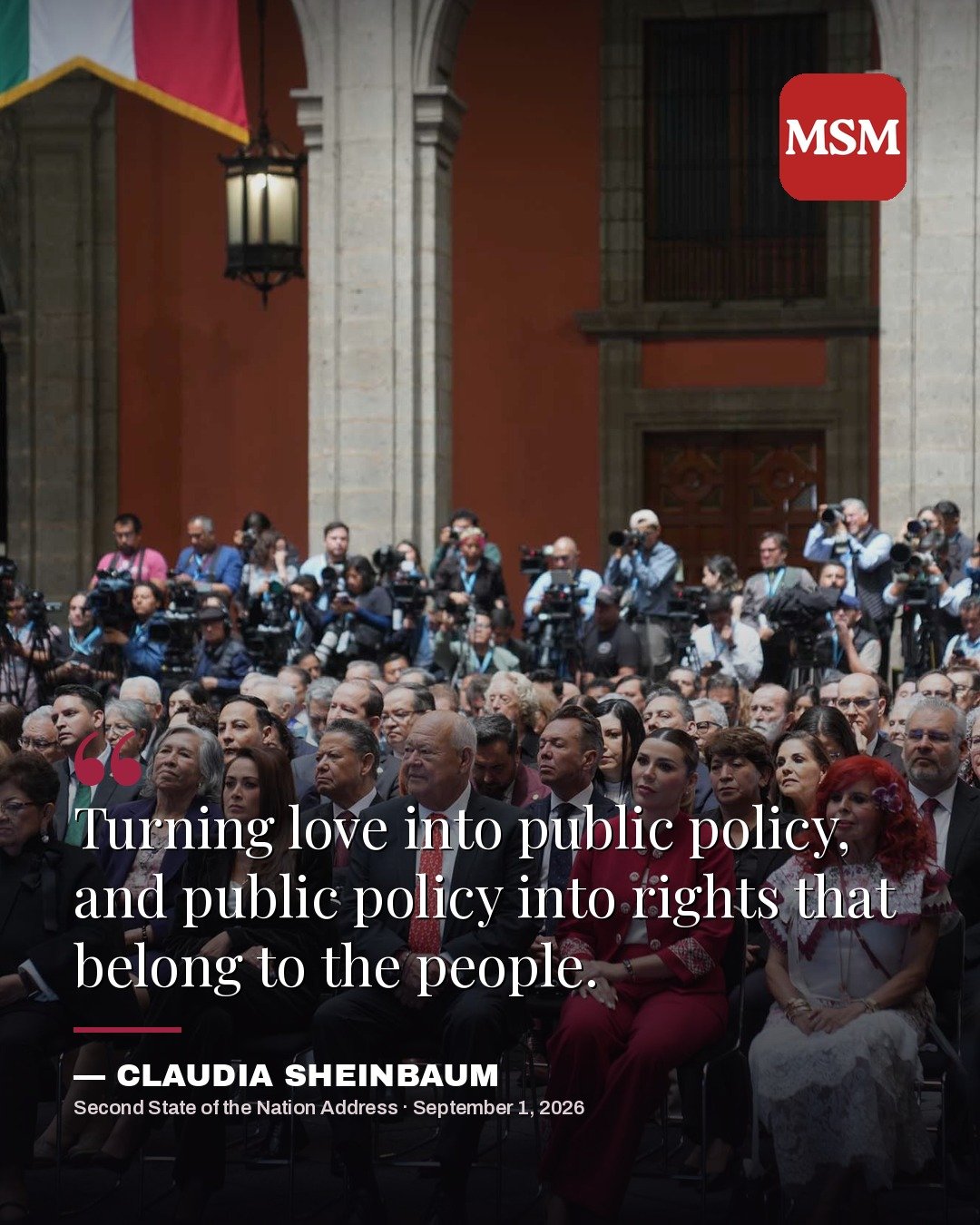
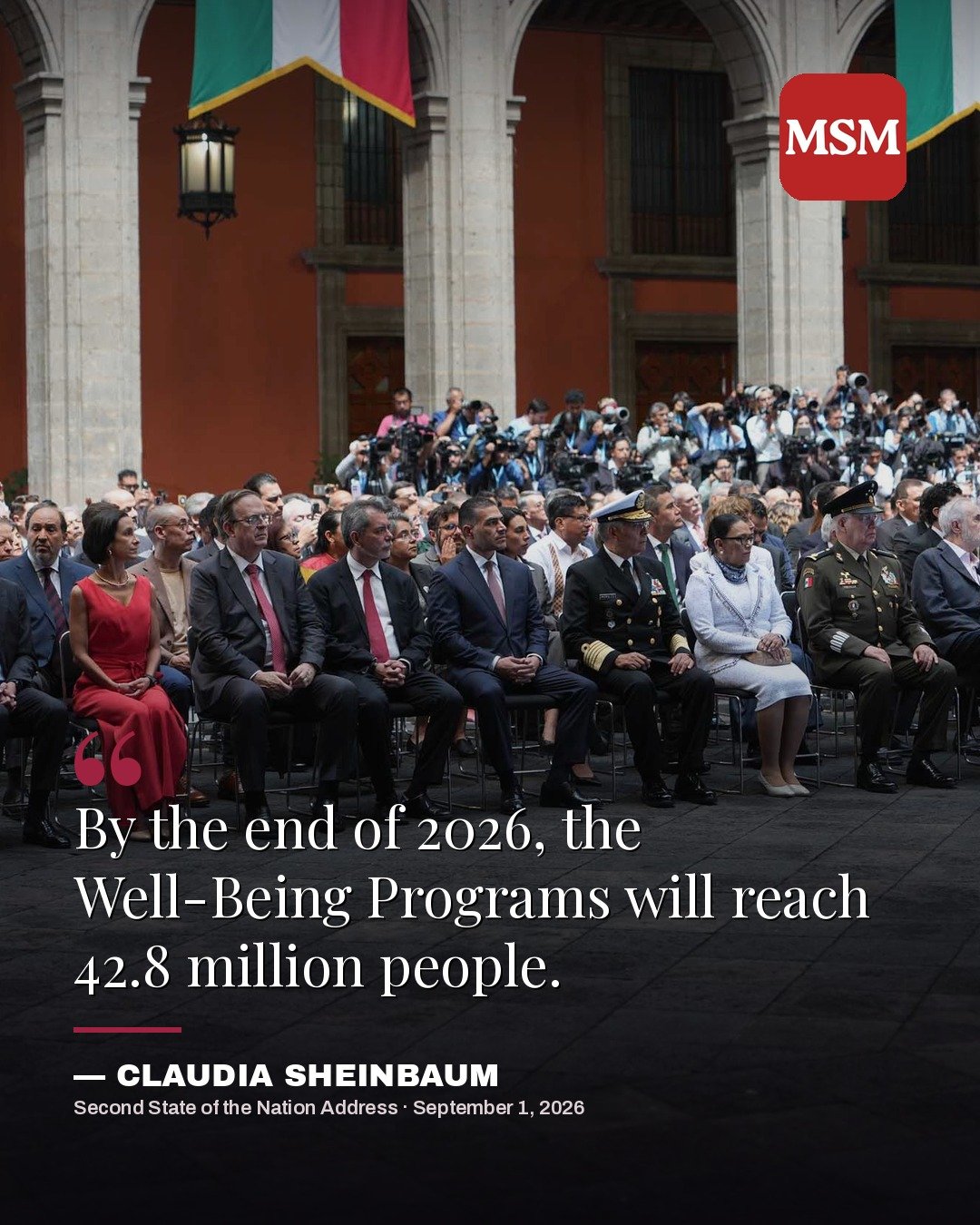
By the end of 2026, the Well-Being Programs will reach 42,860,296 beneficiaries, with a historic investment of one trillion pesos (US$58.82 billion) allocated directly to the well-being of the people.
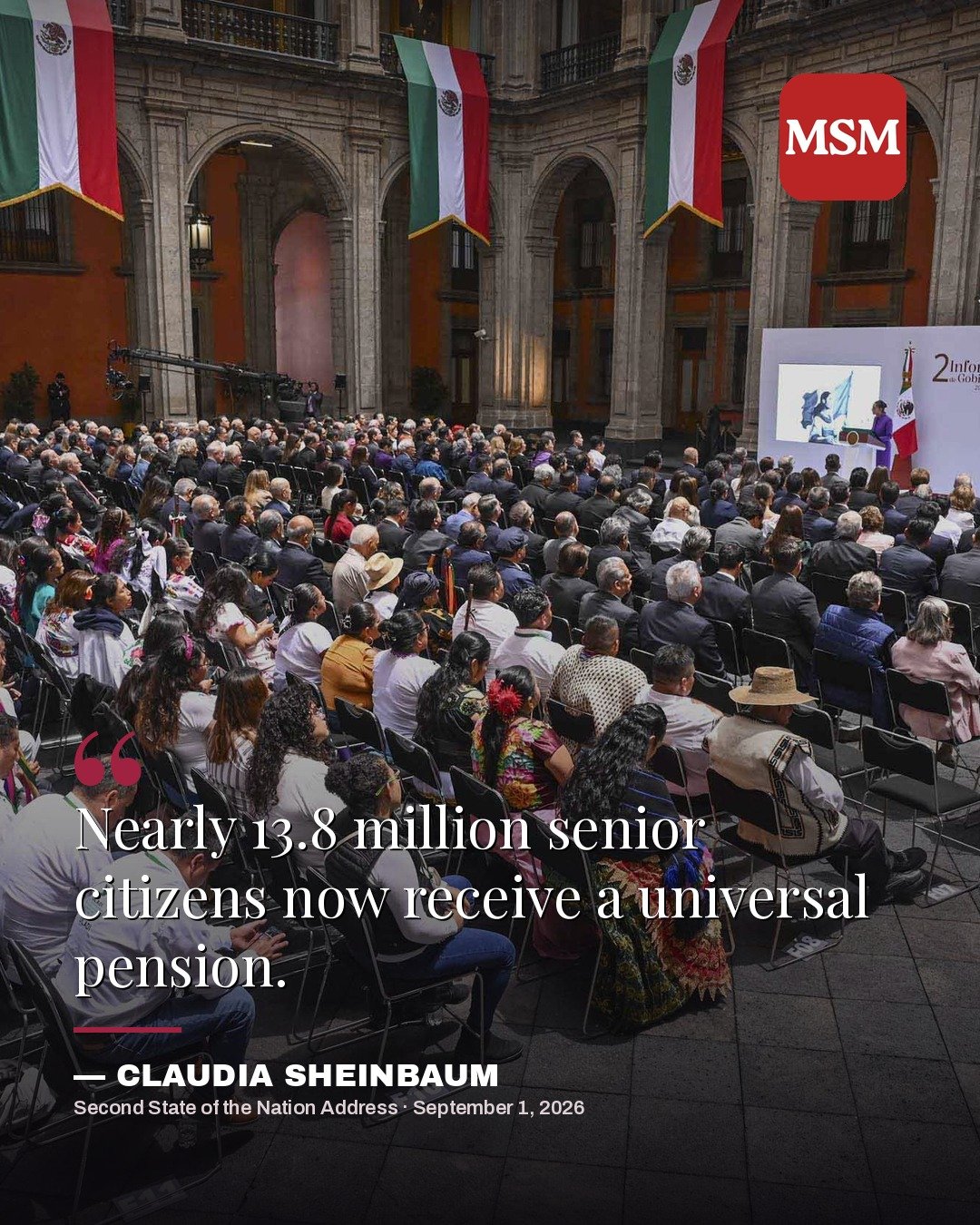
Almost 13.79 million senior citizens receive a pension/stipend of 6,400 pesos (US$376) every two months.
More than 2.87 million women between the ages of 60 and 64 receive the Women’s Well-Being Pension/Stipend, in recognition of a lifetime of work and caregiving.
Two million people with disabilities receive permanent aid of 3,300 pesos (US$194) every two months.
Half a million young people participate in Youth Building the Future program activities.
Some 300,000 children of working mothers and families receive services and care.
We support nearly 200,000 fishermen through Bienpesca.
In the countryside, we are promoting food sovereignty and guaranteeing development by directly supporting those who produce the wealth of our land.
Almost 1.89 million peasant farmers participate in the Production for Well-Being program. Slightly less than 2.16 million producers receive free fertilizer; 445,000 participants receive support through Sembrando Vida; and millions of families benefit from the Food for Well-Being Programs and fair prices.
We support growers of sugarcane, cacao and beans, as well as honey producers. This year, thanks to these efforts, bean production will increase by 300,000 tons and corn output by one million tons, while we guarantee affordable milk for 7 million families.
This year, we signed a historic agreement among seed and agricultural-input producers, growers and buyers to organize the marketing of domestically produced white corn.
The principal goal is to ensure that small and medium-sized producers obtain a fair profit that covers their production costs, to stabilize the tortilla market, and to strengthen the country’s food sovereignty.
Furthermore, in order to preserve the different varieties of native corn and the right to food, we are carrying out the program El Maíz es la Raíz— “Corn Is the Root.” This year it is organizing 600,000 peasant farmers into groups of producers to improve seeds through traditional methods, with the objective of increasing productivity, guaranteeing self-consumption, securing a fair price for corn, and conserving genetic biodiversity.
Twenty-five thousand agricultural producers and fishermen have obtained access to the Rural Credit System through the Harvesting Sovereignty program.
The Transformation is also being experienced in the classroom. A scholarship/stipend can make the difference between continuing in school and dropping out. It helps equalize the conditions from which students begin their studies.
For that reason, every student attending a public lower-secondary school receives the Rita Cetina Stipend.
This year, 8 million primary-school students received assistance for school supplies and uniforms.
Nearly 5 million upper-secondary level students receive the Benito Juárez Stipend, and by the end of 2026 nearly 800,000 university students will be recipients of the Youth Writing the Future and Gertrudis Bocanegra scholarships/stipends. In other words, all primary and upper-secondary students are receiving support stipends, and we are also moving toward providing more scholarships/stipends in higher education.
Through The School Is Ours program, more than 73,000 basic- and upper-secondary schools received financial support in 2026 to improve their facilities together with parents’ efforts.
As we pledged, we have dedicated effort and financial resources to strengthening and expanding upper-secondary and higher education.
To accomplish this, we created the National Upper-Secondary Education System, known as Bachillerato Nacional, with the goal of bringing the country’s preparatory schools and technological institutions under a single educational framework, while ensuring that each is affiliated with an institution of higher education.
This year, more than 657,000 young people graduated from the first generation of the National Upper-Secondary Education System with dual certification: one from the Ministry of Public Education’s Bachillerato program itself and another from an institution of higher education, thanks to an agreement involving 29 national and state universities and technological institutes.
We eliminated upper-secondary admission exams in 17 states. Unlike in previous years, when adolescents were led to believe that “there were good schools and bad schools,” and that “their score on an exam determined which one they could attend,” today young people know that all public upper-secondary schools are good and that they can decide which to attend based on where they live and their interests.
The new system has a highly symbolic name: “My Right, My Place.”
This year, most students obtained a place in one of their first two choices. Under the entrance-exam system, students could end up studying at their tenth choice, which often led them to drop out during their first year.
Young people belong in school.
In addition, during 2026 we will have created 156,000 spaces in new upper-secondary schools through 485 construction and expansion projects. And we will reach 400,000 new spaces in order to achieve 90 percent national coverage at this educational level by 2030.
With regard to higher education, by 2026 the Rosario Castellanos National University will have 13 new campuses throughout the country with 119,280 students. There are now 239 Benito Juárez Universities for Well-Being, with 285,000 students.
Across the entire public system of autonomous universities, polytechnic institutions and public technological institutes, 245,111 additional spaces for students will have been created in two years. That is a quarter of a million young people who previously could not find a place in college and now have the opportunity to study.
In addition to the one million teachers who had their permanent employment status ratified during President López Obrador’s administration, an additional 200,000 teachers have now received permanent positions.
Starting this month, consultations will begin school by school so that all public-education teachers may freely decide the way they want vertical and horizontal professional mobility to be promoted, as well as how transparency should be ensured. Unlike the education reform under Peña Nieto, which was imposed, we consult all teachers democratically.
A total of 154.5 million free textbooks under the New Mexican School model were distributed in basic education, and work is already underway so that three additional textbooks can be incorporated in 2027. They are the History of Mexico, Mathematics Instruction, and Reading and Writing.
Arts education is also a priority. Beginning in 2025, tuition fees were eliminated in all schools operated by the National Institute of Literature and the Fine Arts (INBAL), the National Institute of History and Anthropology (INAH) and the Cinematographic Training Center, and 1,600 educational installations were integrally improved.
We opened the new Cinematographic Training Center in Chapultepec, which increased enrollment fivefold.
For the first time in 37 years, the Carlos Chávez School Orchestra has a permanent home.
And together with the Fondo de Cultura Económica publishing house, 2.5 million books were published for young people in 14 countries, while 26,000 reading groups have been promoted.
Mexico is experiencing a historic moment in sports.
We achieved the best performance in our history at the Central American and Caribbean Games.
Our athletes are winning top places at world championships in categories that include diving, cycling, rowing, flag football and archery, to mention only a few.
These results begin at the grassroots level. The National Olympics and Paralympics constitute the largest sports-development program in the country and engage more than 4 million children and young people.
The National School Sports Games bring together more than 5 million students. Programs such as Ponte Pila, together with state and municipal sports centers, bring physical activity to every part of the country.
At the high-performance level, athletes have the backing of the Mexican State. We allocate more than one billion pesos (US$58.90 million) to scholarships and support for food, accommodations, training camps, medical care, and international competitions.
Today there is methodological and scientific planning accompanying every stage of their preparation. That is why these results are not accidental. They are the product, of course, of the talent and effort of our athletes, their discipline, and the support of a government that understands that sport is both a right and an instrument of transformation.
As part of hosting and holding the FIFA World Cup, we developed the Social World Cup. Through these activities, the Mexican Government built 2,226 soccer fields, with a similar number constructed by municipalities and states. The Youth Institute created 1,123 soccer-related murals; 1,166 sports facilities and public spaces were restored; and 74 mini-World Cups and cup tournaments were held, involving 1.1 million people of all ages. The school tournaments will continue every year.
In healthcare, we are restoring a right that was abandoned for years.
When the government of the Fourth Transformation arrived, Mexico’s public health system had suffered a profound decline.
It is worth recalling the figures to understand the scale of the situation: between 1943 and 1982, the IMSS installed 29,500 hospital beds. During the neoliberal period from 1983 to 2018, only 4,000 additional beds were added. In other words, over roughly the same number of years, the first period produced 29,000 beds, while over the following 36 years only 4,000 were added.
The neglect was so severe that by the end of that period there were more than 80 hospitals that were unfinished or unusable, despite having supposedly been inaugurated.
Pharmaceuticals and medical supplies were purchased through a small group of intermediary companies that charged inflated prices, while inefficient distribution obstructed deliveries to the country’s most marginalized areas.
The Seguro Popular insurance system contracted private services instead of strengthening the capacity of public institutions, and operated using a catalogue of illnesses that determined whether or not a person could receive medical care.
That is why we are reversing the damage caused by decades of neglect in healthcare.
During President López Obrador’s administration, IMSS-Bienestar was created, and 24 states have now joined the system.
This year, in those states incorporated into IMSS-Bienestar, specialist consultations will have increased by 106 percent compared with 2022.
In just two years of government, we completed and put into operation 33 new hospitals belonging to IMSS, the Institute for Social Security and Services for State Workers (ISSSTE), and IMSS-Bienestar, in addition to 11 Family Medicine Units and 36 Healthcare Centers and clinics.
We have also equipped 650 modern operating rooms, and during the current six-year presidential administration we will build 152 new healthcare facilities providing an additional 9,000 beds.
Thanks to a change in our approach, twice as many medical specialists are now trained and hired every year compared with the neoliberal period.
To ensure the timely supply of pharmaceuticals and medical supplies and materials, consolidated purchases are made directly from suppliers. We also created the Health Routes program for IMSS-Bienestar medical units and hospitals, through which 2 billion individual medical items have been distributed.
No hospital treating cancer lacks medicines.
We created the House-by-House Healthcare program, through which 20,000 healthcare professionals have made more than 23 million home visits to senior citizens and people with disabilities. It is the most important preventive healthcare program in the world.
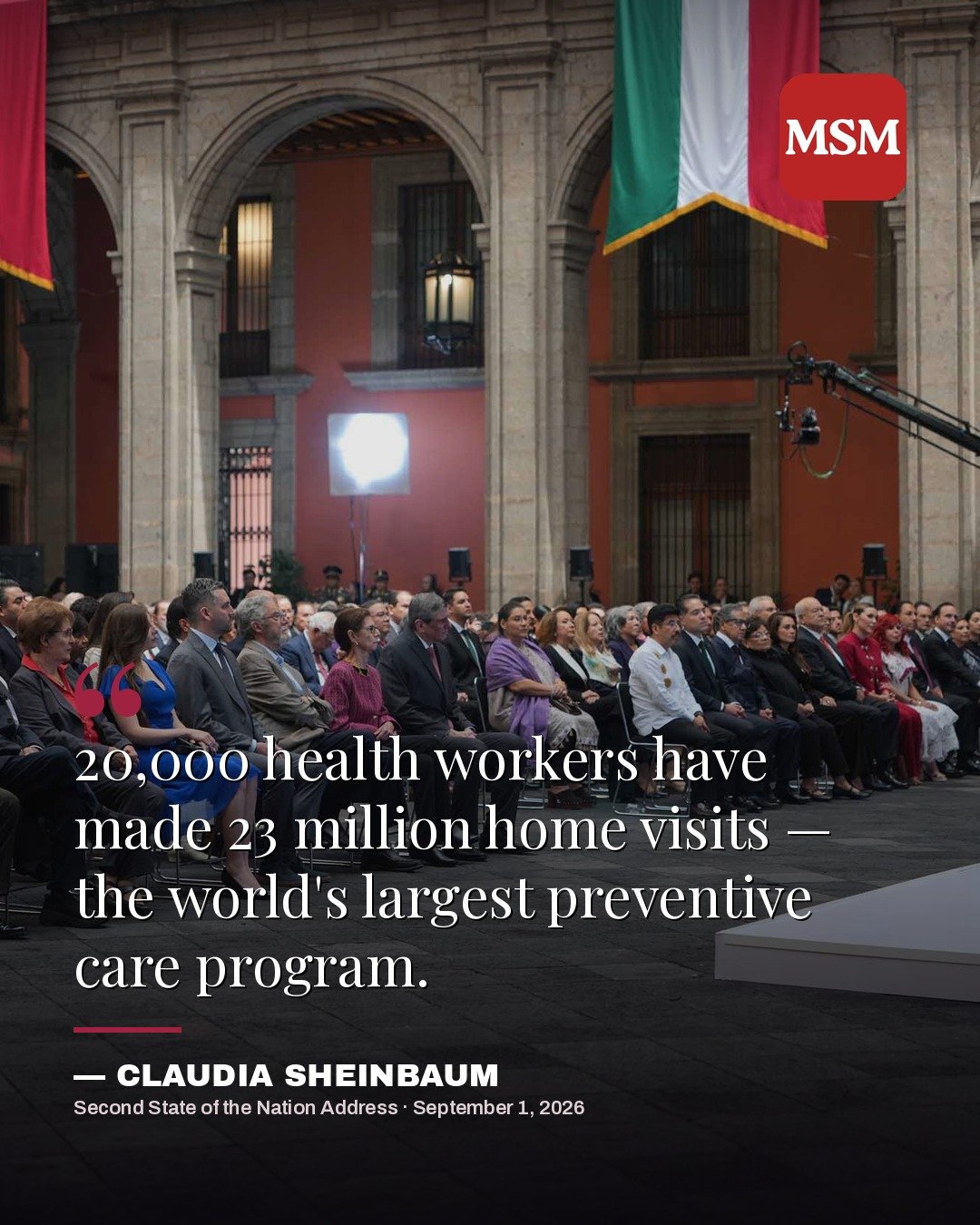
We created the Universal Healthcare Service to combine the efforts of the three principal federal public-health institutions. From September through December, we will launch more than 12,000 medical offices in the 24 states participating in IMSS-Bienestar, with the goal of strengthening primary healthcare and preventive medicine.
Under our administration, Infonavit and FOVISSSTE recovered their capacity to build housing rather than merely issuing unfair loans.
Together, these two institutions and the National Housing Commission have a goal of building 1.8 million homes for families earning less than 2.9 times the minimum wage.
To date, contracts have been issued for 668,000 homes; 278,000 are under construction and 90,000 homes have already been allocated.
These institutions, together with the Sociedad Hipotecaria Federal mortgage institution, also provide more accessible credit for families with higher incomes.
To date, 779,000 loans have been issued to families. The goal is to issue 2.2 million.
In addition, 717,000 families have benefited from housing-improvement loans and assistance, out of our target of 1.8 million.
We have also corrected one of the greatest injustices inherited from the past. Five million families are no longer trapped in unpayable mortgages.
What occurred in the past was astonishing. Someone might borrow 60,000 pesos, make payments for 20 years, and find that their debt had grown to one million pesos. Now all of that has been restructured, and millions of families have already paid off their homes.
To guarantee property ownership, we have regularized the legal status of 337,000 homes, toward our goal of 1.2 million.
Taken together, all of these measures mean the Housing Program will reach 12 million families by the end of the current presidential administration.
There is something that fills me with pride as the first woman President. Women are now part of the Constitution, in the laws and in the state’s fundamental decisions.
Despite the misogyny and machismo of those who believe that “women cannot do it” or “women do not know how to govern,” every day we demonstrate the opposite.
In addition, this year we will have inaugurated 1,001 LIBRE Centers throughout the country. We have distributed 27 million Women’s Rights Booklets and created a network of 190,375 Women Weavers of the Homeland.
The General Law to Prevent, Investigate and Punish Feminicide and Provide Reparations for the Harm Caused by the Crime of Feminicide was presented.
With Indigenous and Afro-Mexican peoples, we have begun a new stage thanks to the amendment to Article 2 of the Constitution, which recognizes Indigenous and Afro-Mexican peoples as legally recognized communities possessing full rights.
Resources now go directly to communities, so that community assemblies themselves decide how they will be used.
In two years, 25 billion pesos (US$1.47 billion) have already been delivered to 19,000 communities.
We have also restored 13,000 hectares of communal lands to the Rarámuri, Yaqui, Seri, Wixárika, Ódami and Otomí Indigenous peoples.
The return of an additional 177,632 hectares is underway.
Indigenous languages are being strengthened through 400 centers, and Comprehensive Justice and Development Plans are being promoted for 35 Indigenous and Afro-Mexican peoples. The General Law on the Rights of Indigenous and Afro-Mexican Peoples is currently undergoing consultation.
We are recovering the nation’s energy sovereignty.
We amended the Constitution to restore Petroleos Mexicanos (Pemex) and the Federal Electricity Commission as public enterprises.
By the end of the current administration, an additional 32,000 megawatts will have been incorporated into the National Interconnected System, increasing the share of renewable energy from 24 percent to 38 percent, in order to fulfill our environmental commitment while simultaneously guaranteeing energy sovereignty.
In two years, six new combined-cycle power plants with a capacity of 3,000 megawatts have been completed, while eight hydroelectric plants have been refurbished, modernized, and uprated.
To advance our renewable-energy goals, in February 2026 the private sector was invited to participate in electricity-generation projects through mixed-investment arrangements that maintain the percentage share established by law, 54 percent public and 46 percent private.
Through transparent bidding processes, 38 projects were approved. Together they will provide 8,025 megawatts of generation capacity and more than 2,500 megawatts of storage, involving an investment of US$10.6 billion.
Additional bidding processes under this innovative model will be announced later this year.
The Federal Electricity Commission has also begun implementing an investment plan of more than 244 billion pesos (US$14.37 billion) to modernize and expand transmission and distribution networks.
The Energy Justice Plan has implemented 20,377 electrification projects benefiting more than 600,000 residents in 13,000 remote communities. The objective is to achieve 99.9 percent electrification by 2030.
Five thousand photovoltaic panels have been installed for homes in the city of Mexicali, and we will expand this program.
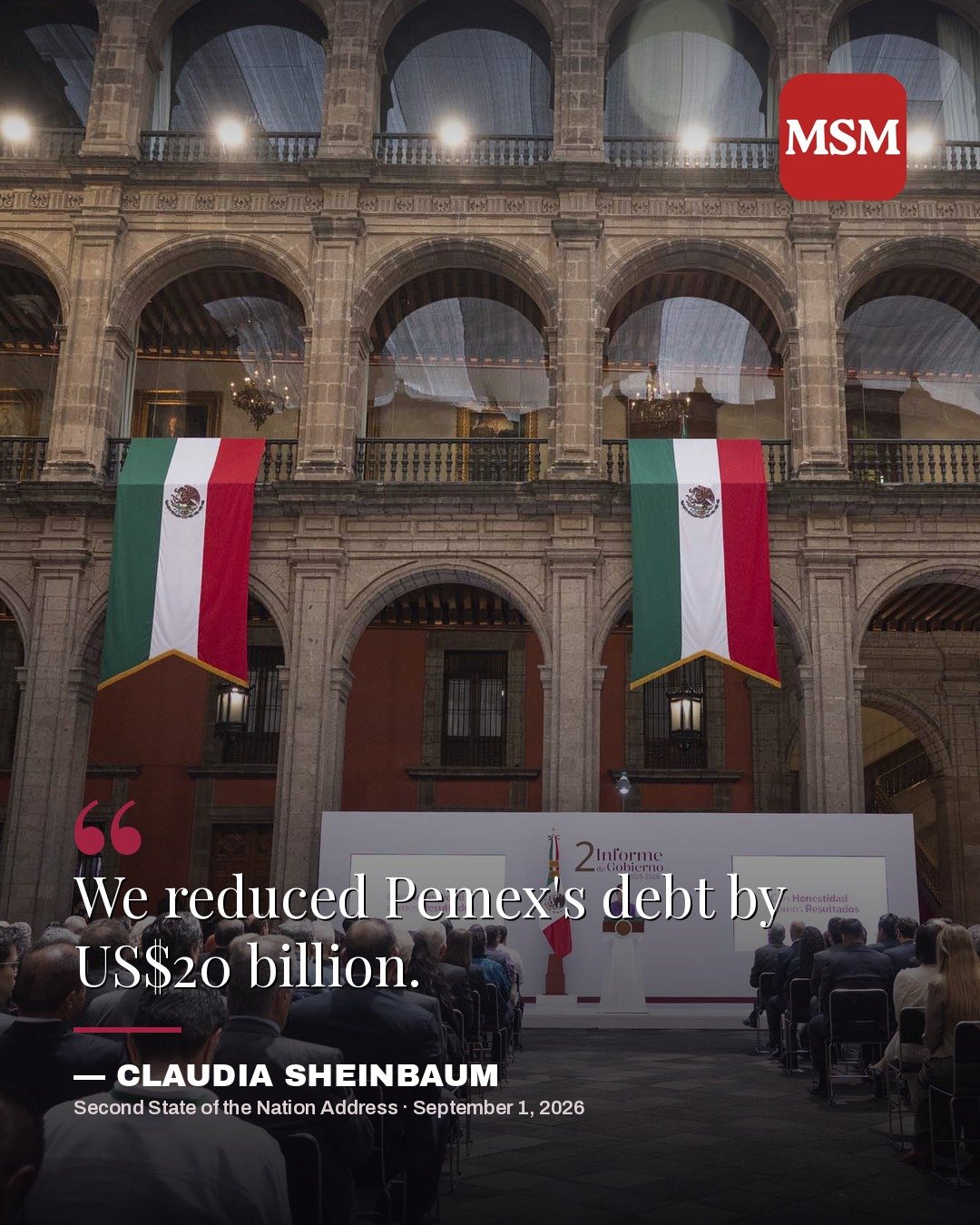
We reduced Pemex’s debt by US$20 billion.
Today, we produce 1.77 million barrels of oil per day and nearly 5 billion cubic feet of natural gas per day, while the National Refining System processes more than 1.5 million barrels per day.
To everyone who criticized the construction of the Olmeca Refinery in Dos Bocas, Paraíso, Tabasco, today it is clear that thanks to this refinery we have been able to confront increases in fuel prices and shortages affecting the vast majority of countries around the world.
We are completing construction of two coking plants in Tula and Salina Cruz in order to produce more gasoline and low-sulfur diesel. The first will be completed this year and the second during the first half of 2027.
By the end of 2025, Pemex fertilizer production—which had been abandoned during the neoliberal period and was restored during President López Obrador’s administration—had recovered. In 2026 it reached 1,185 tons, representing 38 percent more fertilizer production than in 2024.
We have already begun the recovery of the national petrochemical industry through the Escolín, Cosoleacaque, Morelos and Cangrejera projects.
We have launched the National Gas Pipeline Plan, with a historic investment of 141 billion pesos (US$8.30 billion) projected through 2030.
This comprehensive strategy modernizes and expands the natural-gas transportation network in order to supply southeastern Mexico, the 13 new combined-cycle power plants, and the Development Hubs for Well-Being.
We established a pluralistic committee of experts from different public institutions and fields to analyze the feasibility of exploiting unconventional gas resources in Mexico, in order to strengthen energy sovereignty without jeopardizing water resources.
Currently, 75 percent of the natural gas we consume is imported, and 90 percent of that imported gas comes from unconventional techniques.
In its first conclusion, this group established that extraction should be prohibited in the Tampico-Misantla Basin in order to avoid harming communities and natural resources. We will respect and publish that conclusion.
The availability of deep saline water in the Burgos Basin is also being studied.
As we have done until now, we will continue informing the public transparently.
With regard to roads, we have completed 88 percent of the resurfacing of the country’s 51,000 kilometers of toll-free federal highways.
We completed strategic projects including the Bavispe–Nuevo Casas Grandes highway, the Nichupté Bridge in Cancún, Real del Monte–Huasca in Hidalgo, and the Pátzcuaro–Uruapan and San Ignacio–Tayoltita highways.
The road-network improvement and expansion project is extremely ambitious. It represents an investment of 700 billion pesos (US$41.23 billion) covering 5,000 kilometers.
The principal highway corridors include:
The Gulf of Mexico Corridor, including the Macuspana–Escárcega highway; completion of the Veracruz highway from south to north; and the improvement and expansion of the route from Tampico to Reynosa passing through Ciudad Victoria.
The Pacific Corridor, including improvements to the highway from Salina Cruz to Michoacán.
Improvements to Highways 57 and 45, which cross the central region of the country from south to north.
The Guaymas–Chihuahua and Toluca–Zihuatanejo highways; the connection through the Huasteca region from Hidalgo to Tamaulipas via San Luis Potosí; and the Ocosingo–Palenque highway in Chiapas.
During these two years, we built 70 bridges and grade-separated roadway interchanges, and an additional 35 are under construction. These include projects in Guerrero, Colima, Veracruz–Puerto, Coatzacoalcos, and the Bahía de Banderas–Puerto Vallarta crossing—the Amado Nervo Bridge.
We doubled the budget for handcrafted rural roads. Together with Indigenous communities, we have built 135 roads totaling 368 kilometers.
We have also worked on more than 1,100 kilometers of highway infrastructure in the Mixteca region of Oaxaca and Puebla.
We continue recovering passenger rail service, one of the hallmarks of the Fourth Transformation of Public Life.
We inaugurated the Insurgente Train Line from Santa Fe to Observatorio in Mexico City, which has already transported more than 25 million passengers.
And the Felipe Ángeles Train, on its Lechería–AIFA section, is becoming established as a modern transportation alternative for nearly 3 million residents, as well as providing rapid access to Felipe Ángeles International Airport (AIFA).
Work is also advancing on the following rail projects: AIFA–Pachuca, Mexico City–Querétaro, Querétaro–Nuevo Laredo, Querétaro–Guadalajara, Salina Cruz–Ciudad Hidalgo, Roberto Ayala–Dos Bocas, and the Mayan Train freight service.
I would also like to tell everyone who is predicting that that “it does not work” that the Mayan Train has transported 2.5 million passengers and is developing according to plan.
Mexicana de Aviación has transported one million passengers, and we will reach three times that number with the addition of 14 aircraft, in accordance with its targets.
The Felipe Ángeles International Airport (AIFA) transported 3.6 million passengers during the first half of 2026, exceeding even what had been projected.
The Interoceanic Train has transported 2 million tons of cargo.
And passenger-train operations will resume between November 2026 and February 2027, depending on the particular sections involved.
After decades of plundering water resources, in December 2025 the Comprehensive Reform of the National Water Law was approved. Under this reform, water ceased to be conceived of as “a commodity” and was recognized instead as a human right and a resource belonging to the nation.
We have spoken extensively about what the privatization of energy resources meant for the country, but treating water as a commodity also had extremely serious consequences.
Thanks to this change in the law, and to restoring water as a human right and a national resource, we de-privatized more than 5 billion cubic meters of water—enough water to supply more than 90 million people for an entire year.
Thanks to this reform, we were also able to grant 12,346 concession titles to communities and small and medium-sized producers, and to allocate water directly to municipalities that previously had to pay private interests for it. Mexicali and Tijuana, for example, now hold direct concessions from the National Water Commission, whereas previously they had to pay private parties.
We have advanced through the first stage of cleaning up and restoring the Atoyac, Lerma-Santiago and Tula rivers. On these rivers, 23 treatment plants and 282 kilometers of collector pipelines are being constructed or rehabilitated; river channels are being dredged and cleaned; and public spaces are being developed, among other activities.
We are also cleaning up the Tijuana River in Baja California; the Nogales River in Sonora; and the La Sabana River in Guerrero.
We are modernizing and introducing more efficient irrigation infrastructure across more than 250,000 hectares. This will make it possible both to increase agricultural productivity and to free up water for human consumption.
These projects are being carried out in 19 irrigation districts across 15 states.
By the same token, with the goals of guaranteeing the human right to water and reducing the risk of flooding, 17 strategic projects are being promoted.
We have completed 200 kilometers of major water-distribution networks for Healthy Water for La Laguna, in Coahuila.
The Eastern Zone Plan in the State of Mexico is 40 percent complete.
The Comprehensive Plan for the Metropolitan Area of the Valley of Mexico is also under implementation and 40 percent complete.
Other projects include:
The El Novillo Dam, in Baja California Sur.
The Campeche Acuaférico water system.
“Acapulco is being Transformed With You,” which includes drinking-water, sewage and drainage, sanitation and flood-prevention projects.
The second line of the Guadalupe Victoria Aqueduct, in Tamaulipas.
A new aqueduct to bring water to the city of Colima.
The Tunal II Dam, in Durango.
The Coatzacoalcos Aqueduct, in Veracruz.
The El Peaje–San José Aqueduct, in San Luis Potosí.
Flood-protection projects in Tabasco.
And we are about to begin:
The Mujer Solteca Dam, to bring water to the city of Oaxaca.
A desalination plant for Tijuana and Rosarito.
A system of wells to bring water to Hermosillo, Sonora.
Water for Guanajuato.
And Water for Zacatecas.
In addition, using resources coordinated among all three levels of government –federal, state, and municipal- we are implementing 24,000 drinking-water and drainage projects in 2,183 municipalities throughout the country.
We are modernizing seven ports, and work has already begun at the Port of Manzanillo.
We are also moving forward with maintenance, expansion and modernization work at 11 international airports, notably including the renovation of Mexico City International Airport, Puerto Escondido Airport, and Tepic Airport.
The peace and security of families are the government’s priority.
Thousands of members of the National Guard, soldiers, sailors, security agents and public servants work every day in accordance with the four pillars of the National Security Strategy we have established:
Addressing the Root Causes of Violence.
Consolidating the National Guard.
Strengthening intelligence and investigation.
And coordination among Federal Government institutions, the Prosecutor’s Office, and the state governments.
The results speak for themselves:
We have achieved a 51 percent reduction in intentional homicides since we took office, equivalent to 44 fewer homicides every day.
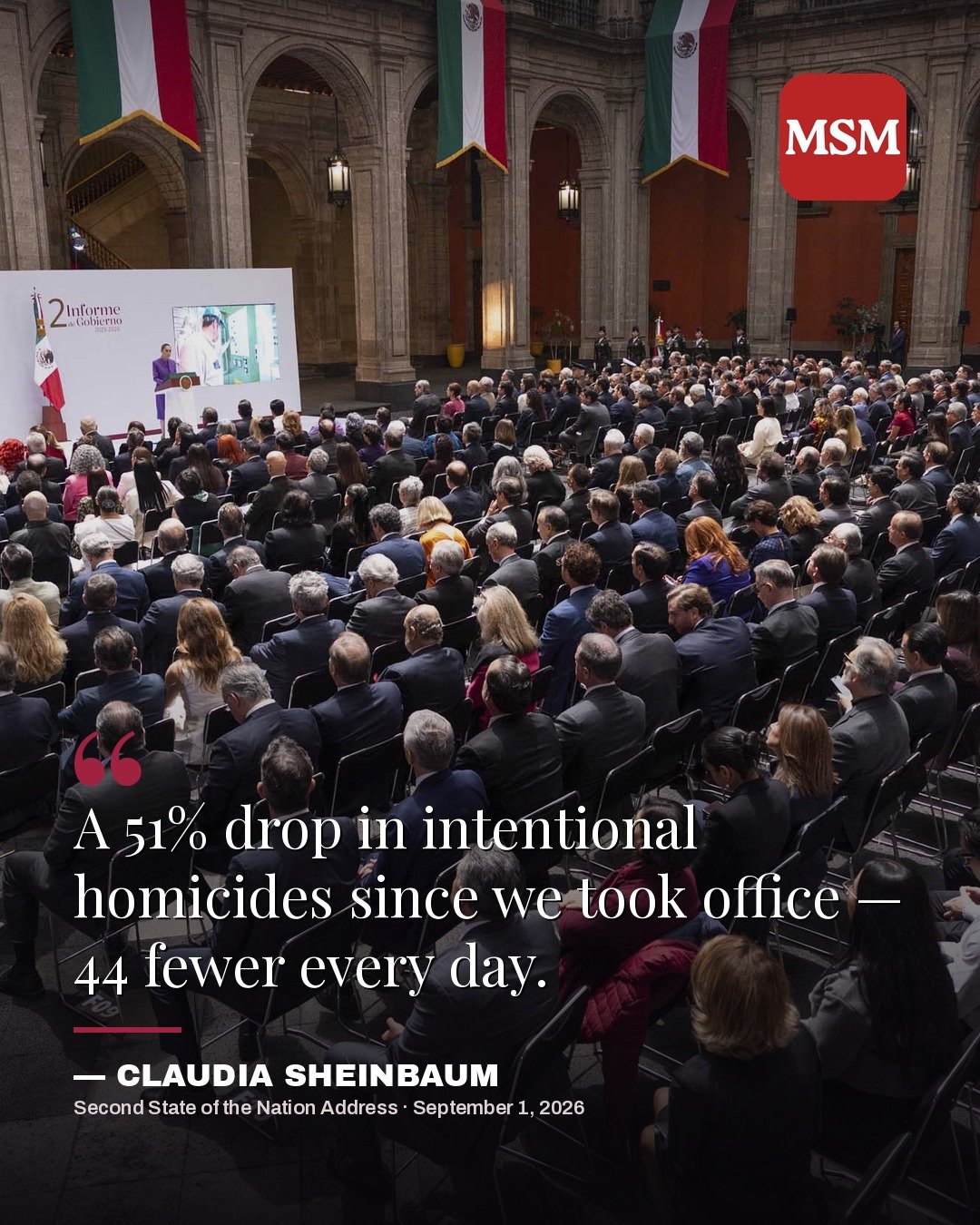
It should be emphasized that July registered the lowest daily average in 11 years.
So far in 2026, the average daily number of high-impact crimes has fallen by 54 percent compared with 2018.
There have also been reductions in violent truck robberies, violent vehicle thefts, and intentional injuries caused by gunfire.
From October 2024 through July 2026, a total of 63,000 suspects connected with alleged criminal offenses have been arrested, including 207 priority targets from various organized-crime groups. Authorities seized 32,824 firearms and 519 tons of drugs.
In addition, 2,725 clandestine drug laboratories and storage facilities used for methamphetamine production have been dismantled and taken out of operation.
Under the Addressing the Root Causes strategy, 665 Peace Fairs were held and more than one million instances of assistance were provided, bringing healthcare, education and employment services, government paperwork procedures and services, guidance, workshops and community activities directly to the population.
We are working with particular attention in several priority geographic areas, including 10 municipalities in Michoacán; Cuautla, Morelos; Culiacán, Sinaloa; the Mountain region of Guerrero; and 40 other priority municipalities, where we are bringing programs including Young People Unite the Neighborhood, Youth Building the Future, Margarita Maza Preparatory Schools, the construction of México Imparable Sports Centers, Boxing for Peace, concerts and sports activities.
Work is being carried out house by house in order to provide comprehensive assistance to families.
I would like to thank the Security Cabinet: Secretary General Ricardo Trevilla Trejo; Minister Admiral Raymundo Pedro Morales Ángeles; Minister of Security Omar García Harfuch; Minister of the Interior Rosa Icela Rodríguez; and Legal Counsel Luisa María Alcalde, for their continuous work throughout these months—these two years—in helping us achieve these security results, although we know that security is ultimately the fruit of justice.
Thanks as well to the transformation of the Judicial Branch, because the difference between the past and the present can clearly be seen.
Nearly 100,000 families affected by torrential rainfall in five states in October 2025 received assistance.
Continuous work to reopen roads was carried out for nearly a month and a half, during which the largest airlift ever conducted in Mexico took place.
All of the roads and bridges that were damaged are now under reconstruction.
I deeply thank every member of the Armed Forces who worked without rest, as well as the Servants of the Nation, the Ministry of Infrastructure, Communications and Transportation, and everyone who participated during those days. At that moment, unconditional solidarity was demonstrated—a quality that characterizes us and of which we are enormously proud.
In foreign policy, we have upheld our constitutional principles, not only because it is our obligation to do so, but because of our own convictions:
People’s right to self-determination;
Non-intervention;
The peaceful resolution of disputes;
The prohibition of the threat or use of force in international relations;
The legal equality of States;
International cooperation for development;
Respect for, protection and promotion of human rights;
And the pursuit of international peace and security.
Within this framework, I would like to emphasize our relationship with the U.S. government. It has had its difficulties, but we have made the decision always to seek understanding.
Perhaps one of the most agonizing issues has been the treatment received by Mexicans in detentions, as well as the painful deaths of 17 of our fellow countrymen in detention centers and enforcement operations.
In response, in addition to using diplomatic channels, we decided to file legal complaints in those cases where this was necessary. We will follow those cases closely and demand full respect for the human rights of our compatriots.
To improve assistance to our fellow Mexicans abroad—and so that they know our consulates are places for understanding, support and solutions—we transformed consular services. We simplified them, brought them closer to the people and, above all, made them more humane.
Today, all of our consuls have a responsibility to reach out to communities, listen to their needs and defend their rights.
Through the “Mexico Embraces You” program, we have supported more than 281,000 compatriots who have returned from the United States, providing hot meals, transportation to their communities, medical and psychological care, and identification documents.
In commercial matters, we maintain permanent dialogue with the U.S. government and hope to reach an understanding.
In security matters, we have achieved cooperation agreements founded on four principles:
Respect for sovereignty and territorial integrity;
Shared and differentiated responsibility;
Mutual respect and trust;
And cooperation without subordination.
In Mexico, we want cooperation, dialogue and understanding with all nations.
But cooperation does not mean submission.
Friendship does not mean abandoning our principles.
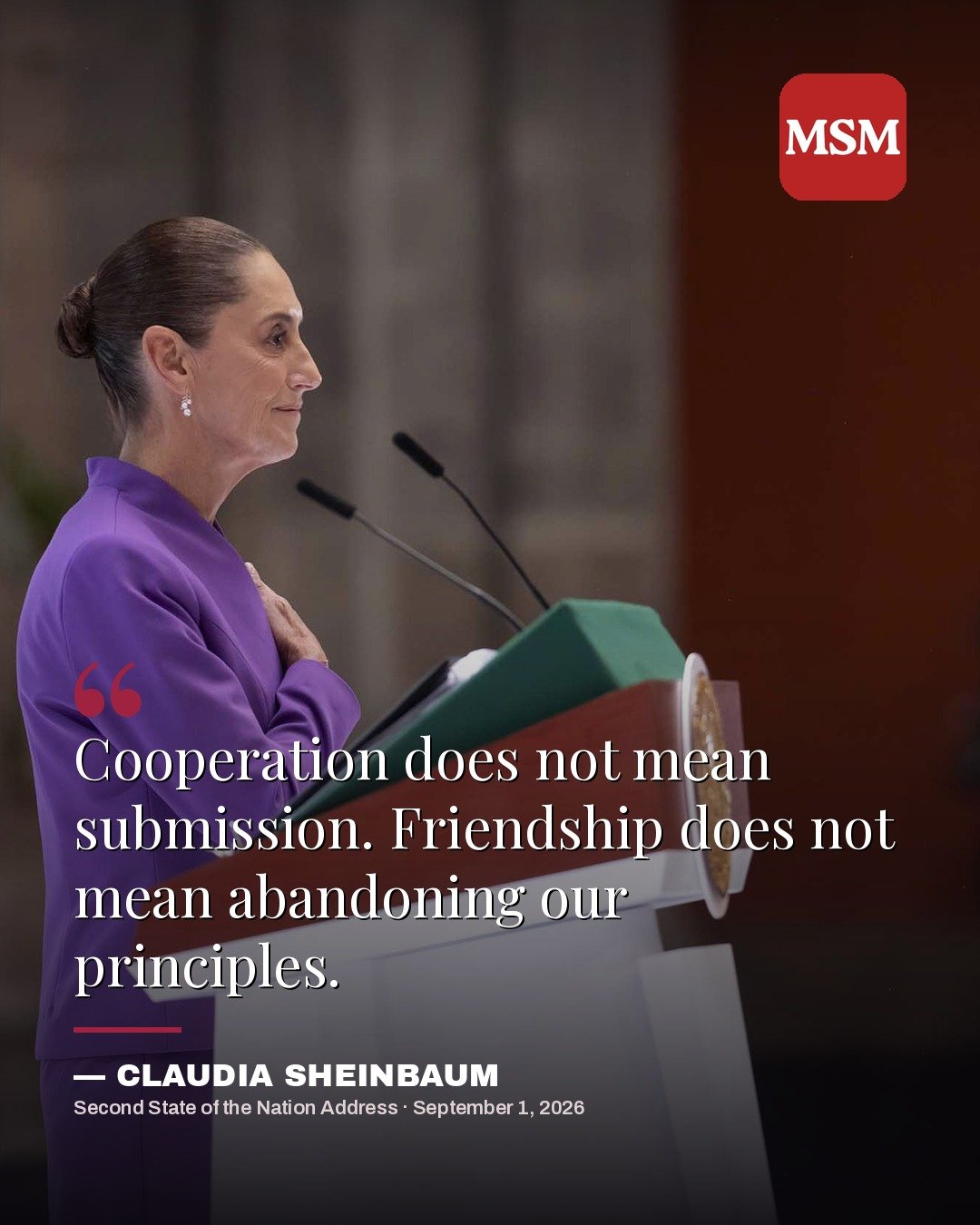
And for as long as I have the honor of serving as President of the Republic, I will firmly defend our sovereignty, our dignity and our independence.
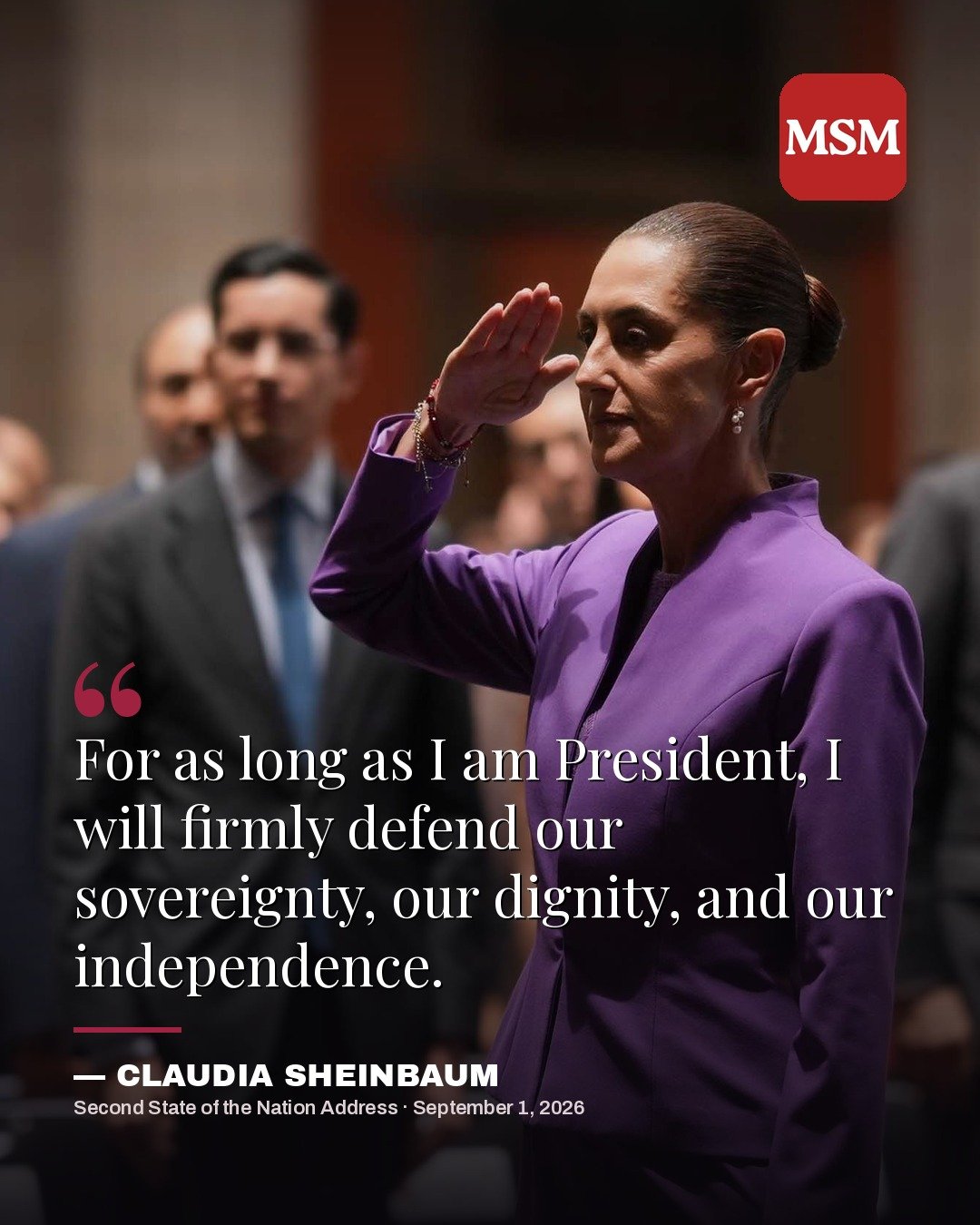
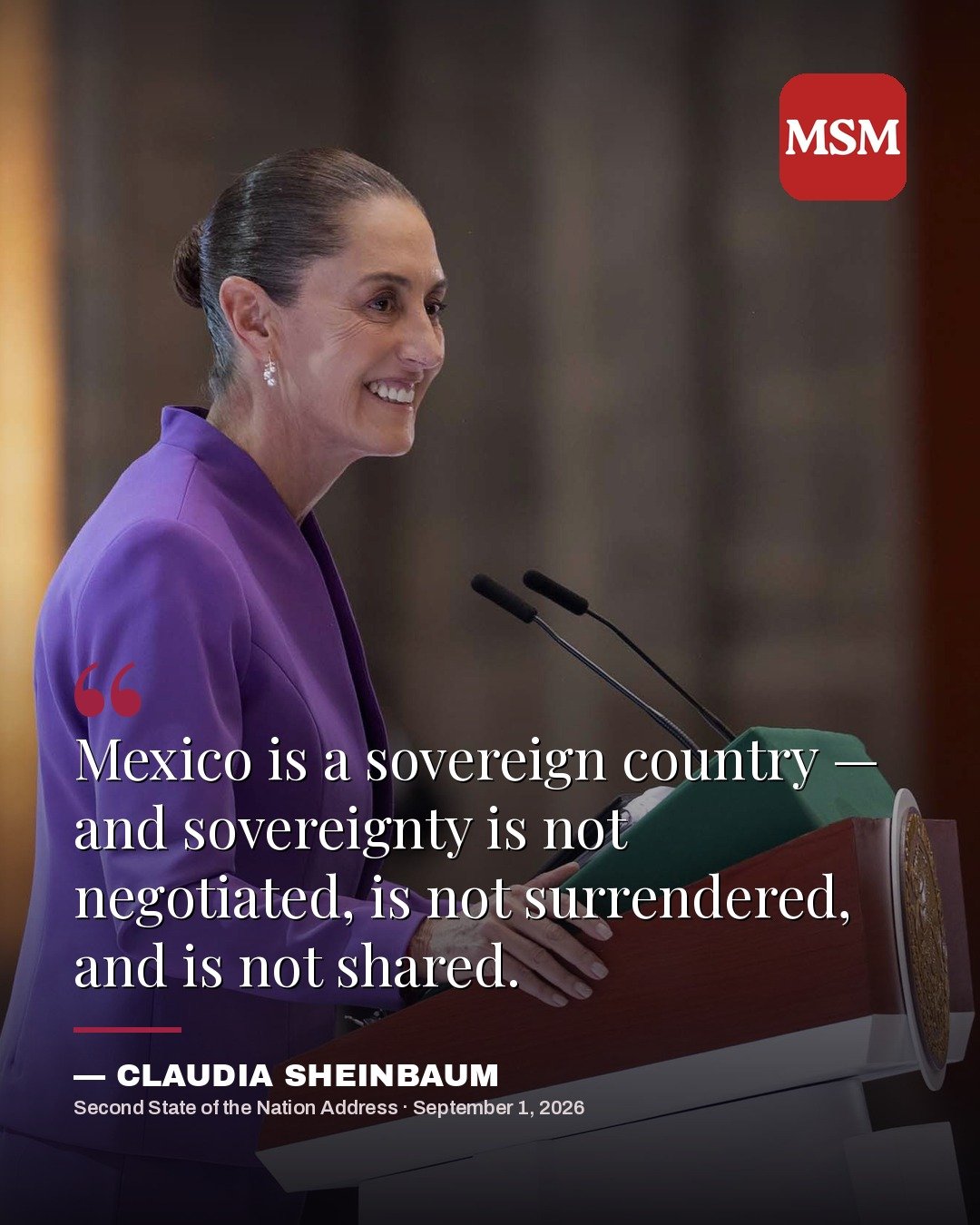
Because Mexico is a sovereign country.
And sovereignty is not negotiated.
It is not surrendered.
And it is not shared.
During these 23 months of great change, we have shown that Mexico is strong, that it has an extraordinary people, that we know how to engage in dialogue, and that we understand ourselves as a democratic country.
We are part of the project of the Fourth Transformation of Public Life.
Let no one be mistaken: there are no divisions here, there are no splits. What exists here is the defense of the people of Mexico and its dignity.
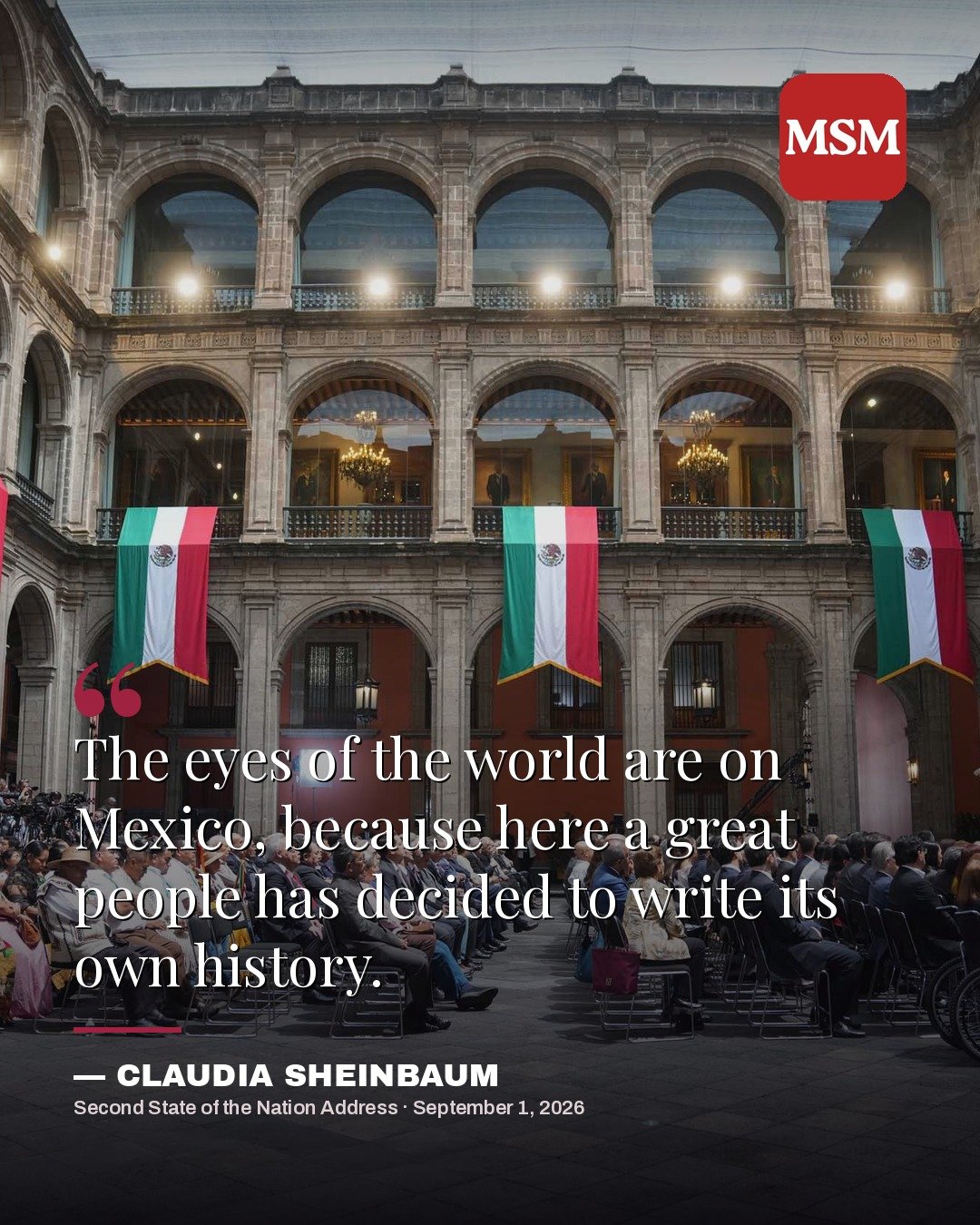
The eyes of the world are on Mexico, because here a great people has decided to write its own history.
We are consolidating a project that was born from below and places equality, justice and well-being at its center.
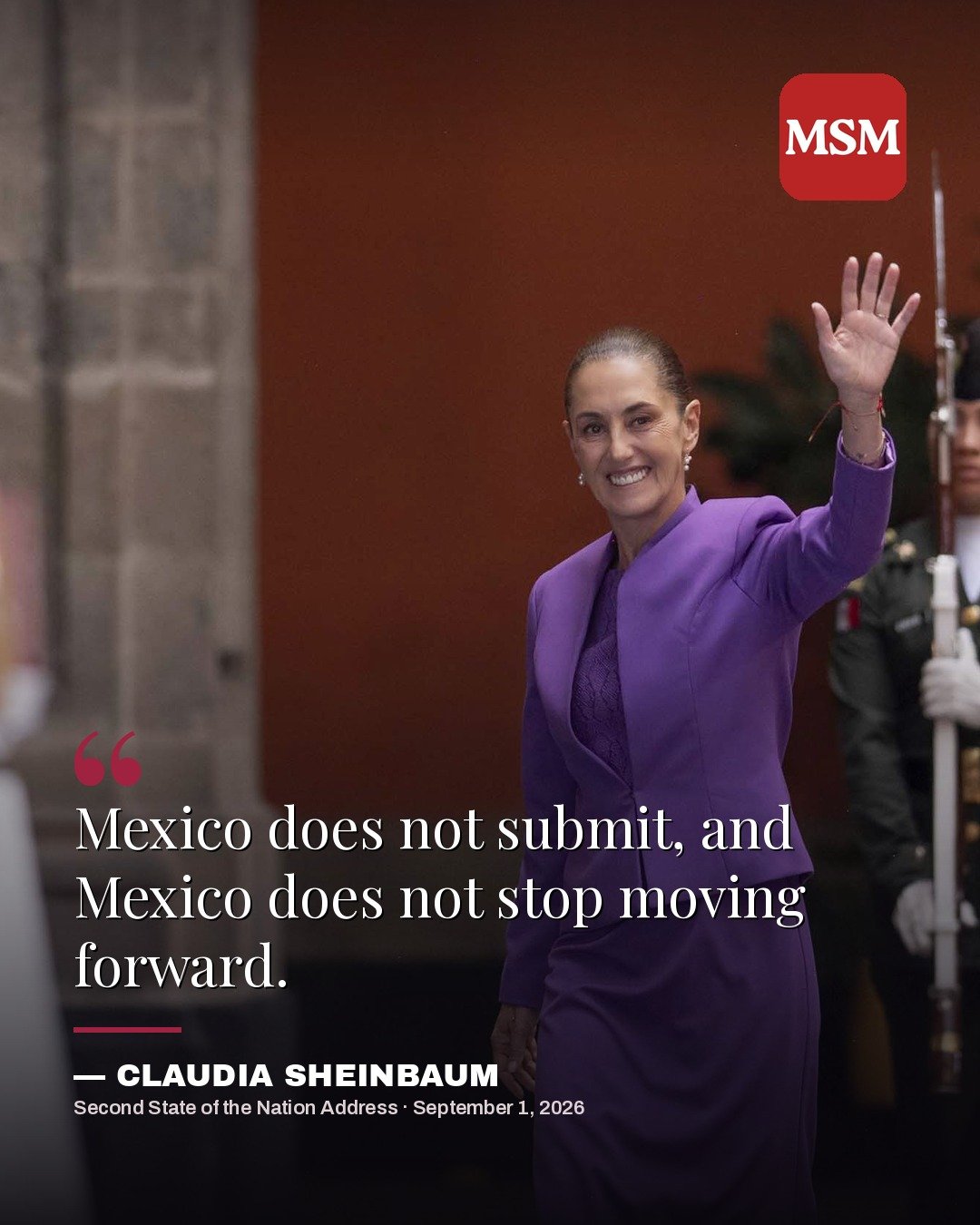
Mexico does not submit, and Mexico does not stop moving forward.
Mexico is free, sovereign, and advancing with dignity—with the strength of its people and its eyes set on a future that flows from our legacy of greatness.
We have the historic responsibility to guarantee the path of honesty and of a government that serves the people.
Precisely because we are loyal to those principles, we can give a good account of our work and guarantee a future of well-being for all Mexicans.
Let us never forget that political and moral authority is codified anew every day. It cannot be acquired with all the money in the world.
That is why—and precisely for this reason—we insist that genuine results can only be achieved through honesty.
We are doing better and we have a clear direction, because that direction is determined by the people. It is our path and our destiny.
Long live our independence! Long live Mexico! Long live Mexico! Long live Mexico!
A round of applause for the entire Cabinet, which is part of these great results.
And a thank you to the governors for attending.
Thank you.
Watch the Full Address
-
Water as a Right: Sheinbaum Reports Recovery of 5 Billion Cubic Meters
Following the reform to the National Water Law, Mexico has recovered over 5 billion cubic meters of water from private concessions, enough to supply 90 million people for a year.
-
The US: The Real Narco-State?
“Washington isn’t interested in fighting organized crime within its borders… but in using drug trafficking as a pretext to interfere in other countries,” La Jornada argues.
-
The Sheinbaum-López Obrador Rupture
“The salinistas who invoke a Sheinbaum-López Obrador split calculate that only a fight could hand them what they’ve failed to win on their own,” argues Delgado.