The US: The Real Narco-State?
This editorial originally appeared in the September 1, 2026 edition of La Jornada, Mexico’s premier left-wing daily newspaper.
The Oversight Committee of the United States House of Representatives is investigating the Drug Enforcement Administration (DEA) over a controversial policing tactic that allowed “staggering quantities of deadly fentanyl” to reach the streets while federal authorities sought to build larger drug cases. According to agency informants interviewed by New Mexico officials — the state considered the epicenter of the fentanyl crisis — their bosses ordered them to stand aside instead of seizing hundreds of thousands of fentanyl pills, in a possible violation of Department of Justice rules meant to protect communities.
Two months ago, Associated Press revealed that between 2023 and 2025, amid the deadliest drug epidemic in United States history, DEA agents allowed more than 3 million fentanyl pills to reach the streets, allegedly in order to strengthen criminal cases. In Albuquerque, the most populous city in New Mexico, DEA agents held back and watched from helicopters and surveillance vehicles as drug distributors entered hotels with backpacks believed to carry up to 100,000 fentanyl pills.
According to the agency itself, seven out of every 10 pills contain enough of the drug to cause a fatal overdose in an average adult; that is, for each backpack they let through, they became accomplices to 70,000 homicides. Of course, it is absurd to assume that every dose results in a death, but the DEA and the White House use that metric when speaking of the “terrorists” who traffic the narcotics.
Perhaps the American public may be surprised to learn of the questionable tactics of its crime-fighting agencies, but in Mexico and Latin America, Washington’s double standard is well known. On this side of the Río Bravo, society remembers the Fast and Furious operation, the perverse scheme through which, between 2009 and 2011, the United States Bureau of Alcohol, Tobacco, Firearms and Explosives deliberately allowed the sale and illegal trafficking into Mexico of more than 2,000 firearms, knowing that the buyers were organized crime groups and that those weapons would be used against Mexican police and civilians.
The hypocrisy extends to the financial sphere: a year ago, the Department of the Treasury forced the closure of two Mexican banks and a brokerage firm for “facilitating the poisoning of countless Americans by moving money for the cartels”; according to the accusations, the entities together handled less than 17 million dollars of illicit origin. By contrast, the same Treasury imposed a laughable fine of 125 million dollars and allowed UBS Financial Services to keep operating, even though this subsidiary of the Swiss financial group carried out international transfers of more than 10 billion dollars without monitoring the possible illicit origin of the funds.
This pattern of conduct confirms that Washington is not interested in fighting organized crime within its borders or in preventing drugs from reaching its citizens, but rather in using drug trafficking as a pretext to interfere in other countries. In practice, there is systematic and bipartisan protection of the multibillion-dollar narcotics business. From organizing the trafficking of cocaine to finance the war against the Nicaraguan government in the 1980s, to the boom in poppy cultivation during the occupation of Afghanistan; from the pardon of drug trafficker and former Honduran president Juan Orlando Hernández, to the program of rewards for so-called protected witnesses, it is impossible to hide that over the last half century the United States has been a true narco-state.
-
People’s Mañanera October 12
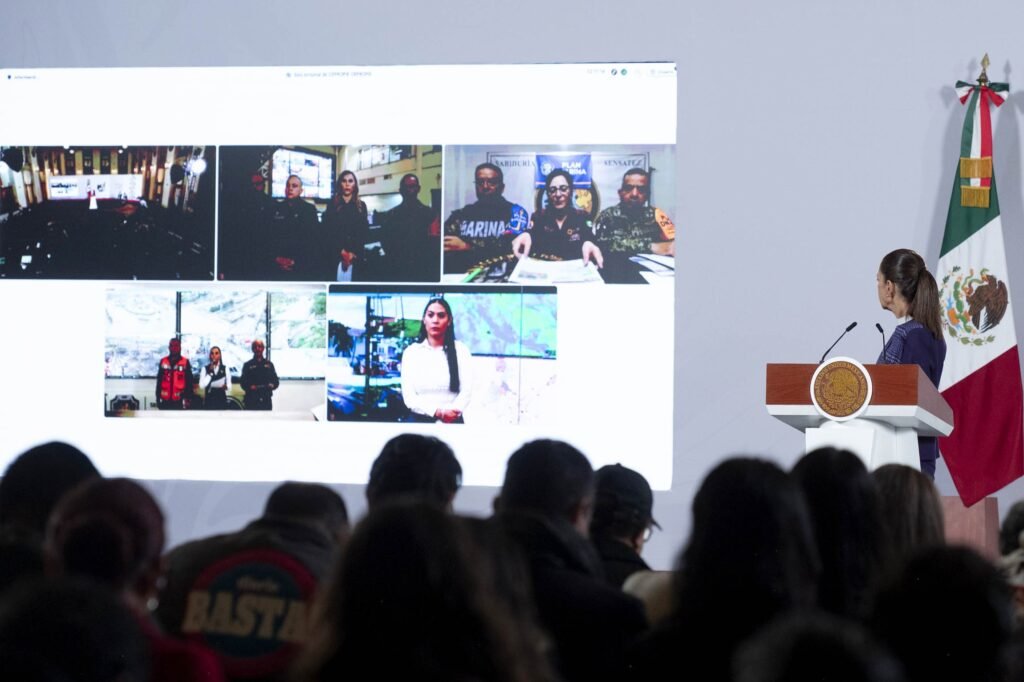
President Sheinbaum’s daily press conference, with comments on Jalisco water, the 4T, Indigenous rights, and digital disinformation.
-
The Meaning of October 12
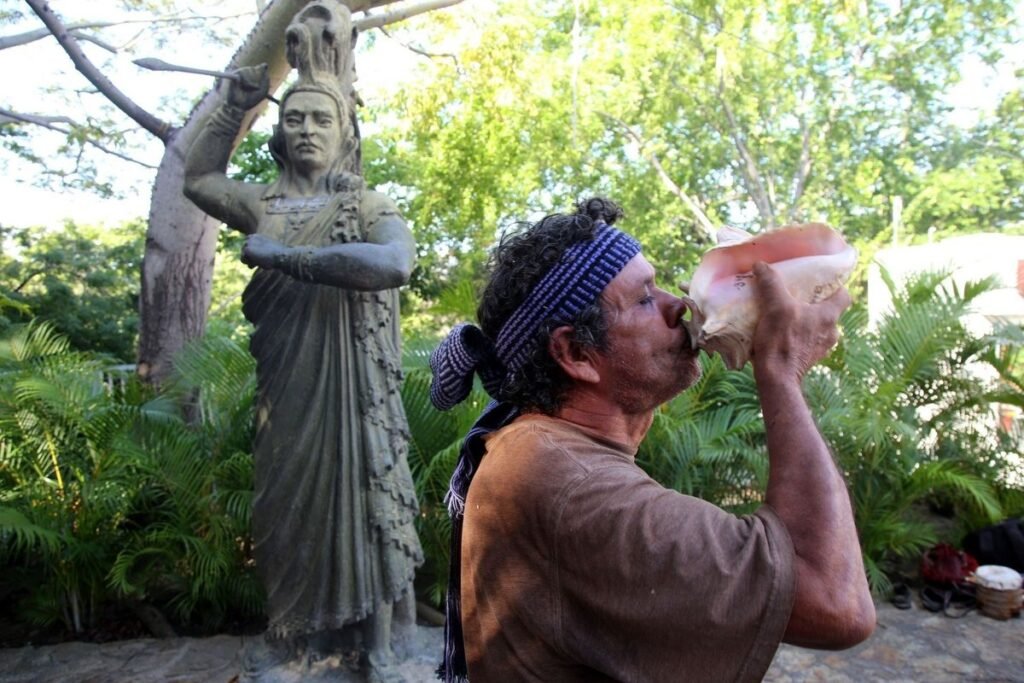
“Those lands were not empty, since they were populated by millions of native inhabitants who had lived on them for millennia,” notes Felipe Ávila.
-
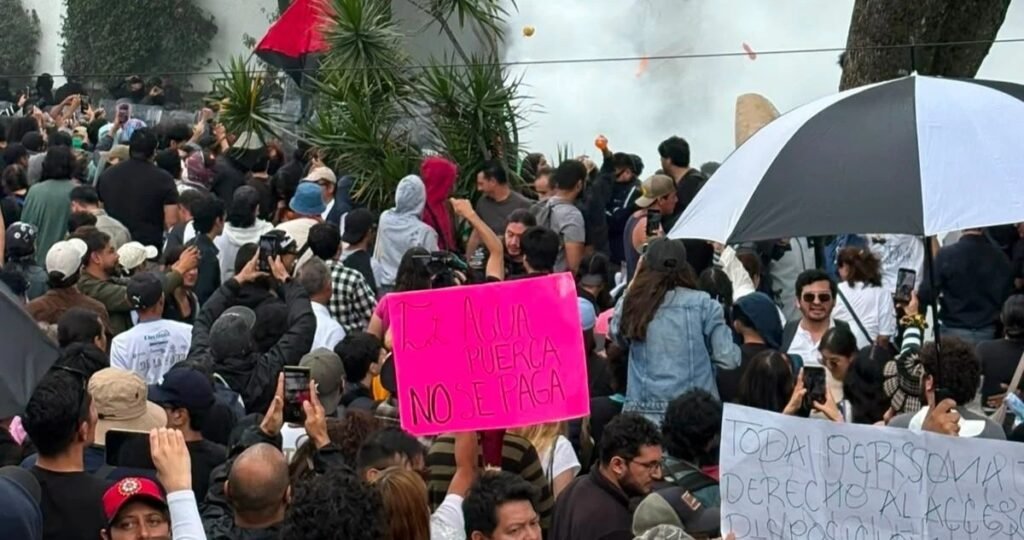
Thousands Demand Clean Water in Jalisco and Lemus Uses It to Repress Them
In Jalisco, governed by the opposition party Movimiento Ciudadano, police met the march with water cannons and tear gas, and protesters reported arrests and two people disappeared.