Two Years, One Direction
This opinion column by Juan Becerra Acosta originally appeared in the September 2, 2026 edition of La Jornada, Mexico’s premier left-wing daily newspaper.
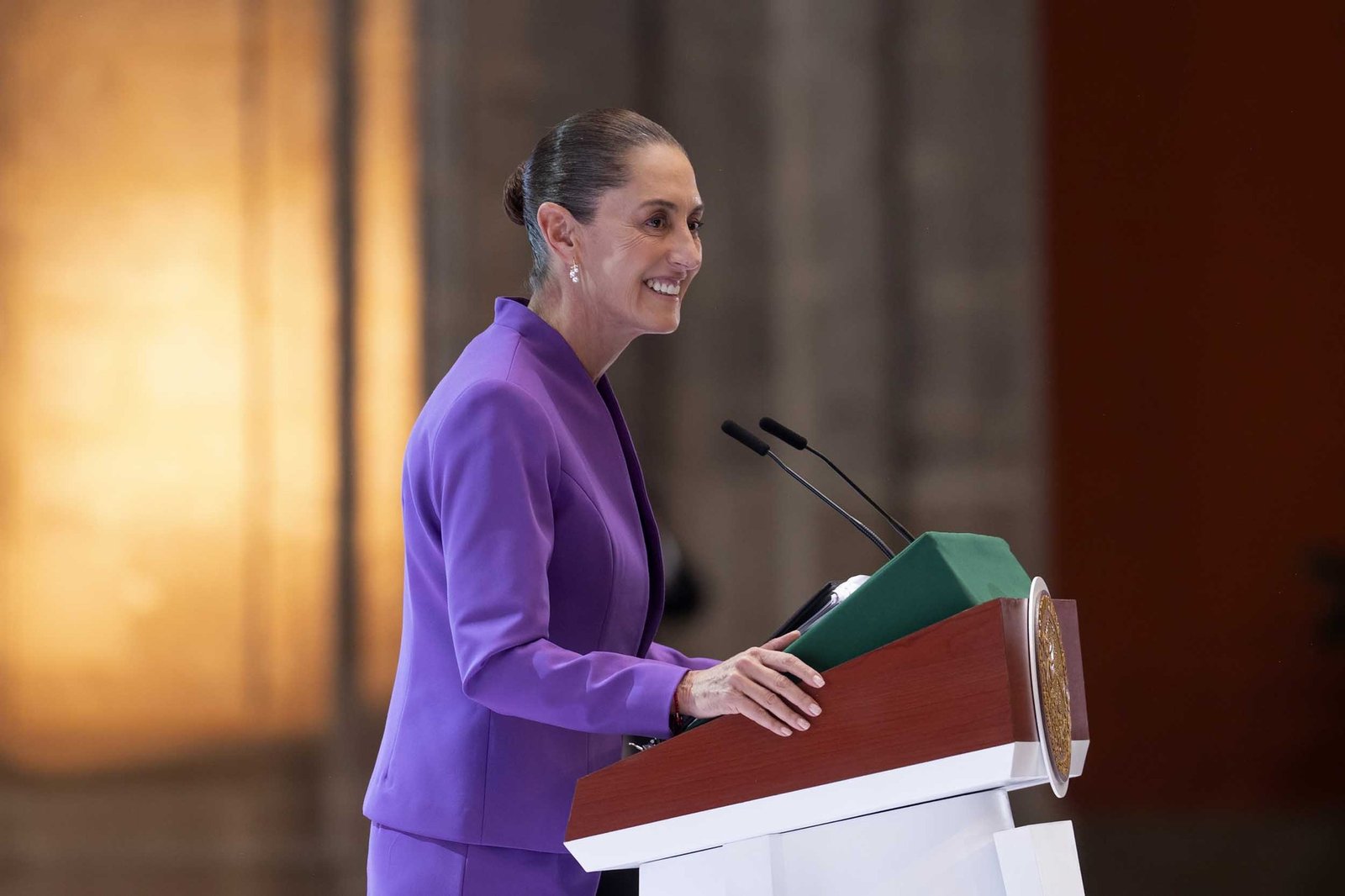
While the opposition remains at odds with reality, President Claudia Sheinbaum Pardo delivered her second State of the Nation Address yesterday, Tuesday, September 1, with data, not with stories. And that is precisely the problem for those who prefer the quip to the figure. From the Patio de Honor of the National Palace, the President reported what most of the opposition finds hard to acknowledge:
The monthly minimum wage reached 9,282 pesos, with a cumulative increase of 154 percent in real terms; tax revenue grew by 485 billion pesos compared with 2024; and intentional homicides fell by 51 percent since the start of her administration. These are not adjectives, they are numbers that the pollsters themselves—including those who do not sympathize with the 4T—have to admit.
She also announced 30,000 new positions for the National Guard, the consolidation of the 25 development hubs of Plan México, and US$3.76 billion in investments already approved. There is Olinia, the first Mexican electric vehicle, in its production phase, as a reminder that technological sovereignty is not a slogan, it is a project.
The Approval the Right Can’t Explain
For those who for years sold the tale that “the model was going to collapse,” reality remains too big for them.
The most recent poll on President Sheinbaum’s approval, published yesterday, September 1, placed presidential approval at 68 percent, with social programs as the best-rated area.
TResearch put it at 71.8 percent; MetricsMx, at 73. No serious pollster—not even the least generous toward the National Palace—places her below 65 percent.
Compare that, as Consulta Mitofsky has done, with what Felipe Calderón (61 percent), Enrique Peña Nieto (48 percent), or Vicente Fox (45 percent) had at the same point in their terms.
The question the opposition avoids asking out loud is simple: if the project were the failure they proclaim in their aunts-and-uncles chat groups, why do two out of three Mexicans still back it nearly two years on?
It is true, and it would be dishonest to omit it, that insecurity remains the main public concern, with an uptick in negative perception. But reducing intentional homicides by 51 percent is neither a minor figure nor statistical window-dressing: it is the result—on which work must continue—of a strategy that, for the first time, separates security from the media spectacle that previous administrations favored.
What Comes Next
President Sheinbaum previewed the approach of the upcoming Economic Package and defended the continuity of public investment, at a time when Washington insists on its old habit of acting first and explaining later. The message to the United States was clear: Mexico engages in dialogue, but it does not kneel.
The Second State of the Nation Address was not an exercise in self-congratulation; it was, above all, confirmation that governing with republican austerity and verifiable data continues to bear fruit in public opinion, no matter how much the opposition is eager to believe otherwise.
-
People’s Mañanera September 2
President Sheinbaum’s daily press conference, with comments on the Constitution, sovereignty, Well-Being programs, public education, US cooperation, and the Lie Detector.
-
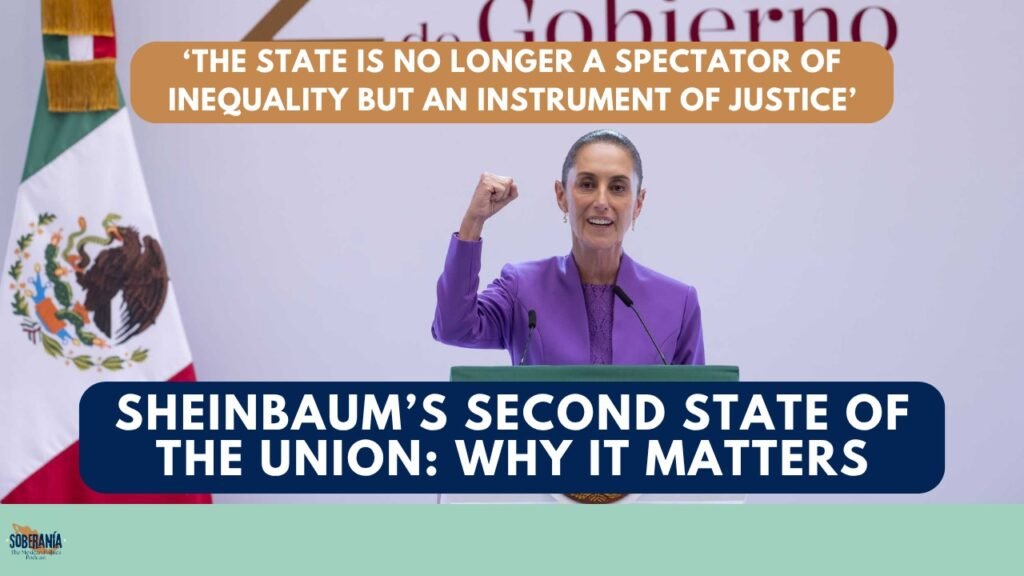
Sheinbaum’s Second State of the Union – Soberanía 122
The hosts break down Sheinbaum’s second State of the Union address, the constitutional reform to bar dual citizens from the presidency, and the controversial U.S.-Venezuela oil deal.
-
Is Terry Cole “Promoting” Harfuch? The US Has Always Sought to Divide Us, Sheinbaum Says
“They run into a wall, because Mexico’s security Cabinet has enormous coordination and unity,” Sheinbaum said, dismissing US attempts to divide her government.