Moral Authority
This article by Fabrizio Mejía Madrid originally appeared in the September 4, 2026 edition of SinEmbargo, a Mexican independent news outlet.
“There is a political courage that does not come from ambitions but from convictions. It is what makes the difference between leaders and leadership.“
In recent days we have heard much discussion of results and data regarding the second year of Claudia Sheinbaum’s government. But we have not heard anyone refer to what makes those successful results possible—in investment, wages, labor poverty, security, infrastructure, and with the United States. It is called moral authority. It is different from political authority and legitimacy because it is not something measurable in millions of votes or in approval ratings, although these are useful for us to see it.
We understand moral authority as the consistency between a person’s values and their daily actions and attitudes. This coherence generates trust and respect beyond mere obedience. Moral authority is not a legal matter; it is the integrity of a person’s character. But when we speak of a President, that character exists outside the laws or of simple institutional power. Its weapons are persuasion, wisdom, and knowing how to lead by example. Moral authority is the capacity to influence others through the way one lives. It is not about personality, popularity, or technique. It arises from character. It grows when a person constantly aligns their life with what they consider true and good. Moral authority emerges when one acts for the good, even when it is not convenient. That is why it is moral and not a calculation. In the two examples we will look at—one of AMLO and another of Claudia—these are not tactical decisions but decisions of conviction. As Cicero wrote: “If power is by nature indivisible, there must exist something external to it that limits it.” That role is morality, the distinction between good and evil.
But first its political dimension. When this moral authority enters into a relationship with citizens, a space of shared values is created where honesty, justice, and treatment among equals are the substance, not just the form. The display of those shared values in a public space is an ethical commitment. There, there are no linguistic constructions or media manipulations.
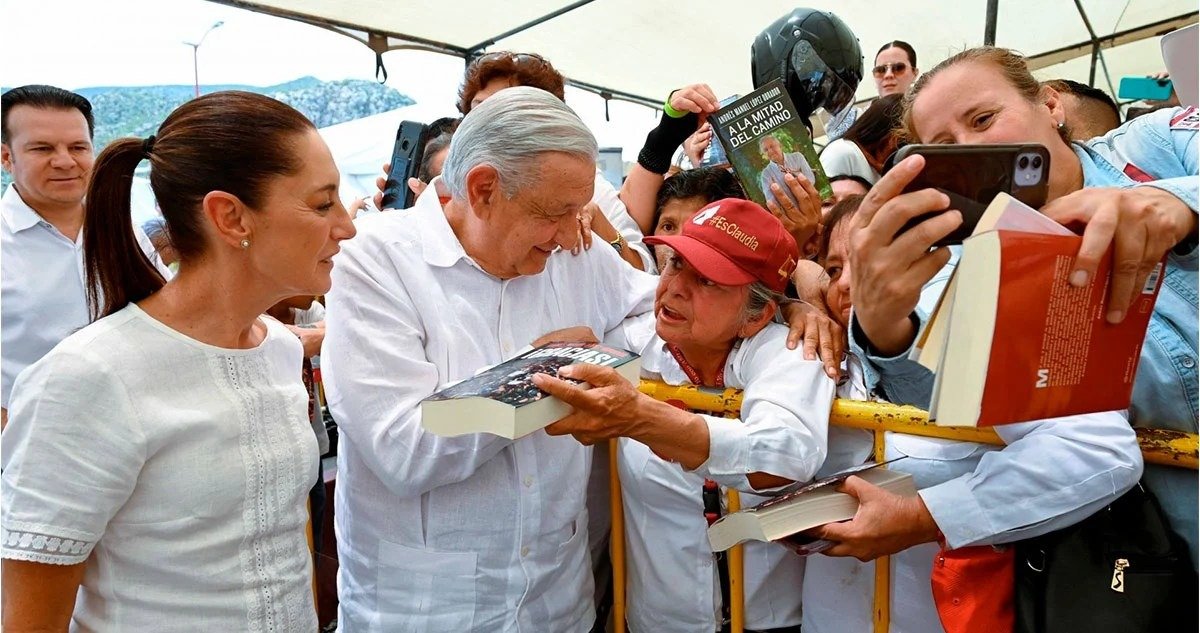
It was López Obrador who was able to bring this type of authority to the Presidency of the Republic. As a leader of the opposition he was consistent between words and deeds, which he called his maxims: “Do not lie, do not steal, do not betray the people.” Once in the National Palace he continued to preserve that integrity between values, way of governing, and character, which renewed the trust of many more than had originally voted for him. “Love is repaid with love” was the slogan he found to reflect that relationship of political trust in the democratic sphere.
The former president who preceded him, Enrique Peña Nieto, utterly lacked integrity and, therefore, depended on publicity to be regarded as a ruler. From the financing of the PRI campaign that brought him to the Presidency through the purchase of five million votes, he entered into collusion with Odebrecht, the Spanish electricity companies, and with Israel’s espionage-equipment services, through his crony Avishai Neria, with whom he was photographed this week at a wedding in Portofino, Italy—at the wedding of another of the Israeli partners in Mexico, the singer Omer Adam. Peña Nieto had denied knowing Neria and Uri Emanuel Ansbacher, who sold to Tomás Zerón and to several governors, and even to private individuals—allegedly to Isabel Miranda de Wallace—the Pegasus system for infiltrating cell phones. Peña denied it when it appeared in Tel Aviv’s The Marker, but now he was filmed alongside Neria at a wedding.
It was not only lying that prevented Peña Nieto from having a gram of moral authority. It was his television contract, the sacks of money he spent on self-promotion, and the fact that he was the puppet of a group of businessmen, such as Claudio X. González. When he was no longer useful to those businessmen who were going to earn billions both at the Texcoco airport and on the Mexico City–Querétaro train that was cancelled, they let Peña Nieto fall into disgrace by disclosing that the house he lived in was part of a bribe. He could not defend himself. He had no authority of any kind, neither moral nor political. There remains the photo in which José Andrés de Oteyza, director of OHL, scolds him in public. As for the one before Peña, Felipe Calderón, we won’t even go there. He was capable of leading a massacre that exceeded even his six-year term just to legitimize himself in an office obtained through fraud. He was capable of saying that one part of Mexicans should die so that the other could live in peace. And he calls himself a Catholic. But let us not even speak of the one who lied by saying he was protecting the national interest when all he did was defend the Sinaloa Cartel and the policies of the DEA.
By definition, morality and authority stand at opposite ends of the space of social relations. Morality concerns correct conduct—the distinction between right and wrong apart from the power of the Law—while authority implies the faculty to decide, order, and make others obey. But, since moral authority is a political and not a legal consideration, obedience can turn not only into approval but into open support to take part. This was especially notable when, between January 9 and 15, 2019, López Obrador ordered the closing of Petróleos Mexicanos’s pipelines to stop the illegal extraction of gasoline and asked motorists for patience. Waiting in line for gasoline was understood as an act of political participation to help the government combat theft. At that moment, the President reached an approval level of 80 percent. This did not only mean that people approved of stopping the so-called huachicol, but that they recognized in AMLO the moral authority to carry it out. That is why the opposition’s brilliant ruse has been to try to link López Obrador, his collaborators, his fellow countrymen, and even his children precisely with the issue that brought him the most support. They have not been able to, because of the moral authority he still has, even far from the public arena.
For her part, President Sheinbaum obtained her highest approval level—83 percent—in May 2025, when she debuted the slogan “Cooperation without subordination.” Some 53 percent declared themselves ready to defend the country, while 71 percent rejected any kind of interference from the United States. Her moral authority came, then, from not bowing her head before a more powerful adversary. This would have been expected from the PRIAN, but not from the left. Cunning in the face of the powerful is a cultural value throughout the country. The space of shared values includes, besides honesty and the dispensing of justice, also temperance and dignity. That attitude of not provoking the advantaged adversary but also not yielding in the defense of our national sovereignty coincided with a set of shared cultural values in Mexican society, such as defensive patriotism, cultural resistance in the face of a far greater power, and the activation of community cohesion. What moves those values is that the dignity of Mexicans cannot be negotiable, above all in a situation where the main aggressor is the greatest economic and military power on the planet. There, temperance and firmness—Sheinbaum’s “cool head”—were the glue of adherence to her moral authority. The defense of the Nation’s strategic interests was attacked by the PRIAN once again as it declared itself ready to receive the armed forces of the United States, their agents of the CIA, the DEA, and even ICE, or making a pilgrimage to Washington to plead for help in the face of a catastrophe that excites only them. They were wrong again, because Claudia has moral authority.
Moral authority is not only spoken, it is exercised. It is consistency of actions, behaviors, and even of the character’s style. A ruler faithful to themselves generates trust to act. But a ruler who is, moreover, consistent with what the people expect of him or her has moral authority. That is why I believe that both the President and the new leadership of her party have insisted in recent days on honesty. Not only to preserve moral authority, but because it is a value tied to prosperity. One need only look at the times of Peña Nieto, when corruption was said to be “cultural,” at how the budget never sufficed for the well-being of the majority. With honesty as a way of life and austerity—not of the workers but of the government—historic distributions of social justice have been achieved. Honesty and doing good are two values that have proven to be part of a majority of Mexicans. Theft and plunder, conflict of interest, nepotism, and influence-peddling must be publicly condemned when practiced by rulers and businessmen. But there still remains the horizon of condemning greed as a way of life, one of the burdens of neoliberalism and of the concentration of enormous fortunes in a single family. If there is morality in the exercise of politics, it should also exist in the realm of business.
From Salinas de Gortari to Peña Nieto—that is, the entire period of the neoliberal PRIAN—it was said that morality was not a public matter but only a private one, and that everything was very relative when it came to distinguishing good from evil. When rulers and businessmen were caught in some swindle, they always said it was legal, because indeed decency as a dimension of public affairs is not something constitutional, but a matter of the expectation of the governed.
The bond established between rulers and the ruled on the basis of public virtues is what makes moral authority a political matter and not a religious or private one. It does not descend from the heavens, whether divine or presidential. Nor is it shut away behind the doors of homes. It is a space of public encounter of values as universal as honesty, justice, equality, prosperity, and happiness in community. The consistencies between the two and, in turn, with the President’s conduct have generated moral authority, a kind of affection that is political.
There is a political courage that does not come from ambitions but from convictions. It is what makes the difference between leaders and leadership, between managers of an administration or conductors of a Nation. The two examples I have given—when both AMLO and Claudia have had almost total approval levels—have to do with that character: adjusting particular interests to the general interest, and being brave. It is not the arrogance of Lorenzo Córdova. It is not the thuggery of “Alito” Moreno. Nor is it dressing up as a soldier with the sleeves hanging, or wearing boots and a hat, or chewing gum. It is moral courage. And it is understanding that, at this moment, elections will not be about competence, but about convictions, ideology, and values shared with the people. In sum, they will be about moral authority.
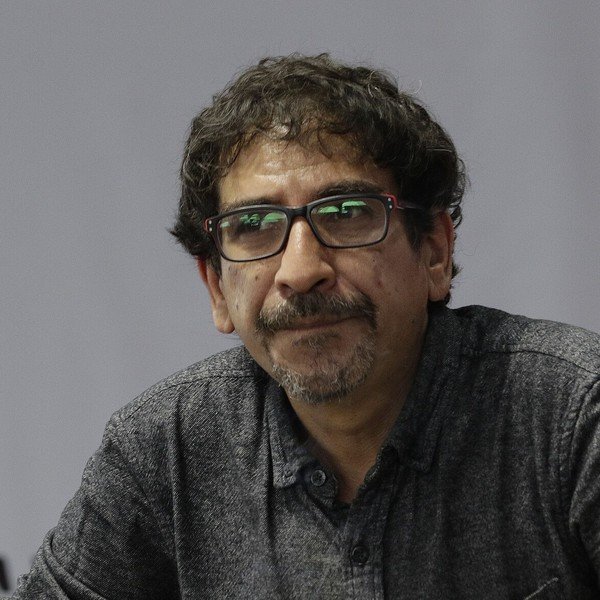
Fabrizio Mejía Madrid is a writer and journalist.
He contributes to La Jornada and Aristegui Noticias. He has published more than 20 books, including the novels Disparos en la oscuridad, El rencor, and Tequila DF, among others.
-
Mexico’s Pemex Cuts Debt by More Than US$20 Billion and Raises Refining 81% Compared to 2018, Carpio Says
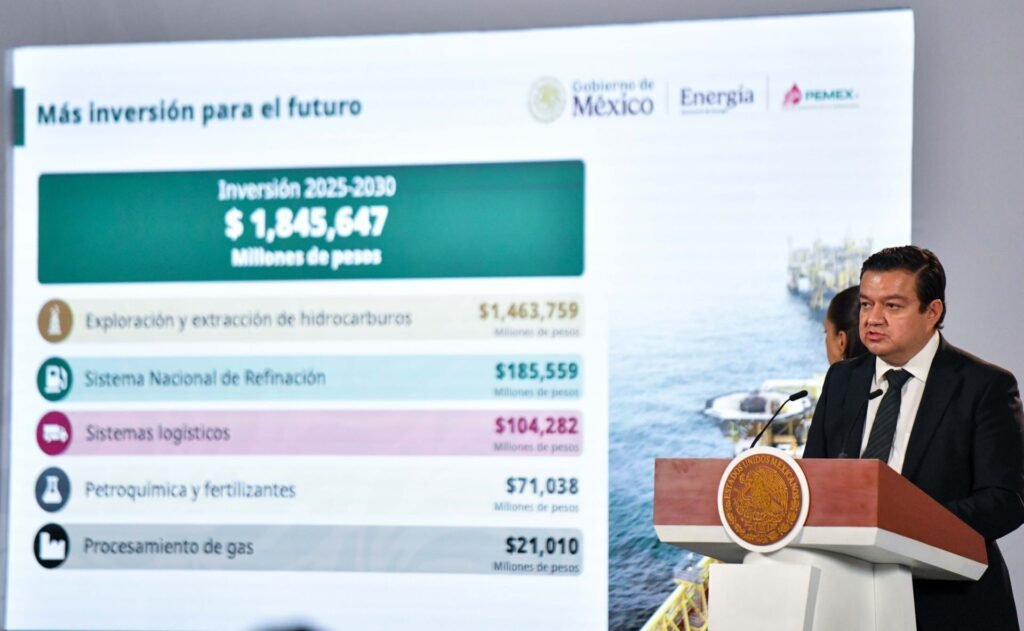
The oil company says its own refineries now supply 87 of every 100 liters it sells, up from 24 in 2018, and plans 1.8 trillion pesos of investment through 2030.
-
Sheinbaum Rejects Collusion With Crime; Fires Back That There Was an Alliance Between the PAN and Criminals
She cited the more than 50% drop in homicides as proof and recalled Genaro García Luna, the PAN-era security secretary tied to criminal organizations.
-
People’s Mañanera October 22
President Sheinbaum’s daily press conference, with comments on Plan México, housing in Guerrero, foreign agents in Chihuahua, and IMSS wages.