A Bigger Plan
This editorial by Alejandro Páez Varela originally appeared in the February 16, 2026 edition of Sin Embargo. The views expressed in this article are the authors’ own and do not necessarily reflect those of Mexico Solidarity Media or the Mexico Solidarity Project.
1. The Past that Calls
Of all the fears that Andrés Manuel López Obrador expressed publicly – and there weren’t many, but they were specific – one that he carried like a sack of rabid cats was the possibility of an abrupt return of Mexico to a past that the 2018 election was supposed to leave behind.
In a world of electoral trends and fabricated majorities, of social media and media manipulation, the most profound social processes can be abruptly halted without military coups, simply through popular vote. Governments born from political maneuvering (with underhanded campaigns and mudslinging) would have to answer to the Constitution. This is why AMLO pushed for pensions and other achievements of the new Welfare State to require a constitutional majority to be reversed; and it is precisely this concern that led the López Obrador movement to fight tooth and nail until it forced the transformation of the Judiciary.
More than seven years have passed since AMLO and the López Obrador movement took power. The question is whether the former President’s fear still exists. The answer is yes. The risks of a right-wing resurgence persist. I see it in some of the President’s decisions, but even without seeing it explicitly, given that she is an intelligent and highly analytical woman, I know she understands it and therefore calculates the risks.
Could such a discredited opposition still attract voters? Of course it could. Highlighting its “merits” didn’t work; neither did the strategies of the likes of Claudio X. González, Carlos Salinas, and Diego Fernández de Cevallos. To advance, it must destroy the reputation of Claudia Sheinbaum’s inner circle, with attacks from both within and without.
Mario Delgado’s mishandling of the Marx Arriaga case is giving ammunition to the President’s enemies; she can’t allow that. The Julio Scherers will multiply. And TV Azteca, Televisa, and their media subsidiaries are hunting down every mistake and every betrayal because they need it.
The left-wing movement must not view recent campaigns as mere coincidences or isolated events. They are part of a larger plan, and anyone who fails to see this is either naive or, worse, negligent and careless.
2. The Right’s Manual
Seven years of left-wing rule is, in reality, a very short time in the life of a nation. Many right-wing and far-right powers remain intact and have ways to resist for even longer. In particular, economic and media powers are seizing their opportunity.
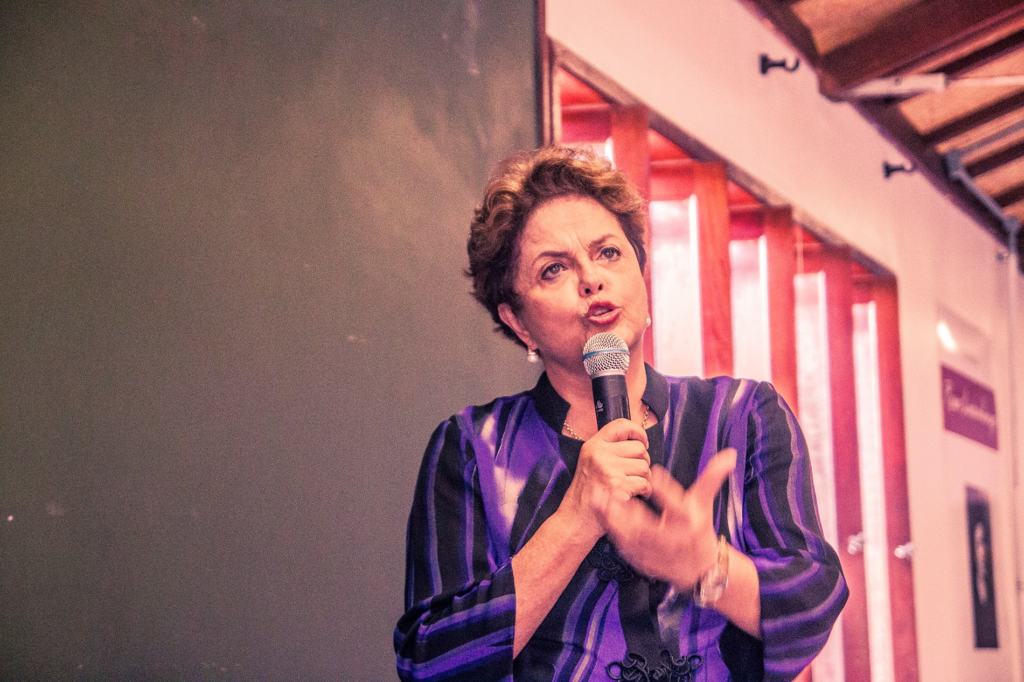
When Dilma Rousseff was impeached as President of Brazil, the Workers’ Party (PT), the political force founded by Luiz Inácio Lula da Silva, had been in power for 13 years. That’s almost twice as long as the current administration has been in office. But 61 of Brazil’s 81 senators voted to oust her in a rigged, opaque, and unjust process. How did the powers that be manage to amass such unprecedented strength in Congress? Through a mountain of (excuse my language) bullshit. And in an instant, presto: Michel Temer, a right-winger who swore he was part of the President’s coalition, seized power.
Before the congressional coup—and this is where I want to take you—there was a very intense campaign. First, social media and television amplified common narratives: “the left is criminal, the left is corrupt, the left is deceitful, and the left is the same as the right.” They attacked every level of the ecosystem built by progressive forces. They launched attacks against all progressive politicians, officials, journalists, and media outlets, even inciting violence against them. Shamelessly, without moral or ethical limits. Just like Ricardo Salinas Pliego or Alejandro Moreno Cárdenas are doing now.
Dilma’s poll numbers plummeted. And then the supposed “spontaneous groups” of “citizens” began to take to the streets, claiming to have “organized via WhatsApp.” Just like the ones organized in Mexico by Claudio X. González, the PRI-PAN factions, the remnants of the PRD, and former officials from the electoral bodies and the judiciary.
During the PT’s first term in power, television networks and the traditional press became almost allies of Lula. I repeat: they presented themselves as ALMOST allies. It was a period of peace that lasted for a considerable time. Even Temer, who succeeded Dilma, was an ally of the left, and the Brazilian Democratic Movement, his party, was part of the ruling coalition. The same is true of Manuel Velasco, Ricardo Gallardo, and the Green Party in Mexico.
I see groups within Morena that would readily betray the left if necessary, and almost anyone can identify them
Dilma maintains that it was they, those on the inside, who orchestrated the final coup. The former president accused them, and continues to accuse them to this day, of being conspirators. The MDB was a marginal, parasitic force, devoid of ideology, that captured politicians from any political stripe in order to survive. A catch-all party, a meta-party, or a sweeping party, as it’s known there. Just like the Green Party here. And the MDB was nothing without the left, just like the PVEM here.
But they were waiting for their moment. And when it came, they released fake audios and videos; rumors and leaks to the press, like the Green Party with, for example, Pío López Obrador. And one day, when they needed it most, Temer’s party turned its back on its leftist allies and, with the seats it had gained in Congress thanks to Lula and Dilma, voted in favor of the legislative and judicial coup. Dilma Rousseff went into exile. Lula and others went to jail. And the PT almost disintegrated.
The street protests against Dilma Rousseff only took shape after the real groundwork had already been laid. This is crucial. It was a process that took months, even years. Journalists from Brazil’s old regime, academics, intellectuals, and traditional media outlets dedicated themselves day and night to lying and denigrating the President, Lula (as they do here with AMLO), and anyone else who was on the left. Television networks and social media unleashed their full force, turning the attacks into a 24/7, 365-day-a-year campaign.
It was then, in that tense atmosphere, that supposedly citizen-led organizations like Vem Pra Rua (Come to the Street) emerged, easily gaining followers. The left, divided by the accusations, didn’t know how to respond. The right, powerless, formed a united front. The perfect storm had been created.
Vem Pra Rua, a Mexicans Against Corruption group, specialized in web tools, such as the so-called Impeachment Map, to create networks of like-minded groups. They then personalized their harassment of left-wing politicians with a Wall of Shame that closely resembles the tactics employed by Televisa, TV Azteca, and allied media outlets, who are paid to harass journalists they identify as progressive. I have information on this latter point, which I will share in due course.
The “citizen” movement organized a kind of “Brazilian Pink Tide”, like the Mexican one, and tried to keep its financiers secret; just as Latinus, which is owned by the family of Roberto Madrazo, tried to do; or as Mexicans Against Corruption sought to do, which received funds from the United States State Department and from large capital in Mexico.
However, Vem Pra Rua was exposed, just like the two previous media outlets. Behind it was Jorge Paulo Lemann, banker, businessman, and former tennis player, the richest man in Brazil and owner of 3G Capital and brands like Burger King, Tim Hortons, Anheuser-Busch, Kraft, Heinz, and many others. In 2023, Lemann had slightly more than Ricardo Salinas Pliego did at that time: $17 billion. The difference is that the owner of TV Azteca burned through an unprecedented amount of approximately $10 billion in two years, while the other, made in real business, has remained stable.
It would later be revealed that the Brazilian “Pink Tide” was coordinating with several of those in charge of the anti-corruption operation known as Lava Jato, which evolved into a soft coup against Lula, Dilma, and the PT. The organization presented itself as “non-partisan,” but it soon became clear that it was anything but independent. The same is true of the organizations that promote Claudio X. González and others who lend themselves to his schemes.
I’m not saying the Mexican right copied the Brazilian right. Don’t be mistaken. Those operational manuals are actually universal within those coup-plotting movements that have indeed managed to reverse the advances of the left in Latin America and that salivate at the possibility of destroying what the López Obrador movement has achieved in Mexico.
3. In Progress
Everyone I’ve spoken with recently—some of whom analyze networks—has found traces of new cells operating in Mexico as part of what some call a “grand plan” against the left, in the lead-up to the 2027 midterm federal elections and as a rehearsal for the 2030 elections. Ricardo Salinas Pliego appears in several analyses as a kind of interface between these networks. This may be, I’m told, because he’s one of the main financiers of campaigns against individuals and sometimes against institutions. But he’s not alone. Because of his prominence, and even his desire for revenge, he appears in almost every attack. But it’s clear to me that the Televisa apparatus, more astutely, is working independently.
A friend who works with an analysis group told me it’s clear there are several slush funds being used for financing, even partisan ones. The PRI appears in several of the networks financing bots, troll farms, and so on. The PAN is more cautious, but it’s undoubtedly part of these new networks that interact with and reinforce each other’s strengths. And there are some governors—pay attention to this—who are funneling money into media outlets that are primarily digital. That’s what’s happening on social media.
But the real danger, according to what I’m told and following Brazilian logic, lies with the television networks. They can set the stage for an attack on their news programs, then help spread it on social media, and then bring it back to the networks, in a continuous flow or loop that can gain such momentum that it becomes organic and devastating. This is what TV Azteca does constantly with President Sheinbaum and some figures on the left. The network’s brand accumulates a lot of disrepute and loses credibility, but it does damage, a lot of damage. These are artificial storms, but storms nonetheless. Anyone who has experienced them knows how they affect one’s morale and leave a stain, even if they are immediately denied or eventually dissipate.
I believe the left in power should look for similarities in Brazil’s strategy (which, given its size, provides data highly relevant to the Mexican case) and activate its “minesweeper” radar. Among the government’s allies, I don’t see the Labor Party as part of a larger plan, even if it’s driven by petty interests; on the other hand, I clearly see the Green Party, and I would put a big spotlight on it, or several big spotlights. I see groups within Morena that would readily betray the left if necessary, and almost anyone can identify them: where do Gibrán Ramírez, Alejandro Rojas, Sandra Cuevas, and others who have been used by the opposition to attack López Obrador’s movement come from? You guessed it without much difficulty: yes, from the Monreal family. But there are several Monreals within the movement. Ricardo and his family aren’t the only ones. I would also pay close attention to Adrián Rubalcava, because in the past he has resorted to dirty tricks against his adversaries, as the National Security Commission proved in an investigation some years ago.
I’ll close with this: López Obrador’s fear of Mexico’s abrupt return to the right still applies today. Progressive forces must be united and active. Mario Delgado’s clumsiness in handling the Marx Arriaga case cannot be repeated; it seems the Secretary is a specialist in creating conflict. Beware. The Julio Scherer Ibarras are going to multiply. Expect them. Proceed cautiously. Keep a cool head and be very vigilant, because the larger plan is only in its testing phase.
The President, I believe, must shift from defense to offense. That’s what Dilma, Lula, and the Brazilian Workers’ Party lacked. She must be aware that if she allows these shadowy powers to continue strengthening, it will be too late when she finally wants to do something. How can she act, within the framework of the law? Well, therein lies the challenge. But the television networks are undoubtedly part of the larger plan. In fact, they are the nodes of the networks being woven to ensnare the left and to tear her, Claudia Sheinbaum Pardo, to pieces.
-
Veracruz: Oil Spill Victims Complain Of Insufficient Action by State Government
Residents of Pajapan, who live around Laguna Ostion, demand that the authorities take prompt intervention to solve the hydrocarbon spill in the southern part of the state of Veracruz.
-
San Luis Potosí Goodyear Workers Threatens Strike After Salary Increase Refusal
While Mexico’s general minimum wage has had a real increase of 116% in the last seven years, SITGM workers have received only 15.2% increases in the same period.
-
FIFA’s Cola Cup & Dystopian Horror
The World Cup’s arrival in Mexico is a stark illustration of the absurdity of the world we’ve reached thanks to the power of large corporations; of the crisis of our current civilization, a society trapped in a power economy, manipulated by addictions.