Concessions, Concessions, Concessions
This article by Aleida Azamar Alonso originally appeared in the February 27, 2026 edition of Rebelión.
Over the past year, the mining sector in Mexico has shown growth in revenue and activity that contrasts sharply with the periods prior to 2024. This rebound can be largely explained by speculation surrounding precious and strategic metals in an international context marked by economic uncertainty, geopolitical tensions, and disputes over supply chains. However, it is also important to mention the approach of the new government, which seems to be seeking to maintain formal control over the mining concession regime while simultaneously maintaining channels of active dialogue with the industry. This strategy of regulatory discipline on the one hand and openness to economic dialogue on the other represents a different approach from that of former President Obrador, who opted for structural containment.
President Claudia Sheinbaum has insisted that mining legislation will not be modified, no new concessions will be granted, and no agreements will be sought that break with this approach. Meanwhile, Economy Secretary Marcelo Ebrard has led dialogues with both international actors and representatives of the national mining sector, particularly within the framework of the action plan on strategic minerals with the United States, as well as in talks aimed at streamlining procedures and strengthening Mexico’s position in value chains considered critical. This suggests a calculated shift toward regulatory firmness in rhetoric and strategic openness in practice, with all that this implies in terms of reconfiguring the state-business relationship, exposure to geopolitical pressures, and potential socio-environmental tensions in territories where strategic projects are concentrated. It appears that this is not a policy of confrontation with mining, but rather an attempt at “balance” between regulatory sovereignty and participation in a global market increasingly strained by speculative and political interests.
In this context, two events emerge that are far more significant than they appear: a) the voluntary return of over 200 mining concessions by private companies; b) the administrative recovery or cancellation of over 1,100 concessions for non-compliance with legal obligations. More important than the numbers themselves is that these developments reveal the balance of power and the state’s room for maneuver in relation to a historically influential sector.
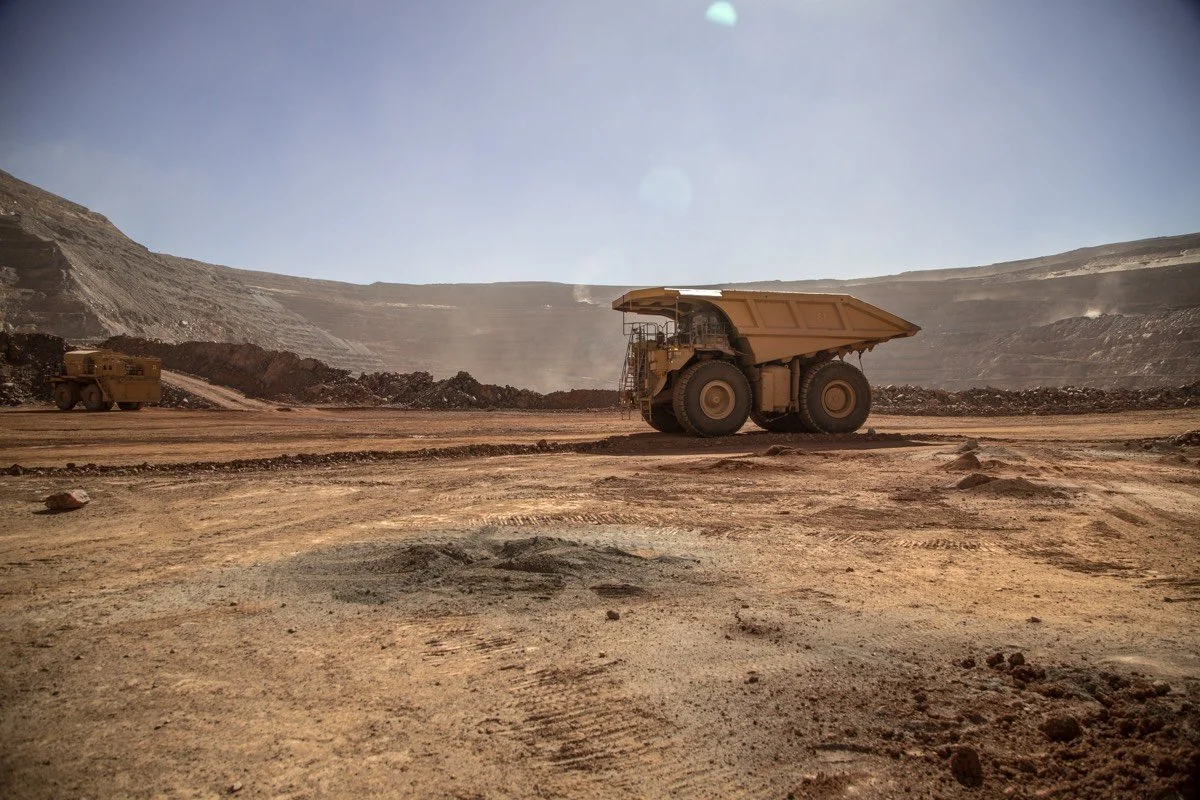
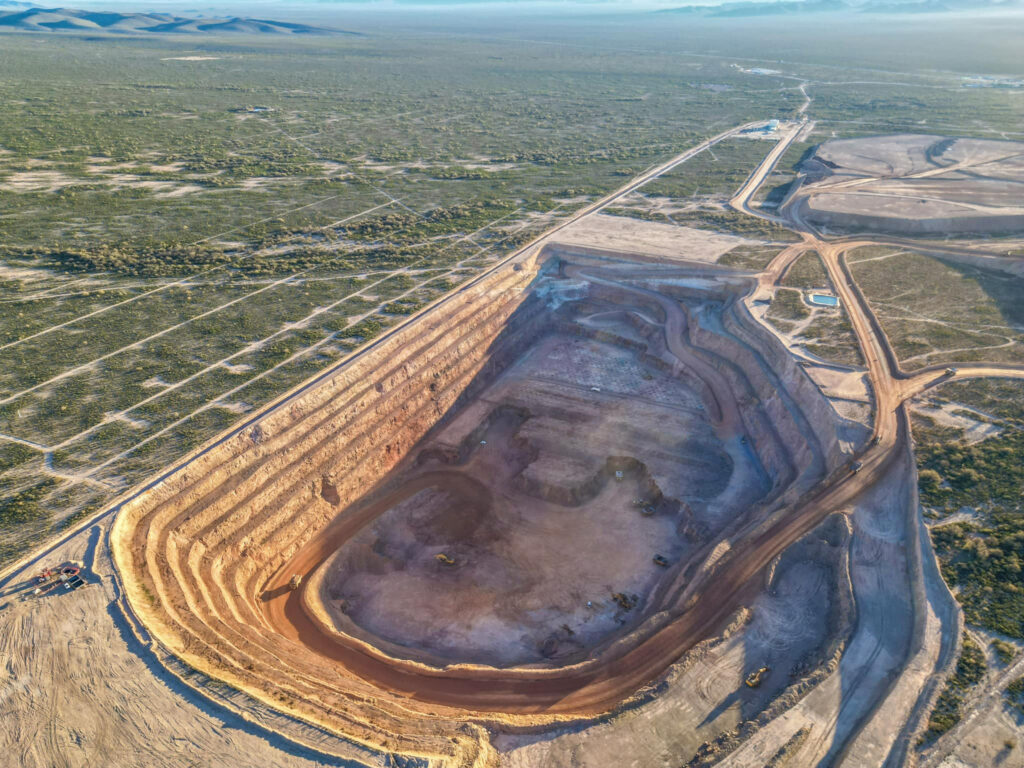
The recovery and return of these concessions is significant, but it’s worth analyzing it in more detail to avoid exaggerating its true scope. Currently, there are around 22,000 active mining concessions in the country, so the 1,100 recovered represent approximately 5% of the total, while the 200 voluntarily returned amount to slightly less than 1%. Structurally speaking, this is a limited intervention within a still extensive concession market.
But the government’s interest in this case could stem from another source, as it is likely attempting to flex its muscles in the face of its foreign neighbour’s recent interest in the joint strategic minerals plan. Perhaps what is being done, in collaboration with the national mining sector, is to set an example that the State will act and enforce the law within its territory, regardless of who owns the project. This improves public opinion, projects the image of a government that will not relinquish territorial control, but also demonstrates a government that still seeks dialogue with the industry.
The question is whether Mexico’s mining reorganization will strengthen environmental and social oversight, or whether it will merely rearrange the extractive map under new geopolitical coordinates.
However, it remains to be seen whether these measures will establish a dynamic that truly ensures compliance with the rules governing this sector, greater transparency, and effective enforcement. This could signal a shift towards a more institutionalized relationship between the state and businesses. But if the return and recovery of concessions is limited to idle or low-impact projects, while strategic projects are consolidated under schemes similar to those of the past, then this will only serve to appease public opinion.
In this regard, the lack of detailed information is the main obstacle to assessing the full extent of the situation, as no disaggregated lists have been published that would allow for determining the exact location, the mineral involved, the holding company, or the compliance history of each affected concession. Nor is there an accessible system that allows for continuous monitoring of royalty payments, technical reports, or penalties.
The foregoing is very important because the relationship between the State and the mining sector is not merely an economic matter, but rather a power dynamic. It involves access to strategic resources, territorial control, foreign investment, employment, potential litigation, and, in the current context, geopolitical positioning. Given the imminent review of the USMCA and US pressure to secure supply chains for critical minerals, a regulatory decision of this magnitude can be seen as a reaffirmation of sovereignty, but also as a message of order and predictability to avoid uncertainty and ensure investment.
My interpretation is that a delicate balance is being struck between demonstrating regulatory firmness without causing a rupture, and at the same time maintaining the discourse of sovereignty without closing the door to strategic integration in North America; in other words, exercising authority without scaring away investment. It’s a fine game, which, if played well, could generate a flood of investment and projects, with the inherent risks and socio-environmental damage.
But we must not lose sight of the fact that what is truly relevant is not the number of concessions returned or canceled, but what these decisions foreshadow about the course the country will take in the coming years. We are facing a profound global geopolitical reconfiguration, where strategic resources will define new economic and political hierarchies. If the government does not exercise its authority consistently and transparently (not only in rhetoric, but in the effective application of the law), we will be at the mercy of the whims of third parties, whether corporations or other countries. The real debate is not how many concessions are canceled, but who decides the fate of the territory. Therefore, the question is whether this reorganization will strengthen environmental and social oversight, or whether it will merely rearrange the extractive map under new geopolitical coordinates.
Aleida Azamar Alonso is research Professor at the Autonomous Metropolitan University, Mexico and a member of the group Our Future, Our Energy.
-
REMA Accuses Zacatecas of Expediting Mining Project Approvals
The Mexican Network of People Affected by Mining believes the government is expediting environmental permits without considering the cumulative impacts in regions that already face overexploitation of aquifers & environmental degradation.
-
A Raw Deal
Mining in Mexico has not led to economic development. Despite record wealth extraction, mining communities remain poor, and often poverty rates are far higher than the national average.
-
The Mining Minefield – Soberanía 95
The controversy surrounding the U.S.-Mexico critical minerals agreement, examining what it actually says, what it doesn’t, and why it has sparked widespread concern over national sovereignty and resource control.