Mexico Saves 159.35 Billion Pesos in Debt Interest Payments Through September
This article by Dora Villanueva originally appeared in the November 2, 2026 edition of La Jornada, Mexico’s premier left wing daily newspaper.
Interest payments on the public debt were 159.35 billion pesos lower than programmed through September, owing to the appreciation of the Mexican currency, better interest-rate conditions and the refinancing operations themselves, the Ministry of Finance and Public Credit (SHCP) reported.
The ministry had projected that through September it would have disbursed 1.118 trillion pesos in payments on the public debt, but only 958.9997 billion were paid.
According to the Finance Ministry and private financial firms, these savings in the financial cost of the public debt largely explain the containment of the public deficit, including that of entities under indirect budgetary control.
That gap between revenue and spending was expected to be around 1.2117 trillion pesos through September, but it ended at 959.582 billion. Víctor Gómez Ayala, chief economist at Finamex, highlighted that two-thirds of the difference is due to the financial cost of the public debt.
This lower spending contributed to the better performance of the budget balance and to easing the pressures on public finances.
Ministry of Finance and Public Credit
The Finance Ministry made the point when releasing its reports on the state of the economy and public finances through September.
Interest payments on the debt not only came in below projections, they also saw an annual reduction of 3.7 percent in real terms compared with the amount spent in the January–September period of last year, the ministry reported.
BBVA agrees that the financial cost favored the public balance. However, “the limited fiscal space makes it difficult to continue advancing significantly in the fiscal consolidation the country requires to stabilize the historical balance of the public sector borrowing requirements (SHRFSP)” as a percentage of gross domestic product (GDP), “and to avoid the loss of investment grade.”
As of September, the SHRFSP—the broadest measure of the public debt—reached 19.554 trillion pesos, 976.3676 billion more than in December 2025. However, as a percentage of GDP, it remains at 52.6 percent.
In this regard, Arnulfo Rodríguez, chief economist for Mexico at BBVA, warned that a tax reform that increases tax collection by at least two percentage points of GDP will be necessary, given the little margin in public spending and the expected continued support for Petróleos Mexicanos.
“The proposal is to prioritize a tax reform with measures that improve compliance and broaden the base of both taxable products and taxpayers. The aim is that higher collection does not depend on an increase in tax rates and that it improves the sustainability of public finances,” he explained.
-
Mexican Economy Grows 3.2% Annually in the Third Quarter of 2026, Its Biggest Advance in Three Years
Services and industry drove the expansion while agriculture contracted, and the economy has now grown year-on-year for four straight quarters.
-
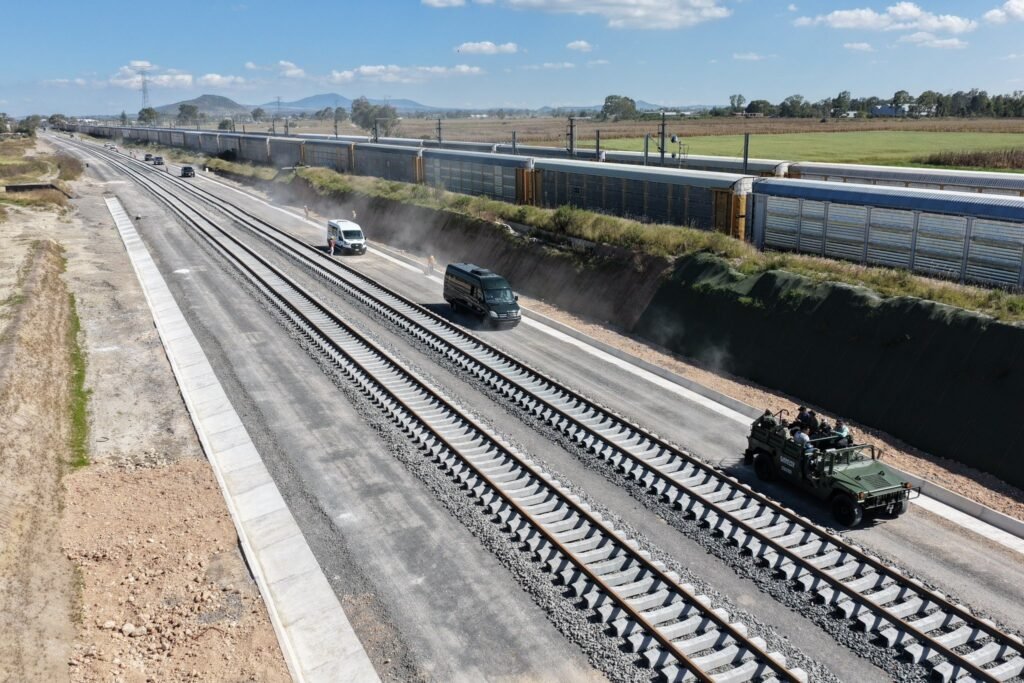
Sheinbaum Supervises Construction of the Mexico City-Querétaro Passenger Train; “It’s Progressing According to Schedule”
Some 18,500 people are working on the 230-kilometer double-track line, which will link Buenavista to downtown Querétaro in about two hours at up to 180 km/h.
-
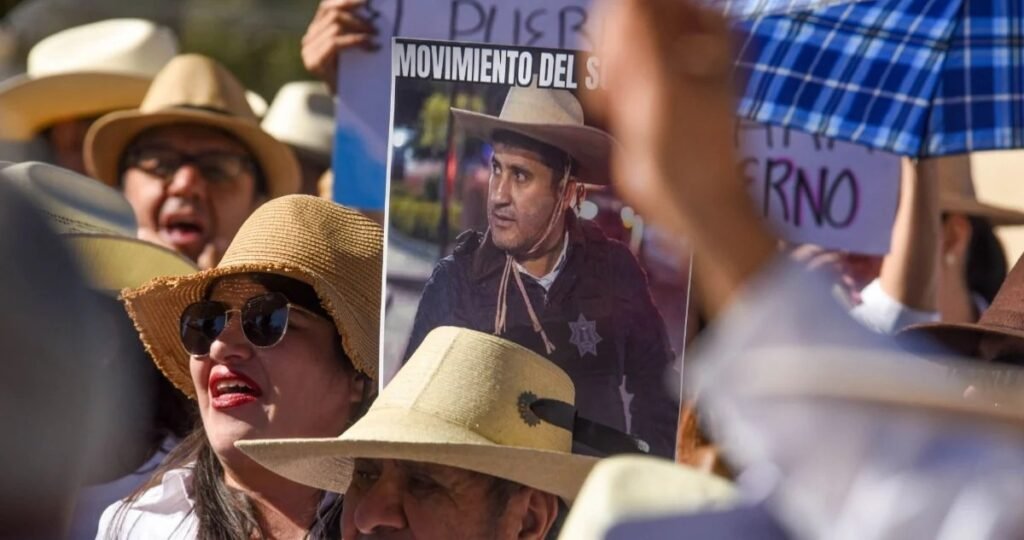
How the McPRIAN, Salinas Pliego and Others Profited from Carlos Manzo.
His brother accuses the widow’s movement of politicizing the case, as prosecutors tie the killing to CJNG revenge and report 33 arrests one year on.