
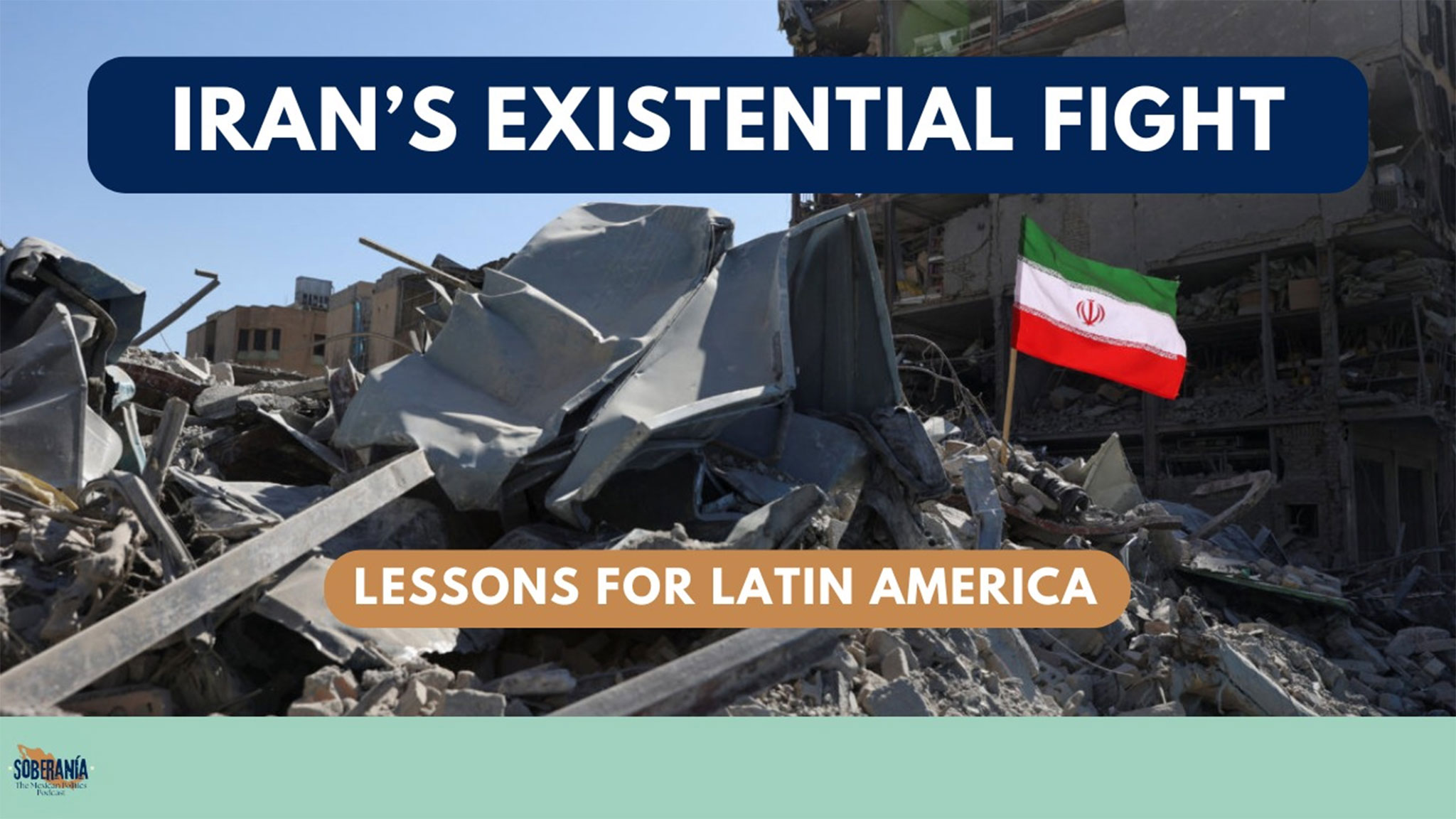
Iran’s Existential Fight: Lessons for Latin America – Soberanía 98
In episode 98 of Soberanía, hosts José Luis Granados Ceja and Kurt Hackbarth analyze the widening global conflict following the U.S.-Israeli attack on Iran and its implications for Mexico and Latin America.
The episode leads with the U.S. attack on Iran, examining how the widespread destruction done in Gaza is being applied to Tehran while the international community stands by. The hosts connect the dots to Latin America, warning client states that U.S. “protection” evaporates when interests shift—a lesson from the Gulf region now playing out in real time.
Next, they break down Morena’s electoral reform, explaining how it would actually reduce the ruling party’s power by eliminating backdoor seats for political opportunists aka “chapulines” and give more voice to voters, including migrants abroad. The reform has sparked rare pushback from coalition partners, revealing the tension between principle and political patronage.
Finally, a rare good news story: Mexico’s Supreme Court traveled to Indigenous territory for the first time to grant self-governance rights to a Chiapas community, breathing life into constitutional reforms decades in the making. It’s a small victory for autonomy in a world increasingly defined by war.
-
People’s Mañanera March 24
President Sheinbaum’s daily press conference, with comments on electoral reform, PAN, femicide, and diesel prices.
-
President Sheinbaum Insists US Eliminate Tariffs on Cars, Steel & Aluminum
The Mexican President said that lowering or eliminating tariffs is part of the discussion with the US, but not yet reflected in reality.
-
Who Produces Social Wealth & Who Concentrates It?
Who built the powerful economic empire of Tehuacán’s poultry industry? Was it solely the entrepreneurial intelligence of its founder? Obviously not.