Mexican Farmers to Mobilize for Food Sovereignty & Agricultural Model Transformation March 20th
This article by Vanessa Rivas originally appeared in the February 25, 2026 edition of El Sol de México.
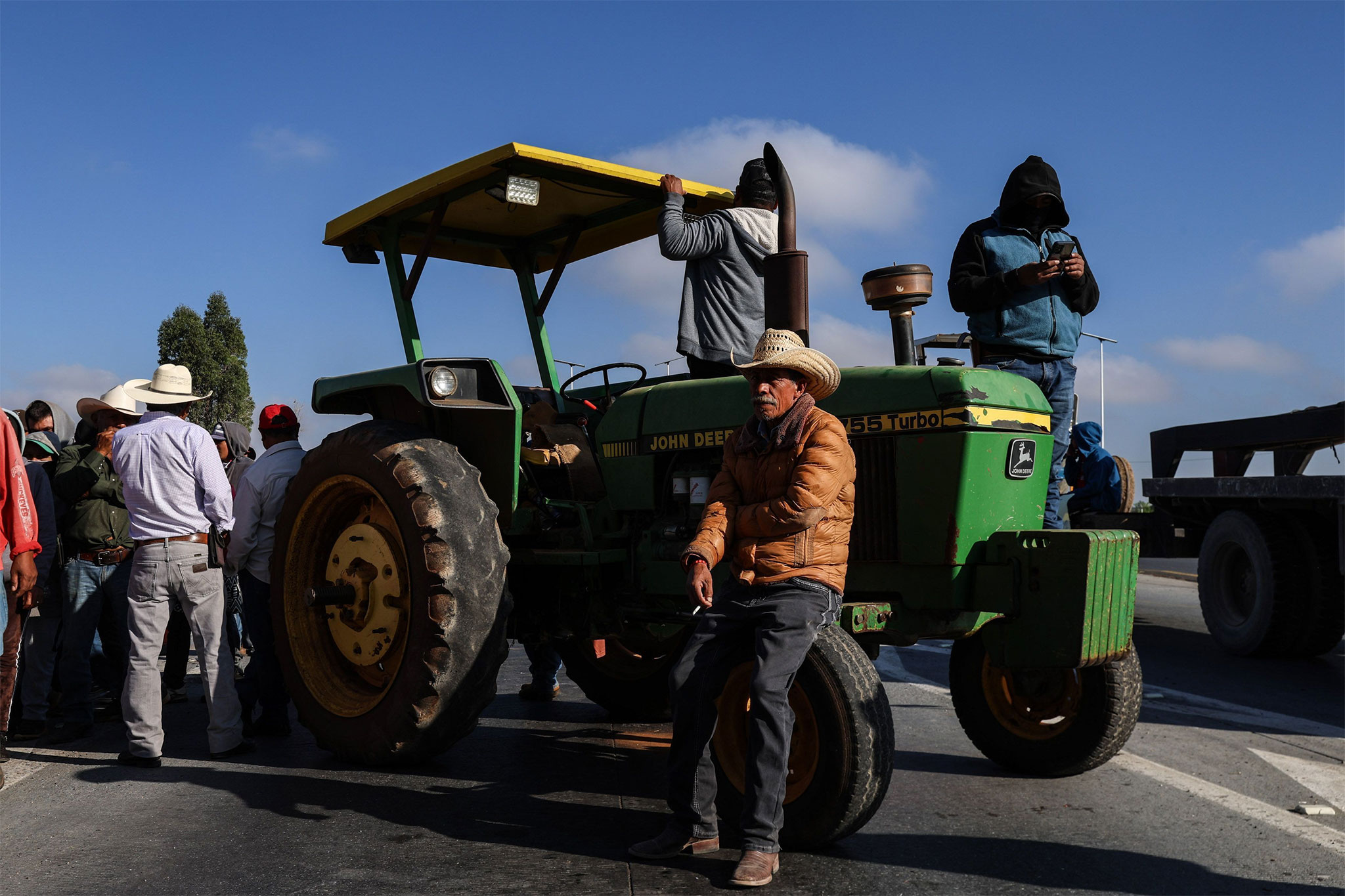
Farmers from various regions of the country are preparing a national mobilization on March 20th to protest the crisis facing Mexican agriculture and what they consider a lack of substantive action by the Federal Government. One of the planned actions is to demonstrate on the railway tracks, uncoupling train cars containing staple grains, given that Mexican farmers are currently not even receiving enough to cover the cost of production for these crops.
The announcement was made by Eraclio Yako Rodríguez Gómez, leader of the National Front for the Rescue of the Mexican Countryside, who explained that the protest is still in the organizational phase, but will have a presence in several states of the Republic.
Mobilization in Several States & at Strategic Points
In an interview with El Heraldo de Chihuahua, the peasant leader commented that the mobilization will not have a single gathering point, but will be replicated in various states. In the case of Chihuahua, strategic points are being considered, such as the Pan-American Highway near the tollbooth in Sacramento or in Ahumada, although these locations are still tentative, as is the railway line near Jiménez.
Yako Rodríguez Gómez explained that the actions are yet to be defined, because on one hand, there is a position that proposes avoiding road blockades so as not to affect the public, considering the social support they have received in previous mobilizations.
However, more targeted measures are also being considered, such as preventing the transit of imported grains, both by rail and freight transport, with the aim of directly putting pressure on sectors that compete with national production.
Among the proposals put forward, the possibility of intervening in freight trains to uncouple wagons carrying grain, allowing the transit of the rest of the goods, as well as the selective stopping of trailers that move these products, stands out.
Economic policy prioritizes industrial sectors, such as the US-dominated automotive industry, over food production, which has led to a growing dependence on foreign countries.
The leader stressed that these actions seek to avoid a widespread impact on the population, concentrating pressure on what they consider the core of the problem: the importation of grains and the displacement of national production.
Regarding the progress made, Yako Rodríguez Gómez acknowledged that there has been some progress, particularly in the purchase of corn and beans by government programs, as well as in the payment of outstanding debts from 2020 in states such as Sinaloa, Sonora, Guanajuato and Michoacán.
However, he stated that these advances are insufficient in the face of the structural problems facing the sector, especially regarding the lack of an agricultural model that guarantees certainty for producers.

The peasant leader insisted on the need to build a new model of national agriculture that reduces dependence on international markets, particularly the Chicago Board of Trade, which influences grain prices in Mexico.
He also denounced the fact that the food market is concentrated in the hands of a small number of transnational corporations, which limits the country’s ability to strengthen its food sovereignty. Internationally, it has been observed that these same companies have a presence in 70 countries.
In that regard, he pointed out that there is a close relationship between large corporations and some officials of the Federal Government, which has hindered the implementation of fundamental changes in national agricultural policy.
As part of the movement’s strategy, a forum is planned for March 19 at the National Autonomous University of Mexico (UNAM), where national and international representatives will participate to discuss alternatives to the current model. In addition, a second international meeting is being organized in Chicago in May, with the participation of agricultural organizations from the Americas and Europe, within the framework of the review of trade agreements.
Among the main demands of the producers is the removal of grains from the North American trade agreement, considering that the current conditions put Mexican farmers at a disadvantage compared to their international competitors.
Yako Rodríguez Gómez criticized the fact that economic policy prioritizes industrial sectors, such as the automotive industry, over food production, which has led to a growing dependence on foreign countries.
He also questioned the conditions under which key institutions for the agricultural sector operate, pointing to budgetary limitations that affect their functioning, from a lack of offices to deficiencies in basic services, as in the case of the Agrarian Attorney’s Office and the National Agrarian Registry, entities that were not allocated sufficient budget, even though farmers require these services.
The leader warned that, unless these problems are addressed, the abandonment of producers and the decline in national grain production will continue.
Finally, he stressed that the mobilization on March 20 is part of a broader strategy of pressure and organization, with the goal of fundamentally transforming the country’s agricultural model.
The movement, he said, is not only seeking immediate solutions, but a structural change that will guarantee food sovereignty and better conditions for those who work in the Mexican countryside.
-
Failing the Stress Test: What the Measles Resurgence in Mexico Reveals About a Fragmented Health System
Surveying the land, 13 months into Mexico’s most recent outbreak.
-
People’s Mañanera March 24
President Sheinbaum’s daily press conference, with comments on electoral reform, PAN, femicide, and diesel prices.
-
President Sheinbaum Insists US Eliminate Tariffs on Cars, Steel & Aluminum
The Mexican President said that lowering or eliminating tariffs is part of the discussion with the US, but not yet reflected in reality.