Monopolies like Nestlé Used COVID to Discredit Breast Milk: Study
This article by Montserrat Antúnez originally appeared in the March 8, 2026 edition of Sin Embargo.
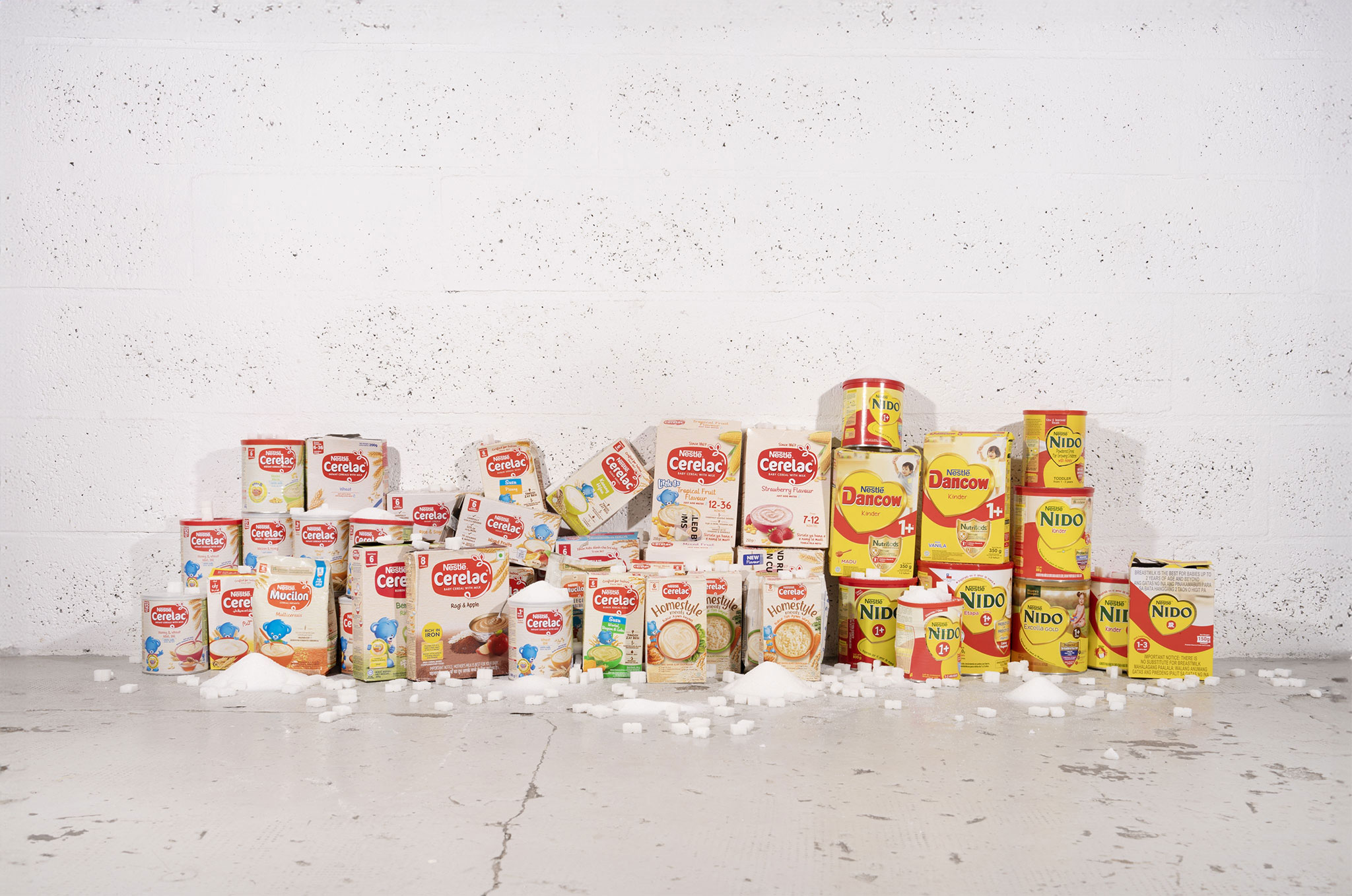
Mexico City. Companies such as Nestlé, Reckitt Benckiser, and Abbott took advantage of the COVID-19 pandemic to promote their infant formula products with false information. Some courses and donations to the Mexican government were part of their strategies to discourage breastfeeding and regulations on the subject, concluded a study published in the scientific journal International Breastfeeding Journal.
“It’s a serious matter. These industries took advantage of the fear we had as a population, not knowing how the virus was transmitted, and used it to position and sell their products, which are not equivalent to breast milk. They are a substitute for specific cases of infants, but not an ideal food for babies,” explained Christian Torres, coordinator of Conflict of Interest and Industry Interference at the organization El Poder del Consumidor and one of the six authors of the article titled The Corporate Political Activity of the Breast Milk Industry in Mexico during the COVID-19 Pandemic, which was published in early 2026.
The research, which analyzed corporate behavior between 2020 and 2022, identified Nestlé as the top-selling brand in Mexico and the one that implemented the most aggressive Corporate Political Activity (CPA) strategy. Its strategy included a “Support Plan” with donations of products and medical equipment, as well as the management of coalitions with government institutions such as the Secretariat of Foreign Affairs, the Mexican Social Security Institute (IMSS), the Secretariat of National Defense, and the National System for Integral Family Development (DIF).
“As part of its actions, in 2020, Nestlé launched the ‘ Nestlé COVID Emergency Support Plan,’ which reported monetary donations of 7.1 million pesos; the distribution of 100 million food packages with Nestlé brand products, including commercial infant formulas, to more than 50 institutions, hospitals, and civil society organizations; and in-kind donations or aid through its various brands. Mexican Economic Development (FEMSA) and YZA Pharmacy organized donation campaigns for commercial infant formulas, inviting the public to participate,” the investigation reads.
In addition to promoting itself on social media as a company that supports the healthcare sector, it disseminated messages and blog posts that raised doubts about whether a mother with COVID-19 should breastfeed and suggested formula as a “safe” option. It spread the false idea that its chemical products could offer specific protection against the virus that breast milk did not.
The Enfamil brand, manufactured by Mead Johnson Nutrition, a subsidiary of Reckitt Benckiser, published a study on its website showing that babies fed with commercial formulas during the first 12 months of life had better development of motor skills than those fed with other types of formulas.
“Our interviewees shared the fact that, during the COVID-19 pandemic, the industry disseminated information about the supposed increase in immunity associated with the consumption of CMF [Commercial Infant Formula], taking advantage of the uncertainty surrounding the pandemic,” the research mentions.
Similarly, the researchers added that in Mexico, training was provided to health professionals “positioning CMF [Commercial Infant Formula] products as a solution to be used during the COVID-19 pandemic. This took advantage of the widespread fear among mothers, fathers, and caregivers, with the claim that CMF could improve the immunity of babies and young children.”
Oscar Reséndiz Lugo, lead author of the study, explained that the direct impact of the strategies used by infant formula companies is to discourage breastfeeding and to position themselves in the eyes of policymakers and the public.
“If you put all those components into the entire political arena, what happens is that self-regulation is still allowed for these types of industries; that is, they formulate their own regulatory codes, they propose their own regulatory strategies, and they can conveniently establish more precise issues that promote the advertising of their products ,” Reséndiz Lugo mentioned.
Since 1974, the World Health Assembly has recognized that women are ceasing to breastfeed their babies due to the influence of unethical marketing practices for breast milk substitutes. Therefore, in 1981, it adopted the International Code of Marketing of Breast-milk Substitutes, which Mexico signed and committed to implementing. However, practices contrary to the provisions of this instrument are still being observed.
Oscar Reséndiz insisted that Mexico still does not have a robust legal framework that allows it to sanction companies that do not comply with the international code.
The research also indicates that excessive exposure to formula advertising, the distribution of free samples, inadequate labeling, and industry influence on health professionals, the main promoters among mothers, persist in Mexico.
Similarly, she highlighted that in the country only 34.2 percent of children receive exclusive breastfeeding in the first six months of life, a figure below the international goal proposed by the World Health Organization to increase the rate to 50 percent by 2025.
-
Mexican External Relations Secretariat Demands US Investigate Death of Mexican Citizen in ICE Custody
14 Mexican citizens have lost their lives in ICE custody or in immigration operations during President Donald Trump’s second term.
-
Mexican Navy Locates Two Sailboats Carrying Aid to Cuba
“The convoy is still en route to complete its mission: to deliver urgently needed humanitarian aid to the Cuban people,” said Nuestra America’s spokesman, who thanked Mexican and Cuban authorities for their “support, coordination and professionalism.”
-
PEMEX & Energy Security in the Face of the International Crisis
In Mexico, energy is a public good provided by the State to ensure the continuity, reliability, accessibility, affordability, and sustainability of fuel and electricity supply as pillars of development.