People’s Mañanera October 7
Every day, President Claudia Sheinbaum gives a morning presidential press conference and Mexico Solidarity Media posts English language summaries, translated by Mexico Solidarity’s Pedro Gellert Frank. Previous press conference summaries are available here.
Record Decline in Intentional Homicides in Sheinbaum’s First Year in Office
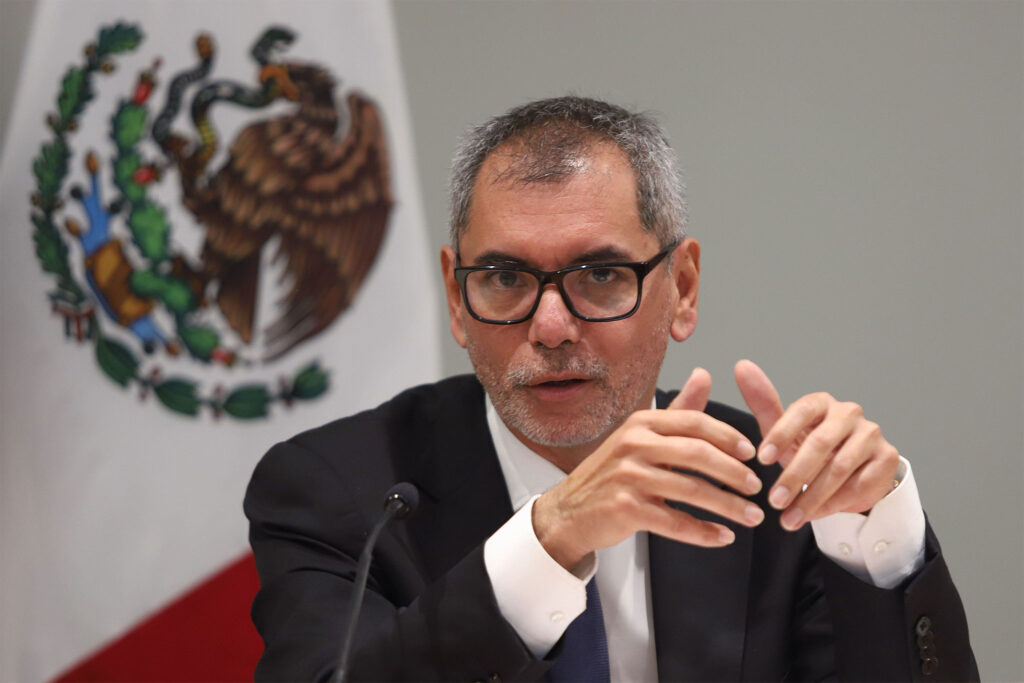
Marcela Figueroa Franco, Executive Secretary of the National Public Security System, reported that intentional homicides decreased by 32% during President Claudia Sheinbaum’s first year in office, declining from 86.9 to 59.5 cases daily cases, the lowest level since 2015. The first nine months of the new administration saw the lowest intentional homicide rates since 2016.
Intentional homicides declined in 23 states, among them Zacatecas, Chiapas, and Quintana Roo. Since 2018, high-impact crimes have fallen 46%, and 74% of extortions were prevented thanks to timely intervention by the corresponding authorities.
Ministry of the Interior Strengthens National Security Strategy and Peace Programs
Minister of the Interior Rosa Icela Rodríguez reported that meetings were held with all state governors to define new national security strategies.
Between September and October, 162 events were held with over 55,000 participants, along with 144 service fairs for women with nearly 39,000 in attendance and 5,586 peace campaigns throughout the country. In addition, 6,400 weapons were exchanged for money as part of the voluntary disarmament program.
Conclusive Results from the National Security Strategy
Minister of Security and Citizen Protection Omar García Harfuch reported the arrest of 34,690 suspects for high-impact crimes, including leaders of criminal groups involved in extortion, homicide, kidnappings, and drug trafficking.
More than 17,000 firearms and 283 tons of drugs were seized, including 3 million fentanyl pills.
García Harfuch highlighted the reduction of intentional homicides in several states, among them Guanajuato (-61%), State of Mexico (-43%), Nuevo León (-61%), Jalisco (-62%), Tabasco (-59%), and Sinaloa (-42%), all with arrests of priority targets.
Security Agreement with the United States
Following an agreement with U.S. Secretary of State Marco Rubio, a relationship of respect and cooperation without interference was consolidated between the two countries.
The goal is to strengthen information exchange within legal frameworks that allow for joint arrests. If Mexico obtains information on crimes in the United States, it shares it with Washington so that U.S. authorities act within their own country, and vice versa.
Case of Hernán Bermúdez
Federal Attorney General Alejandro Gertz Manero explained the case of Hernán Bermúdez, former Secretary of Public Security of Tabasco. He indicated that the investigation began in 2024 in relation to a series of extortion attempts against gas station owners. From this local inquiry, links were established to common crimes and later organized crime, which enable a federal arrest warrant to be issued.
Amparo Law
The President reported that the bill amending the Amparo Law will be sent to the Chamber of Deputies. She emphasized that the amparo, a type of protective injunction, protects citizens against acts of authority and said that this right will be fully guaranteed.
First Draft of Regulatory Laws of Constitutional Article 2
A first draft is ready to strengthen the rights of Indigenous and Afro-Mexican peoples and communities.
National public consultations will be held before its formal presentation.
The objectives of the amended law include protecting the intellectual property and millenary knowledge of Indigenous peoples.
-
President Sheinbaum: Unlikely the Right Wing Will Return to Power in Mexico
The Mexican President indicated that the financial outlook is positive for the country, which demonstrates the viability of its economic model.
-
EZLN: The Nation-state No Longer Has Decision Making Power
“Sovereignty is a bad joke. They can’t say that Mexico is sovereign, even if they say so on the Mañanera, if it can’t even decide whether to send oil to Cuba.”
-
Social Programs Will Cushion Impact of Global Chaos in 2026: Mexico’s Finance Secretary
By 2026, social program spending will reach nearly one trillion pesos, with the goal of sustaining the well-being of the majority of families.