‘QRGate’: the PRI’s New Vote-Buying Scheme in Coahuila
This article by Darylh Rodríguez originally appeared in the June 8, 2026 edition of Contralínea, a Mexican investigative journalism magazine.
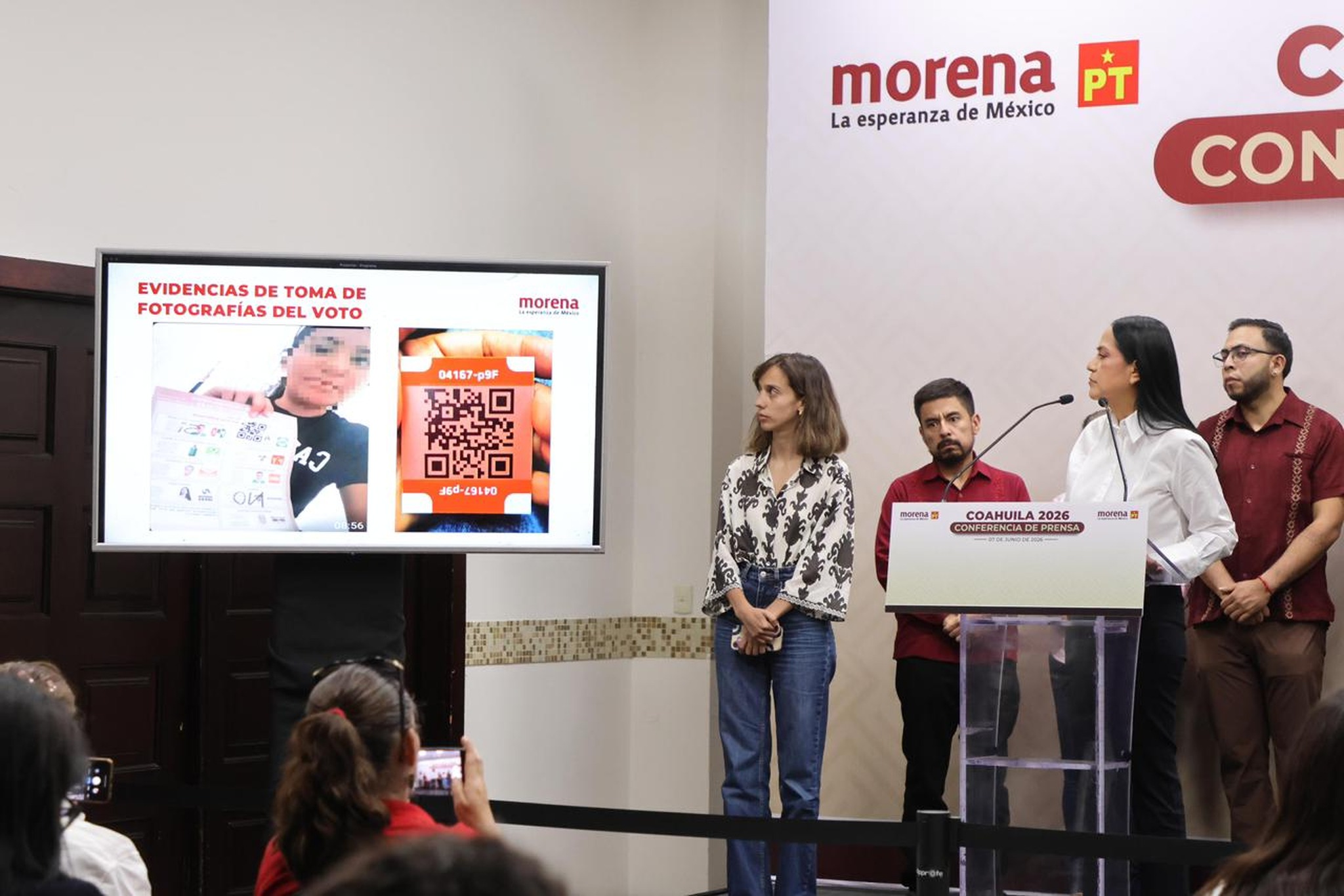
In Coahuila, this past Sunday saw a tense electoral day marked by reports of vote buying, delays in the installation of polling stations, arrests of Morena leaders, and institutional violence by municipal and state police forces. However, the variant that called into question the transparency of those elections was the new mass vote-buying scheme that Morena’s leadership dubbed “QRGate.”
According to Ariadna Montiel, Morena’s national leader, the new mass vote-buying mechanism was operated by the Institutional Revolutionary Party (PRI), led by Alejandro Moreno Cárdenas (also known as “Alito”), with the purpose of influencing the electoral contest that fraudulently awarded victory to the PRI’s alliance with Coahuila’s Democratic Unity (UDC) in 16 electoral districts, an overwhelming victory in the state. The ballots tallied in the Preliminary Electoral Results Program (PREP) registered a total of 684,515 votes for the tricolor alliance, equivalent to 55 percent of the vote.
Despite the electoral results recorded in the state, the president of the guinda party presented a series of videos documenting the “QRGate” operation, a mechanism that worked through the individual delivery of QR codes to voters who, after casting their ballot, had to photograph the marked ballot together with the assigned code. This image was then scanned with mobile devices to register it on a digital platform and validate the corresponding payment.
The new vote-buying scheme could surpass, at the state level, the operations attributed to the PRI during the 2012 presidential election, when the use of Soriana and Monex cards was denounced for the alleged purchase and coercion of votes. “What was the modus operandi of this ‘QRGate’ we are experiencing? It can surpass at the state level what we saw in the 2012 election of President Peña Nieto,” Montiel said.
Following these events, as well as the violence that occurred in the state at the hands of police forces, the state police, and the Coahuila Attorney General’s Office, Ariadna Montiel announced that Morena will file complaints with electoral authorities, such as the Coahuila Electoral Institute, and financial authorities, such as the Financial Intelligence Unit, asserting that the party has the complete database of the digital system, thanks to information provided by disgruntled PRI members.
As she explained, this information would make it possible to trace the scope of the operation and the origin of the resources used, which appear to run into the millions. “We are going to request not only an electoral investigation but also a financial one into the origin of those resources. Once the count is done, we will know the size of the financial operation we are talking about,” she said.
The Morena president also presented a video in which elements of the state police escorted alleged operators involved in vote buying. With this, she accused security forces of intervening in favor of the PRI, as well as obstructing the actions of federal legislators who sought to denounce the events. “The state police are not doing their job, and on the contrary they interfere in democracy and their commanders must be sanctioned,” she added.
-
Sheinbaum Presents Draft Decree to Force Digital Platforms to Take Down Content That Incites Violence and Hate
No fines for now: the government will talk with tech companies before publishing the decree next week, a promise made after the Coahuila school attack.
-
People’s Mañanera October 9
President Sheinbaum’s daily press conference, with comments on digital safety, IMSS-Bienestar, sovereignty, and the opposition.
-
Mexico’s Gas Reserves Would Last Only 3 Days
Cenagas director Cuitláhuac García revealed Mexico has no gas storage and imports 75% of what it consumes, after a US supply cut exposed the risk.