Sheinbaum Analyzes Initiative to Prohibit Dual Nationality in the Presidency and Governorships
This article by Anahí Del Ángel originally appeared in the August 25, 2026 edition of Contralínea, a Mexican investigative journalism magazine.
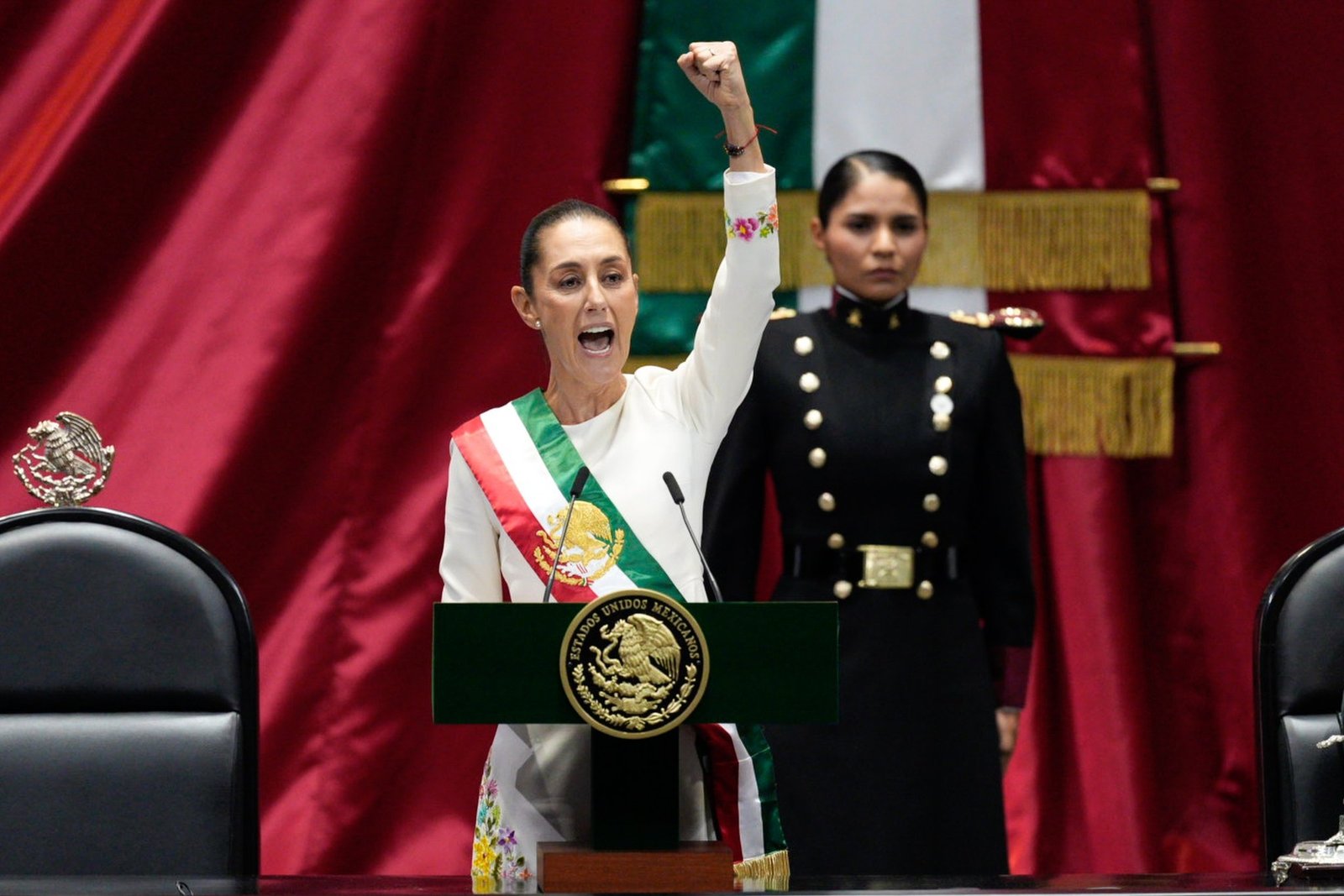
The federal government is analyzing the possibility of sending the Congress of the Union a constitutional reform initiative to restrict candidacies for the presidency of the Republic and for governorships to people with dual nationality, President Claudia Sheinbaum Pardo announced.
During her press conference, the President proposed that those who hold these positions must exclusively represent Mexico’s interests, and so she deemed it necessary to review the current provisions on the nationality of candidates for elected office. “We should prohibit it; a Mexican president is Mexican, they do not represent another country.”
A Mexican president is Mexican; they do not represent another country.
Claudia Sheinbaum
The proposal arose when she was asked about the case of the former governor of Tamaulipas, Francisco Javier Cabeza de Vaca, who holds dual Mexican and U.S. nationality, and against whom the Mexican government has an extradition request before the United States, one that has not been acted upon because of the impediment this condition represents.
Against that backdrop, Sheinbaum Pardo questioned whether a person with dual nationality can hold a governorship, and raised the same criterion for the presidency: “Why would you have dual nationality if you represent the people of Mexico? To be a candidate for governor, why would you hold another country’s nationality? In other words, you are Mexican, period.”
At present, the Constitution does not establish a general prohibition on a person with dual nationality seeking the presidency of the Republic or a governorship. Article 30 recognizes who are Mexicans by birth, while Article 32 refers to Mexicans who hold another nationality and establishes that the law must regulate their rights and prevent conflicts arising from dual nationality.
In the case of the presidency, constitutional Article 82 establishes that to hold the office one must be Mexican by birth, be in full enjoyment of one’s rights, be the child of a Mexican father or mother and have resided in the country for at least 20 years, although it does not establish a formal prohibition.
The discussion on the subject has also broadened at the regional level. Recently the issue sparked debate in Colombia, since the current president, Abelardo de la Espriella, holds U.S. and Italian nationalities in addition to Colombian.
His case generated a legal controversy during the 2026 presidential campaign, but the National Electoral Council kept his candidacy in force, and later a Bogotá court rejected an action challenging his election due to his U.S. nationality; this because Colombian legislation allows Colombians by birth to hold other nationalities and does not establish that condition as an impediment to serving as President.
A similar case is that of the current president of Ecuador, Daniel Noboa, who also holds U.S. nationality because he was born in Miami, Florida.
In contrast, Venezuela does explicitly establish a constitutional prohibition. Article 227 of its Constitution states that to be elected president one must be Venezuelan by birth and “hold no other nationality”.
In the Mexican case, an eventual reform would have to define which offices would be subject to the prohibition; whether the measure would reach people with dual nationality acquired by birth, and how long before an election renunciation of a second nationality would have to be proven.
-
Mexican Governor Maru Hands Out Gifts and Rivers of Public Money to Media and Famous Journalists From Mexico City
Ties from Pineda Covalín, 5,000 tamales and 1.5 million pesos for Adela Micha: Chihuahua’s PAN governments have spent billions polishing their image.
-
Jáuregui, Maru Campos’s Former Prosecutor, Is Ordered to Stand Trial for Treason Against Mexico
After 80 years without a similar case, a judge ordered the trial on more than 150 pieces of evidence presented by the Attorney General’s Office.
-
Mexico Meets Minimum Annual Water Delivery to the US Despite Extreme Drought
Washington’s Agriculture Secretary confirmed the 350,000 acre-feet, but pressed Mexico to keep delivering and repay the “water debt owed to Texas farmers”.