
Tax Evasion Affects the Health Sector
This editorial by Martí Batres originally appeared in the December 29, 2025 edition of El Heraldo. The views expressed in this article are the author’s own and do not necessarily reflect those of Mexico Solidarity Media, or the Mexico Solidarity Project.
Public health is sustained and developed with fiscal resources.
The Mexican Social Security Institute (IMSS) is funded through a tripartite system: contributions from workers, contributions from employers, and the public budget. The Institute for Social Security and Services for State Workers (ISSSTE) is funded by contributions from workers and, primarily, from the public budget. The IMSS-BIENESTAR program and state health systems are funded directly from the public budget.
However, employee and employer contributions are considered tax obligations, and public resources also derive from the payment of tax obligations. When tax obligations are not met, when those who are required to pay their taxes fail to do so, the public budget in general, and the budget allocated to healthcare in particular, is weakened.
This is particularly noticeable in the case of Mexico.
According to the OECD’s Revenue Statistics 2025 (preliminary data from 2024), Mexico collects only 18.3% of GDP in taxes, well below economies with consolidated welfare states such as Germany (38%), Denmark (45.2%), Sweden (43.4%), Finland (42.2%) and Norway (38.4%).
This is a consequence of the gap already reflected in the progressivity of the Income Tax. While in Mexico the maximum income tax rate for individuals is 35%, in Germany the marginal rate reaches 45% (plus a solidarity surcharge); in Denmark it reaches 52.1% (55.9% considering all components); in Sweden, around 52%; in Finland, up to 55.1% when adding national and municipal taxes; and in Norway, close to 39.7%.
The above leads us to three important conclusions: 1) the largest part of the tax burden in advanced welfare states is contributed by high taxpayers; 2) high taxpayers in Mexico do not contribute in the same proportion as high taxpayers in advanced welfare states; and 3) if, under these conditions, high Mexican taxpayers stop paying what is already lower than in other countries, fiscal resources are significantly affected.
In other words, high-income taxpayers who evade taxes severely affect the availability of public resources for health policies.
It is ironic, not to say cynical, that major tax evaders talk about the shortcomings in health services in their media outlets when the lack of resources is due, above all, to the multiple forms of tax evasion they engage in; and, of course, when they “remained silent as mummies” during the neoliberal period in which health services were dismantled.
-
Sheinbaum Dismisses Alleged US Memorandum for Greater Collaboration in Mexican Territory
She made clear that US forces cannot operate inside Mexico, a stance she contrasted with the Calderón years, when US agents were allowed in.
-
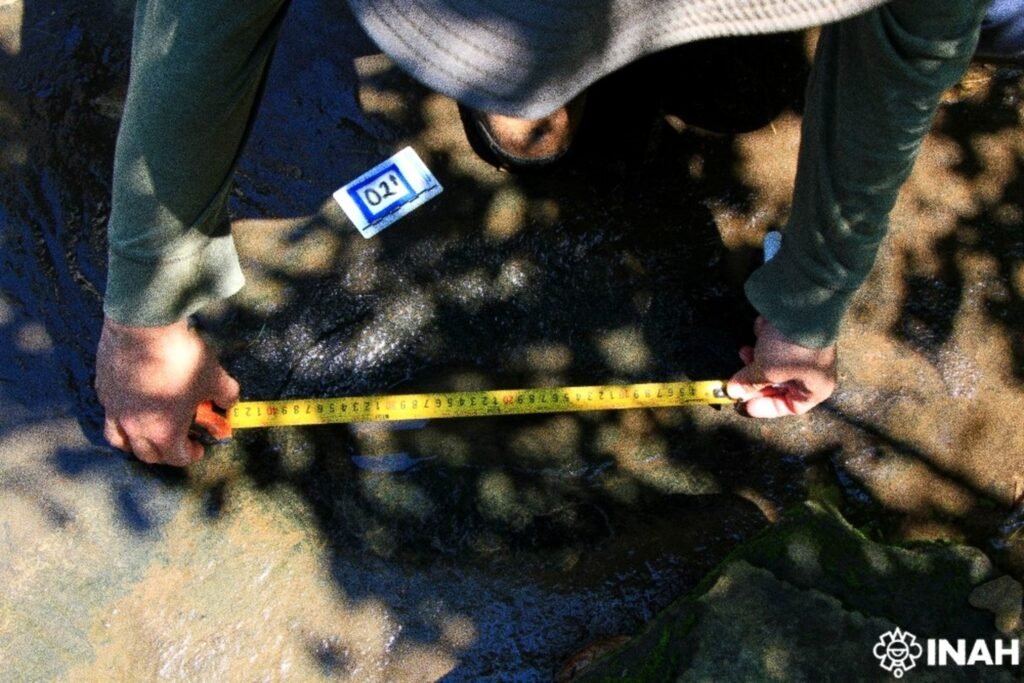
Michoacán Tyrannosaurs, Raptors and ‘Duck-Billed’ Dinosaurs: Mexico Confirms Discovery of 50 Footprints in Apatzingán
Residents of San Juan de los Plátanos reported tracks of “giant animals” in a stream bed, left 65 million years ago in the Late Cretaceous.
-
People’s Mañanera October 26
President Sheinbaum’s daily press conference, with comments on Lula’s victory, sovereignty, economic growth, and the INE.