The Transnational Responsibility of the Mexican Vote in the United States
This article by María Elena Valdivia appears in the November 2026 issue of Let’s Talk About Migration (Hablemos de Migración), a magazine on migration issues published by the Frente Amplio de Mexicanos y Migrantes. Read and download the full November issue.

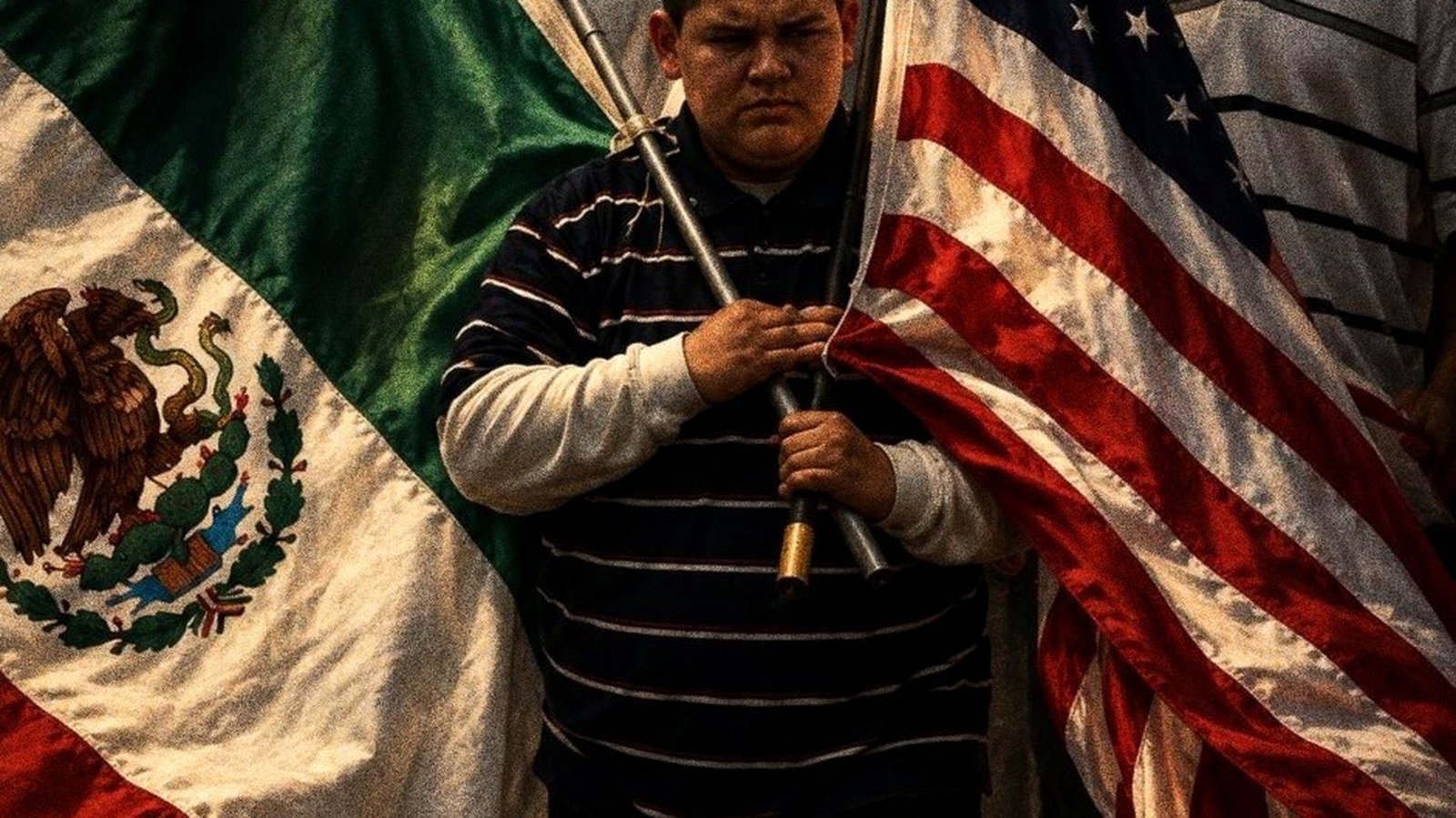
“Citizenship doesn’t end at the border; neither does responsibility.” This statement summarizes a reality that defines the Mexican population living in the United States today: more than 38 million people of Mexican origin, according to the US Census Bureau, American Community Survey (ACS) 2025, they reside in a country whose institutional decisions directly affect Mexicans in transit, in detention, and returning. This presence is not merely demographic; it is political. In this context, the electoral participation of citizens of Mexican descent—whether by naturalization or birth—takes on a dimension that transcends the domestic sphere of the United States: it becomes a form of transnational responsibility.
The Mexican community in the United States is one of the largest transnational populations in the world. Its political influence has grown steadily: the Pew Research Center reports that, between 2020 and 2025, the number of registered voters of Mexican origin increased, especially among young binational citizens. This increase is not merely statistical; it is structural. It implies that a growing number of people are participating in a political system whose decisions have direct effects on Mexican communities on the move. Citizenship in the United States does not sever ties with Mexico; rather, it transforms them into a responsibility that operates in two directions: toward the country of residence and toward the Mexican communities affected by U.S. immigration policies.
Between January 2025 and October 2026, the Government the Government Accountability Office (GAO) released audits documenting persistent failures at ICE detention centers: deficiencies in medical oversight, delays in emergency care, non-compliance with minimum standards, inconsistent surveillance practices, and failures in crisis response protocols. In previous audits, the GAO has highlighted cases where a lack of timely medical attention led to serious hospitalizations, and where the absence of clear protocols increased risks for people in custody. These failures are not abstract; they affect real lives. And they show that the protection of people in custody remains an institutional problem that is rarely corrected without public pressure. This evidence is central to understanding why voter participation in the United States is politically relevant: the vote influences the system that defines immigration policies and detention practices that directly impact Mexicans beyond the border.
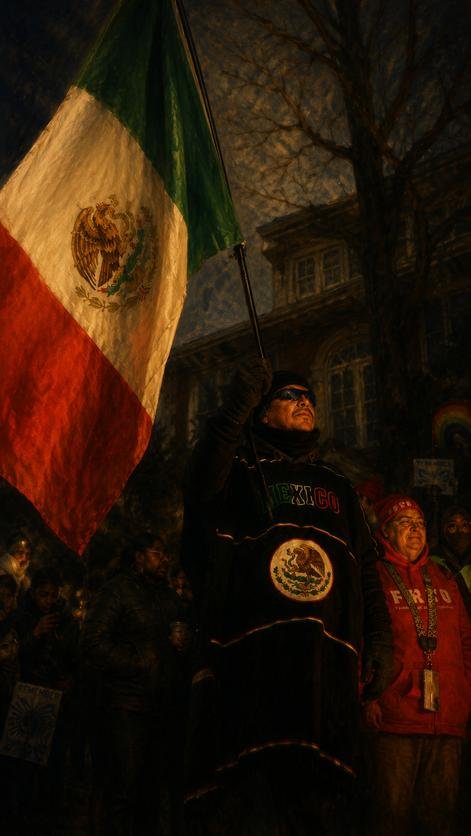
Voting is not an isolated act. It is a form of binational influence. Every vote cast by a citizen of Mexican origin impacts decisions that determine detention standards, oversight resources, domestic operations, racial profiling practices, and budgetary priorities related to immigration. In other words, participating in elections in the United States is exercising a form of transnational responsibility, because it connects daily life in the country of residence with institutional decisions that impact Mexican communities on the move. Voting not only expresses political preferences; it protects lives. It not only participates in American democracy; it influences the Mexican migrant experience.
This electoral responsibility is amplified when it is articulated with civic practices that sustain and expand its political impact. In the United States, pro – migrant civil society organizations with a Mexican and Latin American presence have played an important role in documenting the effects of immigration policies, providing basic guidance during administrative processes, bringing public visibility to cases that often fall outside institutional scrutiny, preparing reports for local and federal authorities, participating in public hearings on surveillance practices, and disseminating information about rights during immigration operations. These actions do not replace the State, but they do contribute to addressing shortcomings documented by the GAO and the Department of Homeland Security (DHS) issues should be known and discussed in public and legislative spaces.
The transition between these two spheres—the electoral and the civic—is fundamental: community action produces evidence and visibility; electoral participation transforms that evidence into institutional influence. Civil society organizations generate information that allows voters to make informed decisions about migration policies, while the vote influences the institutional framework that regulates the practices these organizations monitor. This interaction creates a binational political circuit: the community documents, makes visible, and provides support; voting citizens transform that information into decisions that affect real lives.
Voting in the United States is not an isolated, individual act. It is participating from a position of citizenship that coexists with a profoundly unequal reality: millions of Mexicans who are part of our daily lives—family, friends, coworkers, community members—do not have access to immigration regularization or the right to vote, even though they live, work, and contribute to the same country. This inequality is not abstract. It is a daily experience. It is the political distance between those who can decide and those who, despite sharing a home, history, and community, are excluded from the democratic process that defines their destiny.
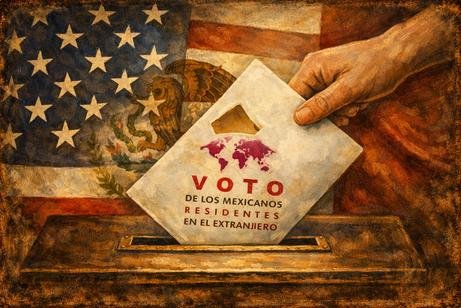
In this context, the electoral participation of citizens of Mexican origin takes on an ethical and political dimension that transcends the individual sphere. It is a transnational responsibility that protects real lives, because the decisions made at the ballot box determine whether the people we love will be recognized as subjects of rights or reduced, once again, to the obsessively repeated category of “illegals” by political actors who solicit our vote while denigrating those who are part of our lives. Exercising citizenship in the United States, then, is an act of accepting or rejecting this contradiction. It implies recognizing that the vote not only expresses political preferences but also defines the conditions of existence of those who share our history, our language, and our mobility.
The question for the Mexican diaspora—naturalized, binational, and Mexican-American—is unavoidable and profoundly political: what does it mean to exercise citizenship in a country where millions of people we love are violated, made invisible, or criminalized by those who seek our vote?
Responding to it—at the ballot box and in everyday civic life—is not a symbolic gesture. It is fully assuming the transnational responsibility of living, working, and loving in a country where immigration policy defines the destiny of our communities, and acting accordingly.
-
Mexico’s Electoral Institute Under Lorenzo Córdova Implicated in USAIDgate
Córdova, who ran the INE as an open foe of the 4T, oversaw its pacts with Facebook, Twitter and Google under the guidance of IFES, declassified files reveal.
-
People’s Mañanera November 25
President Sheinbaum’s daily press conference, with comments on violence against women, housing in Guerrero, and the INE.
-
Sheinbaum Backs Chiapas Coffee Growers: “Nestlé Must Pay a Fair Price”
Nestlé cut payments from 60 to 43 pesos per kilo, affecting about 165,000 families. Mexico’s agriculture secretary will support talks.