Trump Wants Major Surrender from Mexico on USMCA
This article by Nancy Flores originally appeared in the March 7, 2026 edition of Revista Contralínea. The views expressed in this article are the authors’ own and do not necessarily reflect those of Mexico Solidarity Media or the Mexico Solidarity Project.
The first official round of review of the United States-Mexico-Canada Agreement (USMCA) begins on March 16; prior to this, President Donald Trump requested the elimination of 54 non-tariff barriers , including issues related to energy, food, mining, pharmaceutical and technological sovereignty, as –in his opinion– these limit the capabilities of the trade relationship.
The requests from the US government – made by Trump himself in July 2025, when he granted Mexico an extension on the 30 percent tariffs he sought to impose across the board – aim to overcome the “difficulties” faced by US companies in having profitable businesses or expanding them, especially in areas of exclusivity for the Mexican State or definitively prohibited.
According to the 2025 National Trade Estimate Report on Foreign Trade Barriers of the President of the United States on the Trade Agreements Program, the US Presidency considers the following as non-tariff barriers: restrictions on private investment in the energy sector; the ban on genetically modified corn; fracking and open-pit mining; the nationalization of lithium; the gradual denial of permits to import glyphosate and other pesticides; the reduction of permits for planting genetically modified cotton; restrictions on the import of fresh potatoes; and the dominance of the private company Telmex-Telcel in the telecommunications market, among other items.
When asked about this by Contralínea –in her press conference on February 3–, President Claudia Sheinbaum stated that there would be no concessions on sovereign issues, and added that most of the 54 non-tariff barriers had already been addressed.
“There are 54 [non-tariff barriers announced by the United States government] that have been under discussion for some time now, several months. Almost all of them have been resolved. And there are some where we can’t do exactly what they say. For example, regarding… they said: ‘barriers are being put up in the electricity sector.’ So we said: ‘well, no.’ [Because] there’s simply a new Constitution, there’s a new law that establishes a 54-46 ratio; there’s a 46 percent opportunity for private investment.”
The President confirmed to Contralínea that one of the barriers the Trump administration asked to be removed is related to the Calica mine case. “There is indeed the issue of Vulcan—it’s called that—which is the area where they had a limestone mine, which President López Obrador [canceled]. They exceeded the environmental impact limits; they overexploited the area. It was declared a Protected Natural Area. They have a dispute related to the Treaty, and they are looking for a mechanism, if there is a solution: that they could mine in another location that is not a protected area, with all the established environmental criteria, and that the area, which is ultimately their property, could be used for other purposes. A port they have there could have other uses. So, they are working on that; there is no agreement yet on that front.”
Sheinbaum Pardo added that among the 54 matters reviewed were “ some competition issues related to the new competition agencies , the National Antitrust Commission. And some other issues like that. […] The entire coordination is handled by the Ministry of Economy. But we never give in on anything that we consider to violate our sovereignty, our laws, or our project.”
“But wasn’t the majority going in that direction, that is, to put our sovereignty at risk?,” the president of the Republic was asked.
“No, no, not at all. And it had a lot to do with clarifications of issues that ‘were supposed to be violating the Treaty,’ and which were shown not to be violating the Treaty.”
Mexico’s “non-tariff barriers,” according to Trump
The 2025 National Trade Estimate Report on Foreign Trade Barriers reveals the areas in which the Donald Trump administration has pressured Mexico in the context of the upcoming review of the USMCA. Among these, the alleged barriers to investment in the energy sector stand out. These include prioritizing Pemex’s oil exploration , restricting private participation in the electricity sector to 46 percent (54 percent is reserved for the CFE), and definitively prohibiting fracking. In the mining sector, the US government criticizes the fact that only the state-owned company LitioMX is authorized to exploit this strategic metal.
These strategic areas, linked to issues of national sovereignty, were recovered following the arrival of the so-called Fourth Transformation (first, during Andrés Manuel López Obrador’s six-year term, and now with President Sheinbaum). Even the US report itself acknowledges this: “Since December 2018, Mexico has implemented an energy policy focused on restoring the primacy of its state-owned electricity company, the Federal Electricity Commission (CFE), and the state-owned oil and gas company, Petróleos Mexicanos (Pemex) .”
It adds that “private companies operating in Mexico are often unable to participate effectively, or even at all, in the Mexican energy sector due to frequent delays, unexplained or unjustified rejections, and inaction regarding applications for new permits or modifications to existing permits.” It criticizes the fact that, in June 2022, the Ministry of Energy announced a new policy requiring users of the gas transportation network to source their natural gas from Pemex or the CFE, which led “several” U.S. companies to withdraw from the Mexican energy market. And in July 2022, the United States requested consultations with Mexico under Chapter 31 of the USMCA regarding these measures.
However, the oil sector is not entirely closed to US investment: a report from the US Department of Commerce, dated February 12, 2016, indicates that private operators who secured blocks during the 2015-2018 bidding rounds continue exploration and development activities, including drilling campaigns, seismic surveys, and the construction of offshore platforms in the Gulf of Mexico. “ US companies are key players and are actively seeking technology, equipment, and service partners to help meet production timelines and improve efficiency in both deepwater and onshore operations.”
In addition, “Pemex’s 2025-2030 investment plan calls for the development of 18 new fields, the construction of 15 platforms, and drilling in existing shallow-water and onshore fields, which will maintain demand for platforms, derricks, subsea systems, and well services.” The Department of Commerce even indicates that these intermediate projects present opportunities for U.S. suppliers of equipment, engineering, and EPC services. As an example, it cites Mexico’s plans to install more than 14 pipelines (175 kilometers), build and expand storage terminals, and modernize its refining network, including six existing refineries and the near-complete construction of the Dos Bocas refinery in Tabasco.
“These projects require pumps, compressors, control systems, and construction services, and are subject to 25 percent local content requirements (increasing to 35 percent by 2025). U.S. companies with competitive technology and local partnerships are well-positioned to participate, particularly in projects to enhance desulfurization capacity and meet the growing demand for cleaner fuels in Mexico.”
Areas that the US seeks to free up for IP
However, the US Presidential report on non-tariff barriers complains that in October 2024 – already with President Claudia Sheinbaum – Mexico ratified a constitutional amendment to reclassify CFE and Pemex as public companies, instead of productive companies, “in order to undermine the participation of private companies, including US companies, in the Mexican energy market.”
He adds that in January 2025, President Sheinbaum “presented a package of reforms with six bills related to energy that, among other things, include as a principle guaranteeing the prevalence of the CFE and its maintenance of at least 54 percent of the average energy sent to the grid, requiring the participation of the CFE in at least 54 percent of any ‘mixed investment’ electricity generation project and establishing a preference for the CFE over private entities in the generation and marketing of electricity.”
It also expresses its rejection of the likely ban on fracking (extraction of liquid and gaseous hydrocarbons through hydraulic fracturing), considered not only as a highly polluting technique, but also as a waste of clean water.
The United States also complains about Mexico’s public policy on mining, which prohibits open-pit mining, and about the nationalization of lithium—both promoted by the current administration. According to the Trump administration, the legislative amendments stipulate that “the exploration, exploitation, and use of Mexican lithium [remains] under the exclusive control of a newly created state-owned company, LitioMx, and exclude private companies from obtaining concessions, licenses, contracts, permits, and authorizations to carry out these activities.”
The US Presidency also attributes restrictions to the USMCA due to barriers to investment in transportation infrastructure , arguing that this area is completely closed to foreign investment. Furthermore, it questions the 49 percent foreign ownership limit for express courier companies, land for agricultural, livestock, and forestry purposes, as well as for port management services.
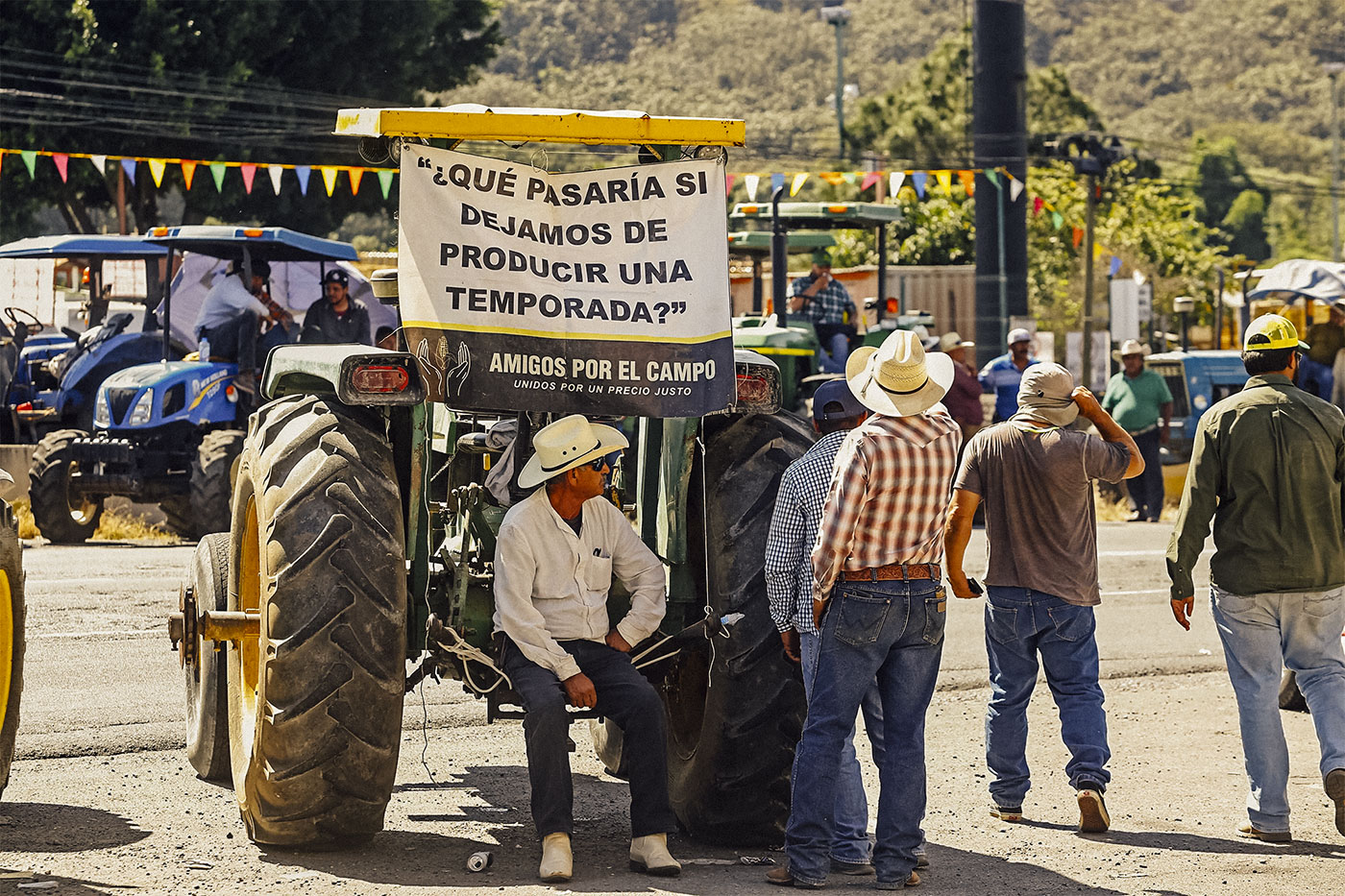
Threat to Food Sovereignty
Another area in which the Trump administration has shown interest is related to Mexico’s food sovereignty. Identifying sanitary and phytosanitary barriers that supposedly limit the USMCA, the 2025 National Trade Estimate Report on Foreign Trade Barriers points to the US Presidency’s dissatisfaction with the ban on genetically modified corn and expresses opposition to Mexico’s Biosafety Law, which places limits on genetically modified products.
Furthermore, the USMCA panel on genetically modified corn, which ruled against Mexico in December 2024 in the dispute opened by the United States, after the government of President López Obrador published a decree to prohibit human consumption of that genetically modified grain, and thereby protect the main reservoir of that food, refers to the USMCA panel on genetically modified corn.
Constituted in accordance with Chapter 31 (Dispute Settlement) of the USMCA, the panel determined that some elements of the Decree on glyphosate and genetically modified corn – published in the Official Gazette of the Federation on February 13, 2023 – cannot be applied “as they are not based on an adequate risk assessment, scientific evidence and relevant international standards.”
Regarding this, the report from the U.S. President’s Office on non-tariff barriers states: “In June 2024, the United States participated in a hearing before the dispute settlement panel. In December 2024, the panel issued its final report, agreeing with the United States on all seven legal claims under the USMCA. On February 5, 2025, Mexico issued a measure declaring ineffective the measures that the U.S. Trade Representative successfully challenged in the USMCA dispute. The United States will continue to closely monitor Mexico’s compliance with its USMCA commitments to ensure that its agricultural biotechnology measures are science-based and provide U.S. corn producers with the market access that Mexico agreed to grant under the USMCA.”
In that same section, it rejects the gradual ban that our country seeks to implement on glyphosate and other highly toxic pesticides and agricultural chemicals. It also complains about the limitations on its exports of fresh potatoes and the restrictions on permits for U.S. companies to plant genetically modified cotton in Mexican territory.
The Other Alleged Barriers
As part of the alleged limitations to the USMCA, the U.S. government also identifies customs and trade facilitation barriers. In this regard, it notes that Mexico frequently notifies new customs or tax requirements only two weeks before they take effect, leaving U.S. exporters little time to adapt their systems and comply with the change.
It also calls for the elimination of restrictions applied at some ports to the entry of goods: “The USMCA prohibits arbitrary limits on the number of ports in which a customs broker may operate. However, Article 161 of Mexico’s Customs Law limits a broker’s operations to four ports if they are not part of a customs agency. The United States continues to urge Mexico to amend the law to allow brokers to operate at any port where they can perform their duties.”
Furthermore, it cites barriers to market access for medical devices, supplies, and pharmaceuticals. On this issue, it notes that COFEPRIS should expedite the permitting process.
Regarding intellectual property protection, the U.S. government is urging Mexico to expedite the registration of patents and trademarks, but also to curb the sale of counterfeit or pirated goods. As an example of these sales, it notes that “the El Santuario and San Juan de Dios markets (in Guadalajara), as well as Tepito (in Mexico City), are listed in the 2024 Notorious Markets Review (Notorious Markets List) for the sale of pirated and counterfeit products.”
Additionally, the Trump administration points out that barriers still exist to electronic payment, insurance, and telecommunications services. In the latter category, it complains about the dominance of a private company of Mexican origin: Telmex-Telcel (América Móvil), which it accuses of monopolizing the market.
In this regard, he points out: “despite the profound reforms of the telecommunications sector in 2013 and 2014, new market entrants still have to compete with the dominant traditional provider that has maintained a market share of almost 70 percent, and which was designated as a ‘preponderant economic agent’ by the IFT.”
Although it does not refer to Telmex-Telcel by name, it does point out that “the entrenched position of this dominant provider, particularly in the mobile services market, demonstrates the constant need for rigorous application of the regulations that the IFT adopted to address its status as a preponderant economic agent.”
Therefore, he criticizes the constitutional reform of December 2024 to eliminate autonomous bodies, since it replaces the IFT with a new antitrust competition agency, which could benefit Telmex-Telcel.
-
Mexican External Relations Secretariat Demands US Investigate Death of Mexican Citizen in ICE Custody
14 Mexican citizens have lost their lives in ICE custody or in immigration operations during President Donald Trump’s second term.
-
Mexican Navy Locates Two Sailboats Carrying Aid to Cuba
“The convoy is still en route to complete its mission: to deliver urgently needed humanitarian aid to the Cuban people,” said Nuestra America’s spokesman, who thanked Mexican and Cuban authorities for their “support, coordination and professionalism.”
-
PEMEX & Energy Security in the Face of the International Crisis
In Mexico, energy is a public good provided by the State to ensure the continuity, reliability, accessibility, affordability, and sustainability of fuel and electricity supply as pillars of development.