Vulcan: Mexico’s Victory
This editorial by the La Jornada editorial board originally appeared in the July 29, 2026 edition of La Jornada, Mexico’s premier left wing daily newspaper.
The Arbitral Tribunal of the World Bank’s International Centre for Settlement of Investment Disputes (ICSID) dismissed nearly all the claims that Vulcan Materials had maintained against Mexico since 2018 under the defunct NAFTA, and only granted it compensation of $15 million versus the $1.9 billion the company was demanding. This amount, described by the U.S. firm as insignificant, corresponds to the closure of a property of Calizas Industriales del Carmen (Calica, its local subsidiary) carried out in January 2018.
The ruling represents a great triumph for the Mexican state, whose importance increases when considering that these types of bodies are designed to favor corporate interests and undermine the sovereignty of nations. However, it is unlikely to put an end to Vulcan’s ambitions to continue enriching itself at Mexico’s expense: in addition to the fact that the parties can request the annulment of the resolution, the company has lobbied the U.S. Congress and government to get directly involved. Last December, 35 Republican legislators urged President Donald Trump to pressure his counterpart Claudia Sheinbaum to enter into “good faith negotiations” with the company. In a context where the magnate and his cabinet are hunting for pretexts to interfere in Mexico’s internal affairs, there is a real risk that Vulcan’s claims could give rise to tariff blackmail or other forms of extortion.
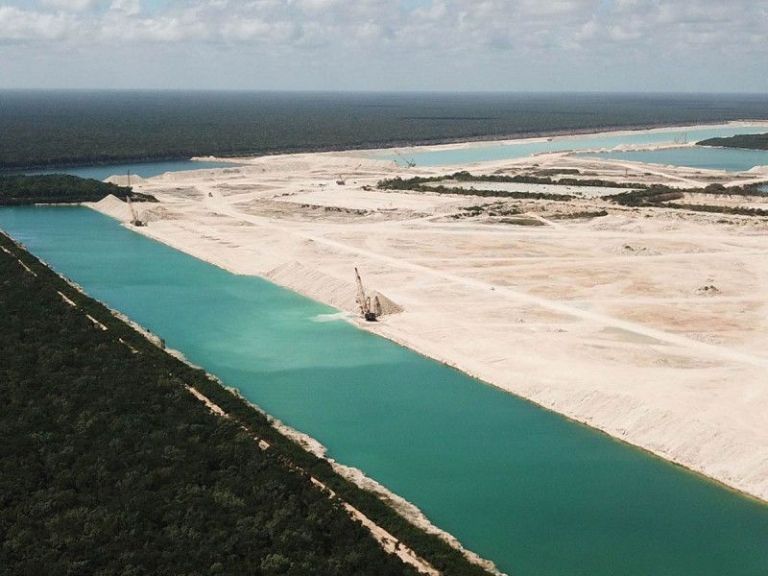
The history of this company in our country is an example of how much damage a neoliberal measure can do decades after it was applied.
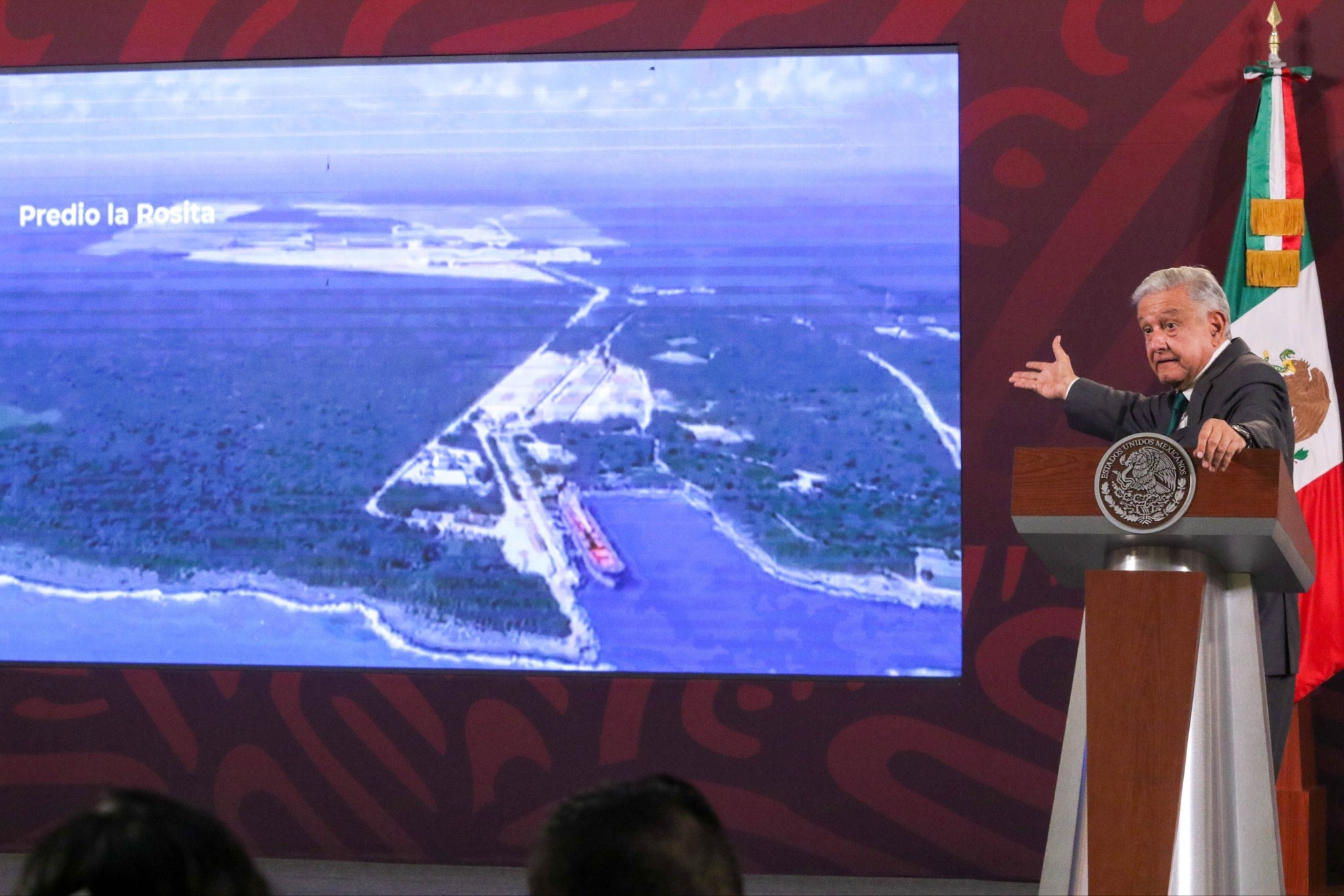
Former president Miguel de la Madrid Hurtado (1982-1988) ordered the sale of 1,200 hectares on the coast of what is now the Riviera Maya to Vulcan, and granted it permits to extract stone materials so that it would build a port that would improve connectivity with the island of Cozumel, even though the Constitution expressly prohibits (and prohibited then) direct ownership of land and waters by foreigners within a 50-kilometer strip from the beaches.
The permits granted during the De la Madrid administration, tasked with inaugurating the neoliberal model in Mexico, still considered some safeguards for sovereignty and national interests: for example, it established that the State “may at any time declare the concession null and void when the public interest so requires,” in addition to setting a 20-year term for the license.
These limits on corporate voracity were eliminated by Carlos Salinas de Gortari, who deprived the country of the use of that port which by law would have come to belong to it, extended the concession for 30 years (which expired in 2024), and erased the possibility of the public interest overriding private profit. Those decisions turned an expanse of jungle of enormous tourist, ecological, and strategic value into a hole from which minerals are extracted that are not even used in Mexico, but are sent directly to the United States.
In 2017, during the Enrique Peña Nieto administration, the Federal Attorney for Environmental Protection (Profepa) suspended activities because the company was extracting more volume than authorized. Later, former president Andrés Manuel López Obrador tried to reach an understanding with Calica, but the company repeatedly flouted the agreements, so in May 2022 he shut down its operations and in 2024 declared the disputed area a protected natural area. It is worth noting that before making this decision, he offered to buy the land from Calica, but it refused, showing that it is not willing to make any “good faith” deal. By then, Profepa had confirmed serious deterioration of the ecosystem, with the destruction of cenotes and the contamination of underground rivers. Likewise, it is suspected that the company devastated archaeological heritage without leaving a trace.
The difficulties in recovering the territory unduly handed over to Vulcan, the abuse and overexploitation the company made of natural resources, its attempts to defraud the Mexican state, and the foreign interference it invokes in defense of its illegitimate interests constitute a lesson about the dangers of attracting “investment” at any cost and of opening the country to foreign capital without due safeguards for national sovereignty, the environment, and the common good.
-
People’s Mañanera October 21
President Sheinbaum’s daily press conference, with comments on Pemex, fuel theft, Jalisco’s water crisis, missing persons, and the lie detector.
-
Jáuregui’s Arrest Does Not Close the CIA Case in Chihuahua; Morena Demands Broader Investigations
Morena leader Ariadna Montiel holds Governor Maru Campos politically responsible and says ex-prosecutor Guillermo Zuany must also face justice.
-
Morena Accuses Violation of the Secular State Over Award Ceremony for Evangelicals in the Chamber of Deputies
A representative of Israel’s embassy attended the PRI-hosted event, and the group’s founder was arrested in the U.S. for drug trafficking in 2007, Morena deputies said.