World Cup Construction at Estadio Azteca Causing Respiratory Problems say Residents
This article by Erik López originally appeared in the March 3, 2026 edition of La Silla Rota.
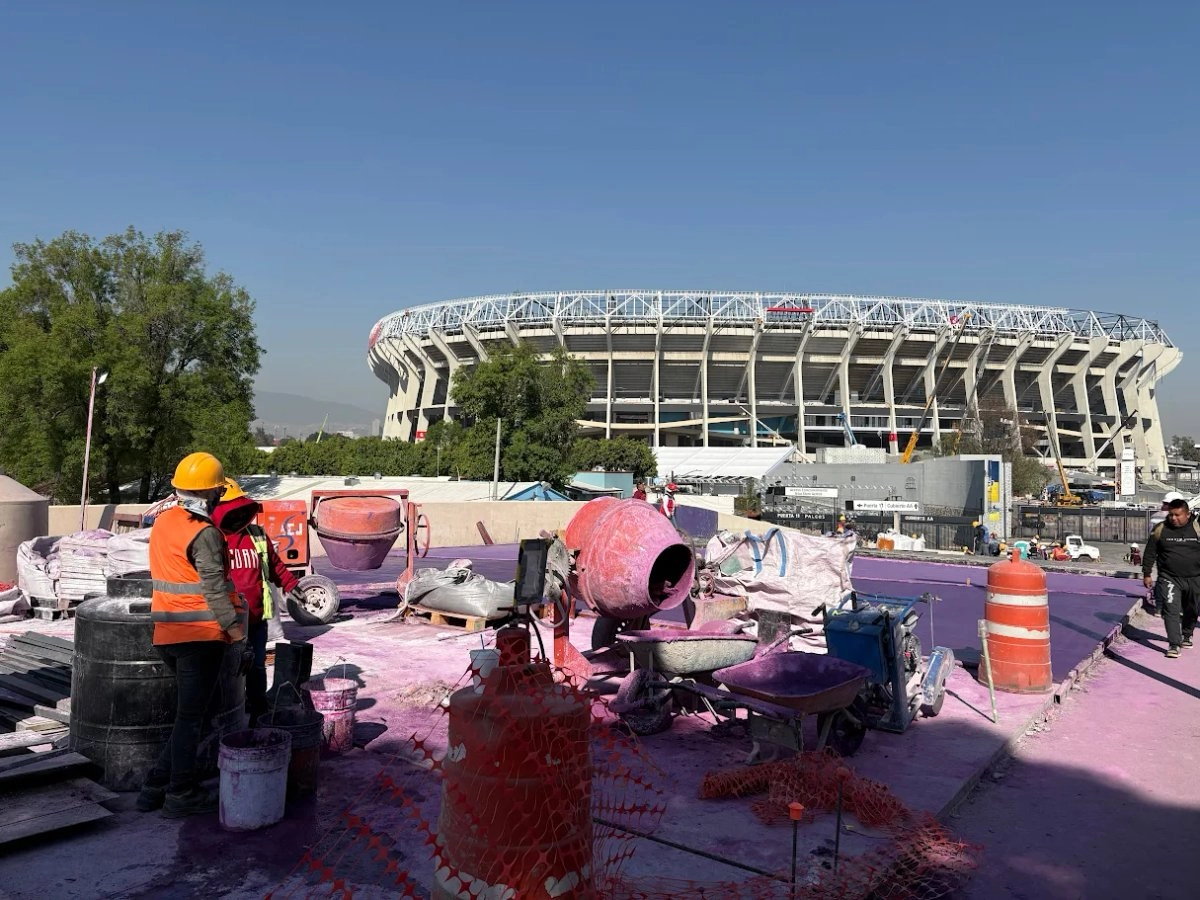
The 100-day countdown to the start of the 2026 World Cup has begun, and crews of workers are busy replacing pavement, sidewalks, pruning trees, and building pedestrian crossings in the neighborhoods surrounding Azteca Stadium.
In neighborhoods such as San Lorenzo Huipulco, Pueblo de Santa Úrsula Coapa, Santa Úrsula, IMAN, among others, the works are going full steam ahead so that the tournament can be inaugurated on June 11 and the first of the five matches that will have the Azteca as the stage can be played.
While the teams are making progress on the works, residents told La Silla Rota that the works to improve the environment of the area have caused problems.
María Esther Méndez said that she and her family have been suffering from respiratory problems since the excavations and the movement of heavy machinery around Azteca Stadium began.
The woman, a resident of the Indigenous town of Santa Úrsula Coapa, recounts that throat irritation, persistent cough, and infections became constant since the remodeling and resurfacing work began in the area.
During a tour of neighborhoods like Santa Úrsula and Huipulco, it was observed that cars, businesses, and homes are covered in a layer of dust. Although there are no official figures, doctors in the area estimate that up to 70% of their patients suffer from some ailment related to constant exposure to particulate matter and the fumes emitted by heavy machinery working on the streets surrounding the stadium.
Dust Spread Over Houses & Businesses
One hundred meters from the Azteca Stadium, Thelma Díaz is cleaning the dust covering her plants, furniture, and water tank for the second time this week. She lives on San Álvaro Street, from whose rooftop she can see the building that will host the opening ceremony of the World Cup in 100 days. Below, on the street, the machinery never stops.
During the interview, Thelma coughs several times. She says that for months she has felt a constant irritation in her throat, a dryness that causes her to clear her throat and that doesn’t go away.
Since then, dust enters through doors and windows, even when they remain closed.
“There are two asthmatics in my house, and they’re using more salbutamol because of the dust. We wear face masks almost all day. Even though I’m not asthmatic, I’ve been waking up with wheezing ever since they said it was asthma.”
In her living room, Thelma runs the palm of her hand over a plant leaf and then over the water tank. She shows it to La Silla Rota. With a single swipe, her hand is covered in dark dust. “And I cleaned it a week ago,” she says.
In addition to respiratory symptoms, one of her children has developed skin allergies, something she says had never happened before.
“My son has never had skin allergies before. I feel like this is related to it; it’s never happened to him before. We’re worried.”
“I have a cold all the time.”
The symptoms Thelma describes are repeated almost house by house. Fernando Sánchez, who walks every day along Circuito Estadio Azteca to go down to Calzada de Tlalpan and take public transportation, says that for several months he has had watery eyes, a cough, and irritation with a constant runny nose.
“Personally, I didn’t have any problems with asthma or anything like that, but unfortunately, for the last few months, my nose has started running a lot and my eyes start watering. I feel like I have a stuffy nose all the time,” he says in an interview, his voice congested.
Fernando points out that the tar smoke and the gases emitted by heavy machinery aggravate his discomfort.
Fernando and other residents of the town of Santa Úrsula Coapa have sought treatment for these respiratory problems at clinics in the neighborhood. One of these clinics is located on Las Flores Street, where Dr. Daniela has been seeing patients for several years.
In an interview with La Silla Rota, the professional states that in recent months consultations for respiratory problems have increased significantly.
“Since January, I think 50% of my sales have been for respiratory issues. The best-selling items are cough syrups, antihistamines, and bronchodilators. And I have a patient I’m treating who’s even going to have surgery. That’s how bad the dust is because she’s been undergoing treatment,” she says.
Daniela explains that the dust began to be noticeable last year, but it was in January that she saw a spike in cases. “Even when I’m inside with the door closed, the dust smells and gets in,” she says.
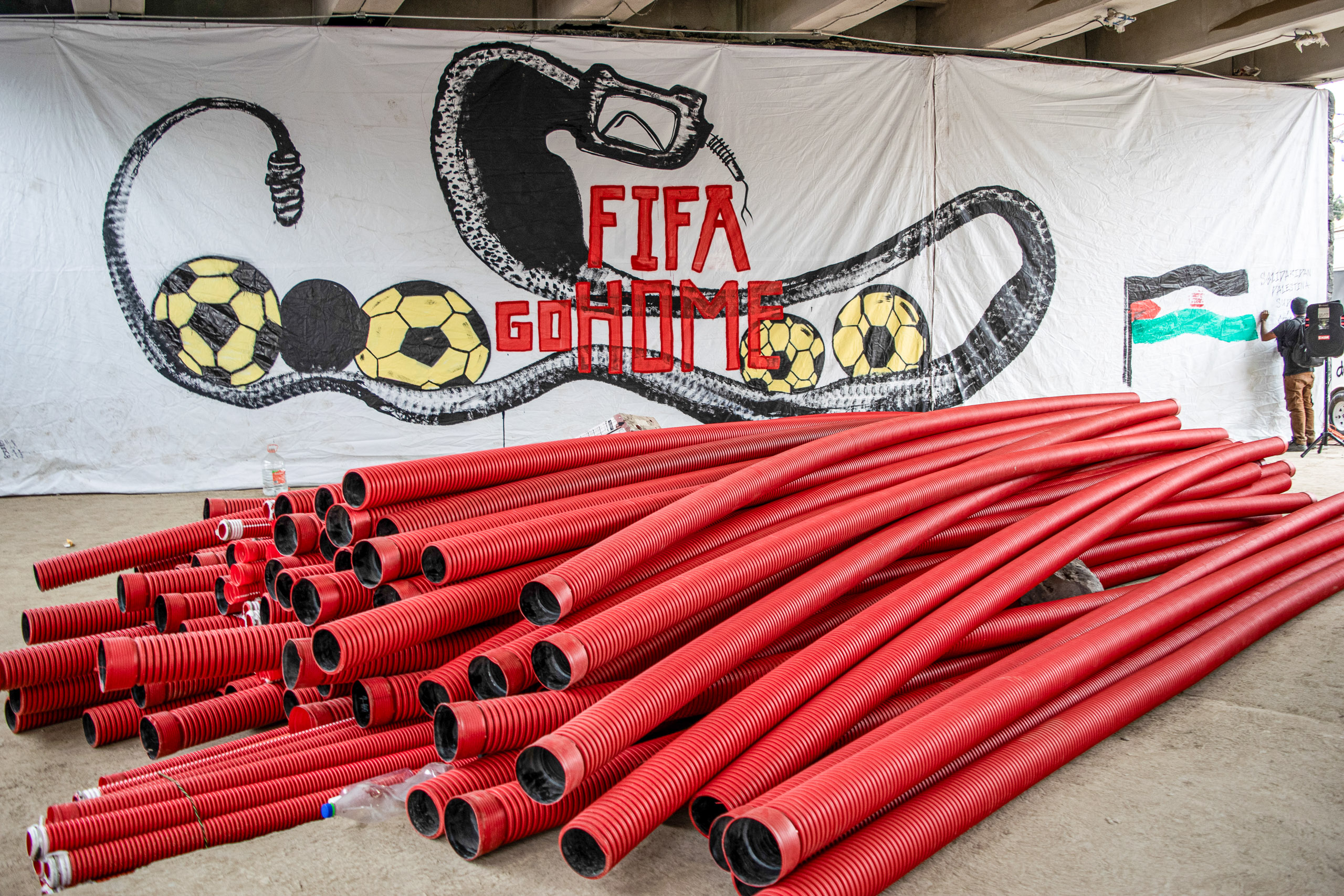
Businesses Affected & Demands on Authorities
Rubén Ramírez, a traditional authority of the Indigenous community of Santa Úrsula Coapa, says he has held talks with Mexico City authorities to explain the impacts.
He points out that the removal of tepetate, a fine and volatile material characteristic of the area, and the constant passage of heavy machinery have generated large amounts of dust that are dispersed through the streets of the town.
Rubén has asked the authorities for measures to reduce dust and emissions, regulate construction hours, and establish mitigation actions to protect the population.
25 Days Until the Opening Match
In October 2025, the Mexico City government reported that the rehabilitation works in the vicinity of the Azteca Stadium included the intervention of more than 16,000 square meters, with asphalt pavement rehabilitation, sidewalks, walkways and new lighting, in addition to the construction of complementary infrastructure in the Huipulco area.
It is precisely these works that residents of Santa Úrsula and surrounding neighborhoods point to as the origin of the dust that, they claim, has caused respiratory problems.
During the program’s launch, Mayor Clara Brugada stated that the works would guarantee basic rights for the surrounding population, such as access to water, drainage, quality public services, and improved mobility. It was also indicated that the projects would be completed before the first international matches leading up to the 2026 World Cup.
With 25 days to go before the opening match between the Mexican and Portuguese national teams, scheduled for March 28, work continues on various fronts around the stadium.
-
Failing the Stress Test: What the Measles Resurgence in Mexico Reveals About a Fragmented Health System
Surveying the land, 13 months into Mexico’s most recent outbreak.
-
People’s Mañanera March 24
President Sheinbaum’s daily press conference, with comments on electoral reform, PAN, femicide, and diesel prices.
-
President Sheinbaum Insists US Eliminate Tariffs on Cars, Steel & Aluminum
The Mexican President said that lowering or eliminating tariffs is part of the discussion with the US, but not yet reflected in reality.