National Institute of Indigenous Peoples & Afro-Mexican Communities Agree on Comprehensive, Just Development Path
This article originally appeared in the October 20, 2025 edition of La Jornada, Mexico’s premier left wing daily newspaper.
Mexico City. The National Institute of Indigenous Peoples (INPI) held the first regional assembly to develop the Regional Justice and Development Plan for the Afro-Mexican People of the Costa Chica of Guerrero and the Oaxaca Coast. This plan seeks comprehensive, intercultural, and sustainable development to improve the living conditions and common well-being of these communities.
In the context of Oaxaca’s Day of the Black Afro-Mexican People (October 19), the Institute, together with local authorities, agreed to work on seven thematic areas: Afro-Mexican culture and identity; Afro-Mexican rights; basic and community infrastructure; Afro-Mexican economy and natural resources; culturally relevant education; health and traditional medicine; and land and territory.
This initiative is part of the Lázaro Cárdenas del Río General Plan, which covers the Balsas region, including the states of Oaxaca, Guerrero, Michoacán, Puebla, Morelos, and the State of Mexico. It is led by the Chief of the Office of the President of the Republic, Lázaro Cárdenas Batel.
The INPI indicated that this comprehensive development plan complies with the constitutional mandate of Article 2, which establishes that the State must determine public policies that guarantee the effective exercise of the rights of indigenous and Afro-Mexican peoples.
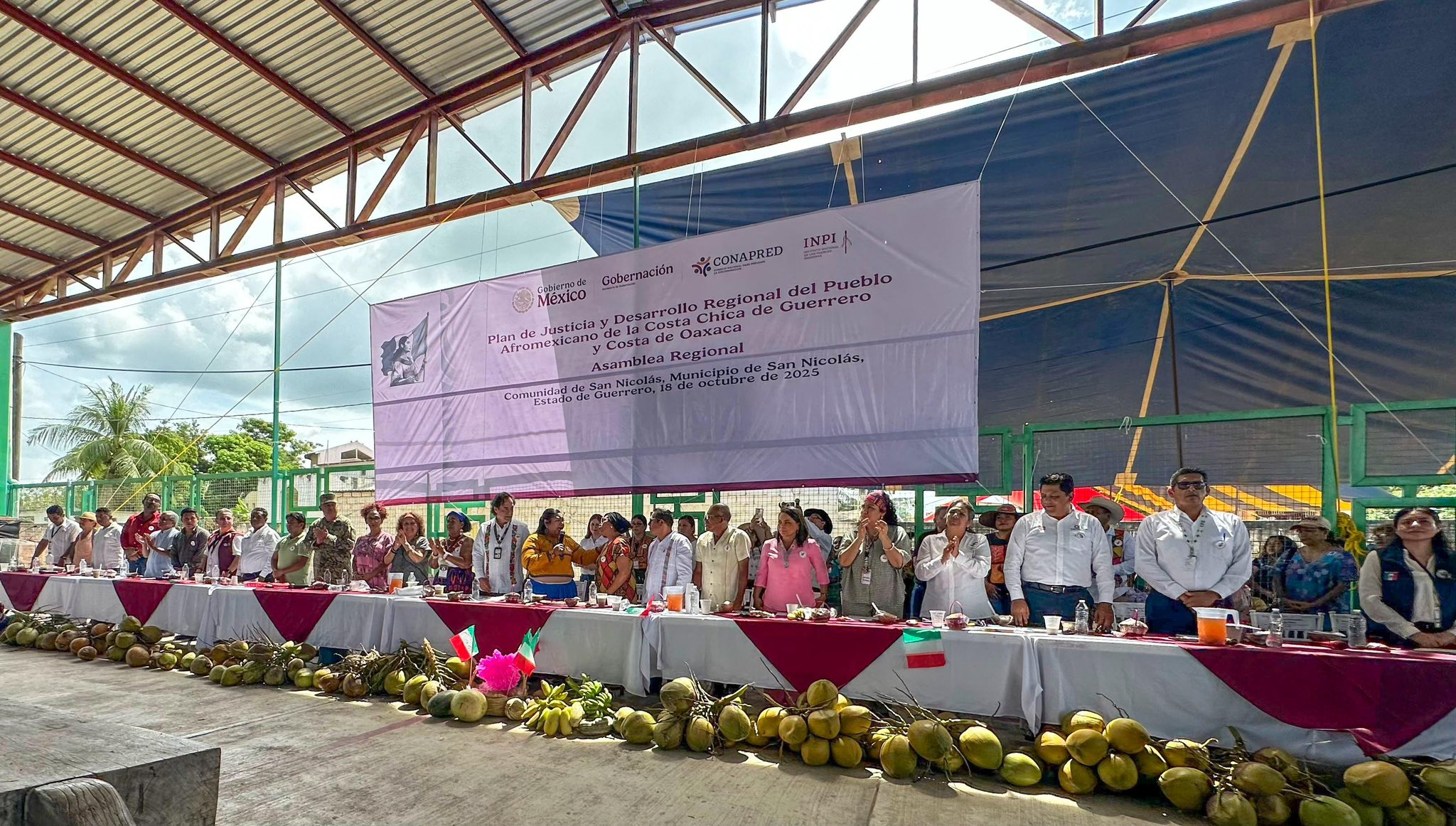
Gustavo Torres Cisneros, general coordinator of Cultural Heritage and Indigenous Education at INPI, reported that they are making progress on the General Law on the Rights of Indigenous and Afro-Mexican Peoples. “We hope that next year we will be able to conduct the consultations, as President Claudia Sheinbaum Pardo has stated, and send it to the Legislative Branch for approval.”
For her part, the president of the National Council to Prevent Discrimination (CONAPRED), Claudia Olivia Morales Reza, mentioned that this plan “is a historic debt. It is not a process that seeks to be imposed, but rather one that will be heard, recognized, and built collectively, based on voices and knowledge.”
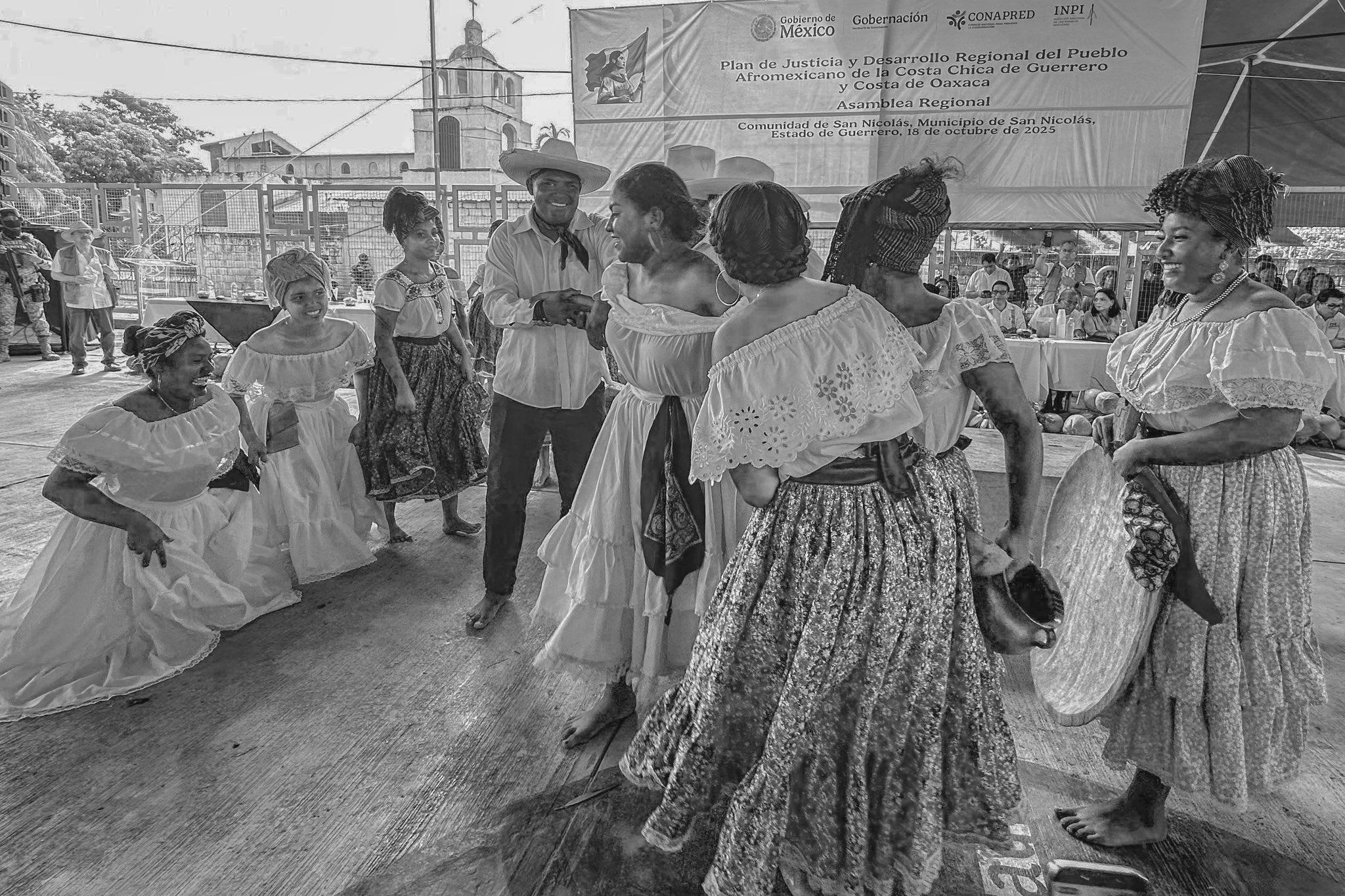
After a cultural presentation of dance and music in the municipality of San Nicolás, Guerrero, Sergio Peñaloza Pérez, representative of the Afro-Mexican people, affirmed that one of the central demands of the movement was constitutional recognition. Therefore, he welcomed its inclusion in Article 2 of the Magna Carta and in local constitutions in several states, since “it constitutes the legal mechanism through which they can effectively exercise the right to self-determination and autonomy recognized in national and international law.”
-
Thousands Demand Clean Water in Jalisco and Lemus Uses It to Repress Them
In Jalisco, governed by the opposition party Movimiento Ciudadano, police met the march with water cannons and tear gas, and protesters reported arrests and two people disappeared.
-
Hurricane Simon Paralyzes Towns and Highways in Jalisco Amid Forecast That It Will Make Landfall
With an erratic path, the Category 4 storm keeps the coast shut in under nonstop rain, though no casualties have been reported so far.
-
Mexican Book Fairs
“Book fairs in Mexico are among the great gatherings that speak of how a people nourishes itself on books,” observes Poniatowska.