In San Quintín, Agricultural Workers Pick for Northern Profit
This article by Mireya Cuéllar originally appeared in the April 1, 2026 edition of La Jornada, Mexico’s premier left wing daily newspaper.
San Quintín, Baja California. It’s barely 3:30 in the morning, but two old buses are already parked in front of the Alejandra market, next to the Transpeninsular Highway. At the wheel of the buses, the driver makes the offer in monosyllables: “To Rosario, to the pea!”, “leaving and paying.”
The cold air of the semi-desert goes unnoticed by the men and women who wear something similar to a uniform that only leaves their eyes visible.
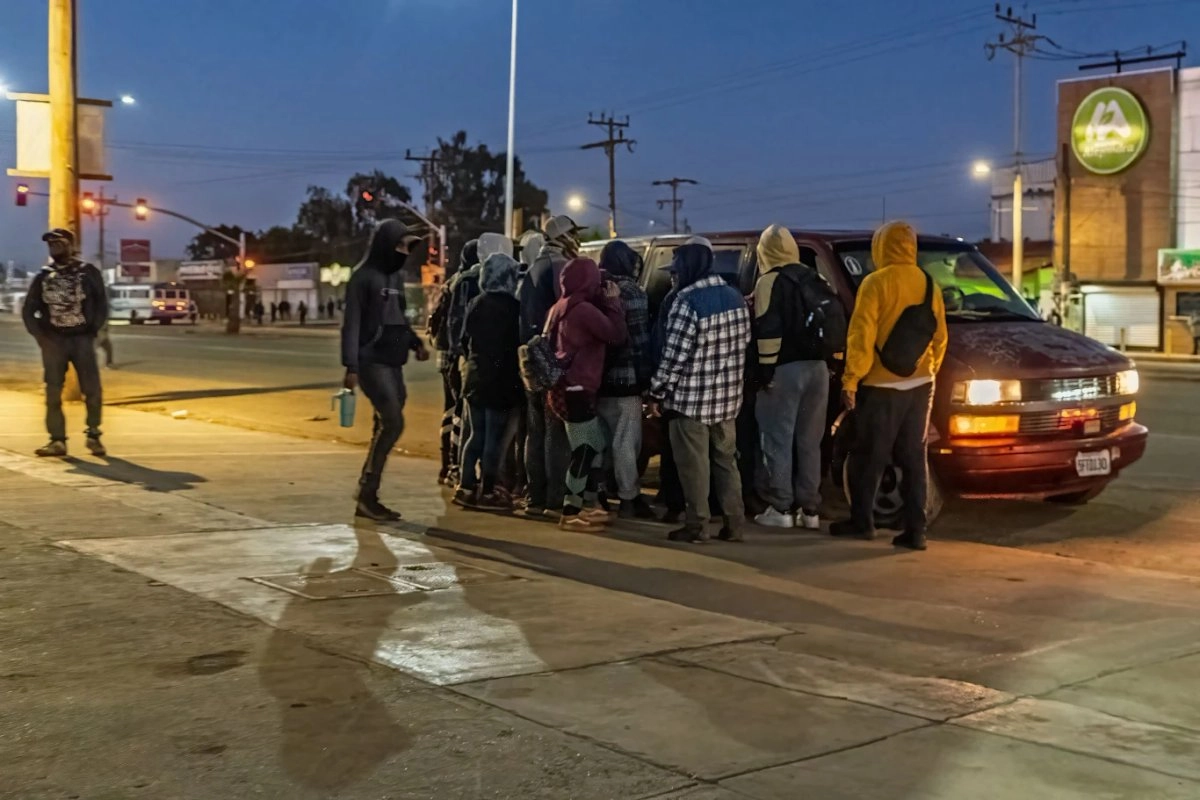
Few take advantage of the offer. The crew slowly fills up, though on the sidewalk, a few meters from the road, some 50 men and women wrapped in pants and leggings, hoodies, bandanas and/or face masks, and baseball caps wait silently. It’s still dark; some go to the coffee and burrito cart on the corner. But not a word.
Everyone seems to know that this harvest is one of the hardest; you have to bend down a lot, and the patterns are very delicate. So when you leave the furrow to go to the table with the bucket and they select the peas, “you end up losing a lot” because they don’t want them stained, small, “ugly.” And the pay is 4 or 5 pesos per pound.
The first piece of advice I received from a seasoned farmworker, whom I told the day before I was going to work, was: “Don’t go to El Rosario, it’s far away and there are snakes.” It’s a little over an hour by public transport to get to the fields.
If few respond to the offer to go to El Rosario, we must heed the advice. Gloria, a woman from Sinaloa who has been living in San Quintín for two years, has only her eyes visible between her hood and face mask. Unlike the Indigenous people from Oaxaca and Guerrero, she is open to conversation.
She shares her experience with peas and recounts a more distant one, in the turnip fields; where the root has to be washed after picking it, so “my legs and shoes would end up all wet. One day I was splashed with very cold water for so many hours that when I came back from the field I couldn’t feel my feet inside my sneakers.”
She doesn’t want to go to El Rosario either. She’s waiting for one of the trucks to recruit workers for “blackberry or raspberry picking” because you don’t have to bend over much to pick the fruit, and you work under the shade netting, protected from the sun and the dust devils that the strong winds raise this time of year.
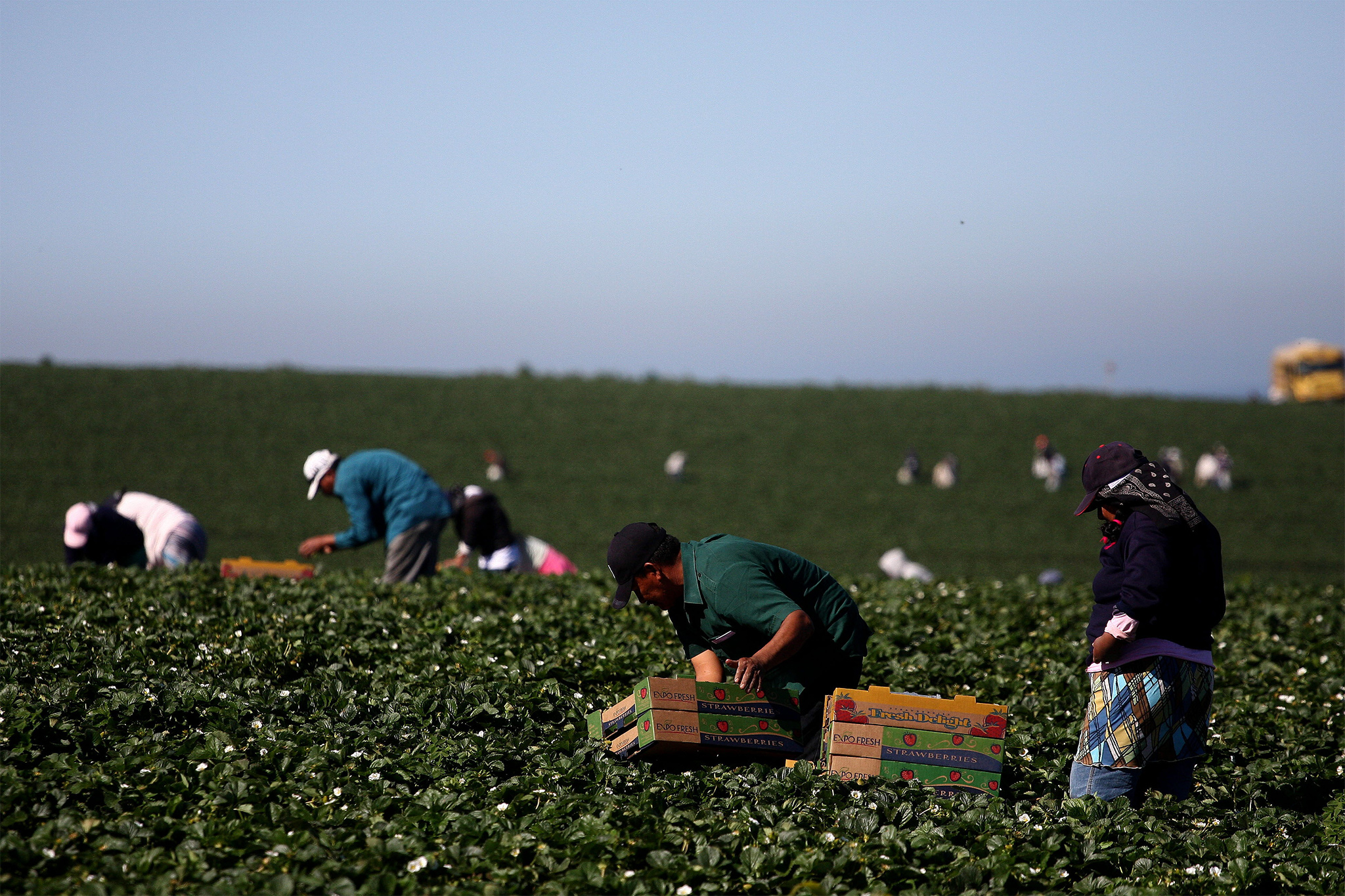
The strawberry harvest is underway in some fields, but it’s done under the blazing sun, by piecework, and requires bending over to reach the fruit. “You can earn very well if you’re quick at picking, but it’s incredibly hard work.” So Gloria isn’t keen to get on the truck either, even though the foreman/driver offers: “It’s very close, just leaving and paying.”
Some fields that use this payment system do so per day; it’s 470 pesos, with a minimum of 12 boxes containing 13 baskets of raspberries (berry baskets, which are called basketes in the fields). The so-called “champions” of the fields can earn up to 1,500 pesos a day. Others work in pairs.
It’s a sprint, from 7 a.m. to 3 p.m. –with half an hour for lunch-, where hands must fill boxes and boxes of red fruits or berries, the generic term to refer to strawberries, raspberries, blackberries and blueberries… a kind of modern “red gold” that grows in the south of the state, on the border with Baja California Sur.
Gloria is waiting for a daily wage offer, but it’s already 5:30 and none meet her expectations. Around 6:00, she decides to go home; she’ll try again the next day. Most of the Sinaloans who come to San Quintín go to the packing plant, not the harvest, I’m told later. Her departure leaves the impression that the law of supply and demand prevails here.
The uncle, a stout man who bears little resemblance to the thin, short farmworkers of Oaxaca and Guerrero, overheard the conversation with Gloria. “They don’t like anything, what do they know how to do? Wash clothes?” he sneers. But he, too, is waiting for the foreman who drives the truck from a nearby ranch and recruits workers to harvest raspberries. He’s been working there for several days, “leaving and paying,” because at the very least he earns a wage of 490 pesos, he admits.
In San Quintín, there are several ways to get hired for work in the “leaving and paying” modality. Some arrive in their own vehicle at the agricultural fields, others are picked up and distributed at the end of the day by drivers who already have an agreement with the companies, but the vast majority arrive in the early morning at Lázaro Cárdenas Park, in the neighborhood of the same name.
That’s where the drivers park their rickety bus, designed for schoolchildren. The park is under renovation—fenced off with black plastic—so the job market has moved a few meters, to the sidewalk in front of Alejandra, an old supermarket in town.
It’s the off-season—the harvest hasn’t even started on some ranches—so there are no more than 150 farmworkers milling about, coming and going. Eight or ten get on one bus; twelve on another. Each foreman indicates how many workers he needs, so a recruiter who arrived in a pickup truck only takes three, even though several others crowd around him.
During peak season, there can be more than 300 people looking for work, says El Tío, while we’re in line to board the bus to the raspberry fields. He explains that he’d like to be hired (with pay) by the week—a bit more formal—but he can’t find anything. He’s not young anymore, and here, what matters is hard work.
-
Mexico’s September 16 Military Parade Will Incorporate Tactical Drones and Nationally Made Armored Vehicles
First-ever 99-aircraft flyover, 45 debuting tactical drones, and DN11 vehicles with 100%-national remote weapons systems; 15,458 troops will march.
-
Sheinbaum Foresees 12 Million Families Benefited by the Housing Program by the End of Her Government
“The most important thing is having access to what we consider a right, which is decent housing,” Sheinbaum said.
-
People’s Mañanera September 14
President Sheinbaum’s daily press conference, with comments on housing, property rights, gentrification, sovereignty, and national pride.