The World Cup: Screens & Stamps for the Poor
This editorial by Lev M. Veláquez Barriga originally appeared in the May 23, 2026 edition of La Jornada, Mexico’s premier left wing daily newspaper. The views expressed in this article are the author’s own and do not necessarily reflect those of Mexico Solidarity Media or the Mexico Solidarity Project.
Our deep-rooted and healthy passion for football as a sport for coexistence, competition, sporting rivalry, mental discipline, physical exercise of our bodies, sociocultural encounter in the neighborhood and community, affirmation of our territorial belongings or towards identity collectives, should not blind us to what the 2026 World Cup represents and which has nothing to do with the popular values built in common.
The World Cup is privately owned by the transnational corporation called the International Federation of Association Football, or FIFA, whose most important partners are not sports clubs, but a few multinational companies that benefit from the mass production and distribution of physical, technological, digital, communicational goods, junk food, and services in tourism, finance, real estate, restaurants, betting, mobility, hotels, the construction industry, and others that would make this list much longer.
In any case, these clubs represent affiliated companies with an economic imperative. The players selected are not the result of a country’s best players emerging from local, regional, and national competitions where the most outstanding athletes from the population, teams, schools, and universities have the opportunity to showcase their individual or team football skills and strategies; rather, they are employees arbitrarily chosen beforehand from among businesspeople who leverage their private brands and economic power by monopolizing this sport as an entertainment business.
So, the World Cup is also the monstrous machine for the production of consumer subjectivities, depoliticized and uprooted from their own values, historical, cultural, plurinational and Indo-American in our case, which are supplanted by aspirations and interests of power groups through strategies of media overexposure that induce belonging to the brands of their national teams, clubs and ideologies that define them, whose merchandise is distinguished by a model of shirt that usually usurps the colors and symbols of the national flags.
In each match played, Mexico, Colombia, or Brazil don’t win; instead, the multimillion-dollar profits of FIFA executives, the presidents of its national branches, and the owners of corporations associated with the industrial, commercial, financial, and communications complex grow enormously. This complex, like the military complex with war, has turned the World Cup into a fictitious stage, creating a need for investment for the accumulation of capitalism in its critical phase, the dispossession of vital resources like water, speculation on the rental and sale of housing, and the forced displacement of popular sectors from housing and territory.
Unlike the mechanisms used in war, FIFA does not resort to the same coercive measures, because it is the host states that seek agreements and consensus for the transfer of resources from the people to private enterprise, the expanded reproduction of capital through the commodification of services, labor and tax flexibility, as well as the installation of infrastructure necessary for the development of the World Cup; all with a class bias in which only the economically wealthy castes will be able to experience the sporting feat in the stadiums, luxury hotels and exclusive areas, which the poor and even the middle classes will not be able to access; for them there will only be screens and collectible stickers.
Mexico is far from imposing the World Cup agenda (I write this without any desire for it to be so); it is the US government that, through the sporting event, washes away its despotic and pro-fascist image, its neo-colonial policy and imperialist plunder strategy; it is capitalism and its travesties that praises itself with FIFA peace prizes for Trump in the midst of war, which is legitimized by religious fanaticism, white supremacist racism, and Israeli Zionism.
However, in our country, the enormous media apparatus will also serve to overshadow the political and electoral proposals for 2027 with the World Cup spectacle, attempting to eclipse major national problems such as insecurity, US interventionism through the CIA directly or indirectly through the relationship of certain levels of government with criminal violence groups, the privatization of pensions for teachers and state employees, the abandonment of corn and bean producers, attacks on Indigenous communities, the tens of thousands of disappeared persons, the precarious working conditions of university workers, health sector workers, and salaried employees who demand an effective 40-hour workweek, to name a few.
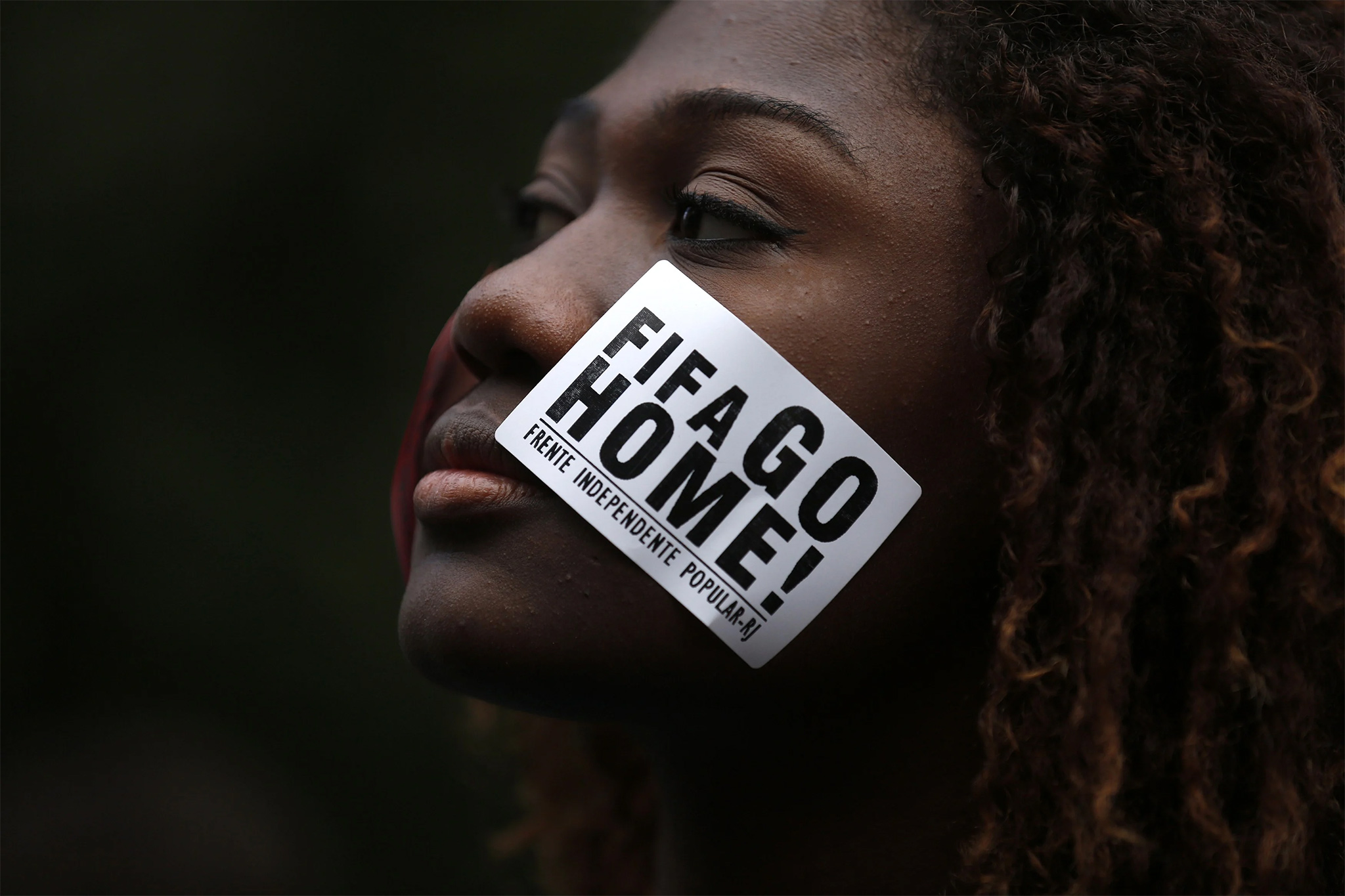
In this context, the CNTE is not wrong to call for a blockade of the World Cup. Their strategy remains against the interests of capitalism; nationalism is not about wearing a green jersey and cheering for the partners of a consortium made up of private companies, but rather about solidarity and empathy with the working classes, their needs, and their rights. It is anti-imperialist because it embraces self-determination as a principle of sovereignty and peace among nations. “If there is no solution, the ball won’t roll.”
-
People’s Mañanera October 16
President Sheinbaum’s daily press conference, with comments on recovered assets, public education, security, and exports.
-
Mexico Does Not Have the Capacity to Confront the Cartels, Trump Says
Speaking at the White House, Trump claimed without evidence that cartels control Mexico and warned they have a deadline to “basically surrender.”
-
Mexico’s Secretary of Governance Announces Group of Experts Will Analyze National Registry of the Disappeared
Backed by the UN human rights office, Mexican and U.S. scientists will audit the registry, while 16,003 people reported missing have been located.