
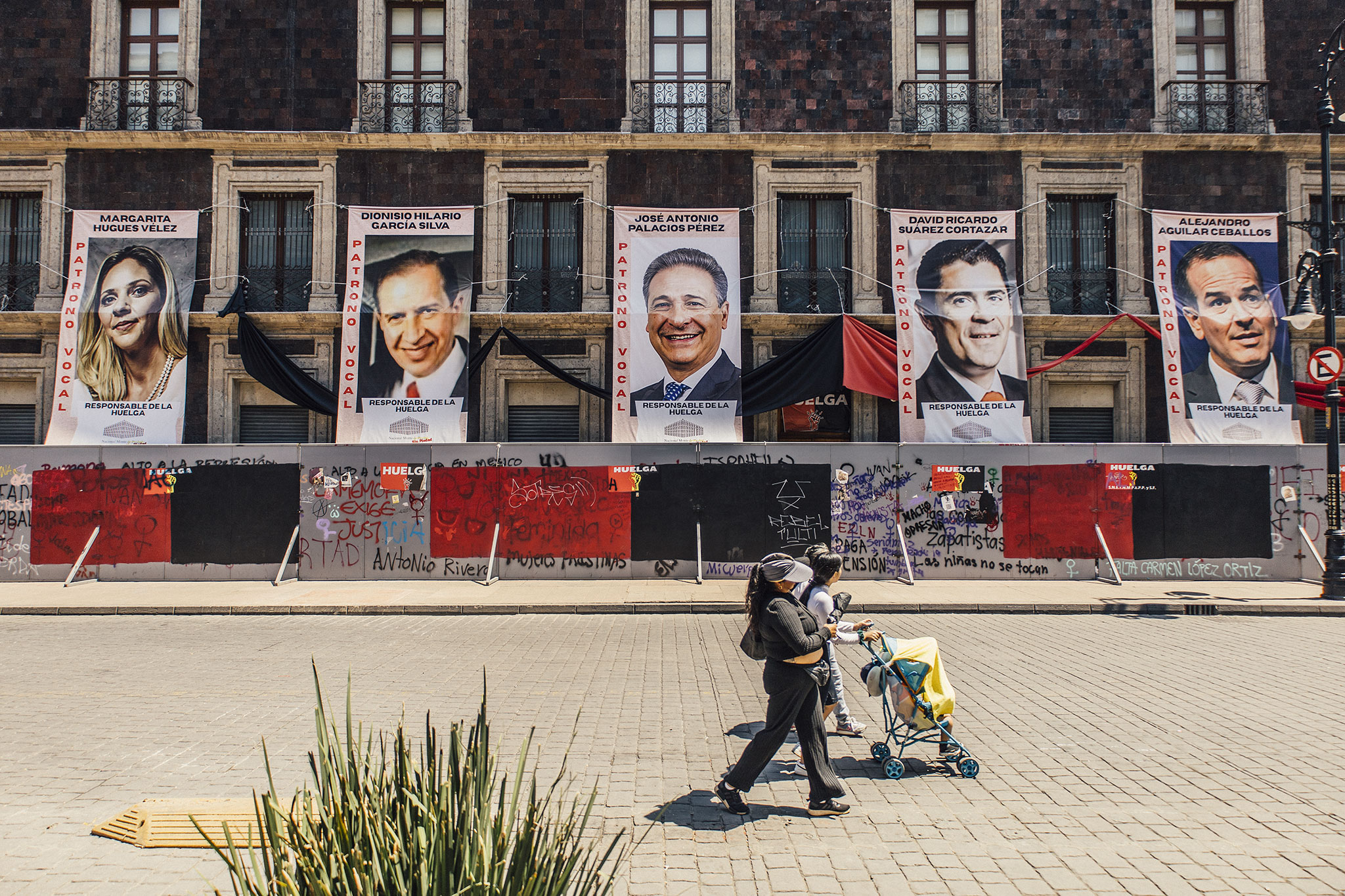
Monte de Piedad Board Rejects Appearance Before Court
This article by María del Pilar Martínez originally appeared in the May 11, 2026 edition of El Economista.
Nacional Monte de Piedad (NMP) filed a legal appeal to prevent its board members from appearing in person before the Federal Labour Court for Collective Bargaining. The hearing, scheduled for 11:00 a.m. on May 11, 2026, was intended to bring the leadership of the Private Assistance Institution (IAP) to a key conciliation meeting to resolve the conflict with its union.
In a statement signed by its legal representative, Héctor Mauricio de la Cruz Castañeda, the institution described the judge’s order as an unnecessary, additional, and disproportionate measure. The defense for Monte de Piedad argues that there is no legal provision that obligates the members of the Board of Trustees, in their capacity as individuals, to attend conciliation meetings, especially since the institution already has duly authorized legal representatives to make decisions.
The Board’s refusal is based on the fact that the management and appointment of representatives falls exclusively under the IAP’s internal regulations. Furthermore, the institution maintains that the strike has already been declared illegal by the competent authority, which, in its view, limits the court’s power to impose extraordinary burdens such as this appearance. Finally, they point out that the proceedings are currently before a Collegiate Circuit Court, which restricts the scope of the current court’s rulings.
Therefore, Monte de Piedad formally requested that Monday’s conciliation meeting be cancelled. This stance comes at a critical moment, as labour authorities seek to exhaust all avenues of dialogue to end a paralysis that has affected both the workers and the millions of users of the institution.
Regarding the proposal issued by the Secretariat of Labour and Social Welfare (STPS) through bulletin 35/2026 dated May 2, 2026, Nacional Monte de Piedad has expressed a position of total acceptance.
The institution sees the ruling mechanism proposed by the Federal Government as a legal and orderly way to resolve the conflict, highlighting that this alternative prioritizes a democratic solution where workers have an active role and vote in defining their future employment.
-
The Uncomfortable Ally Splits Off: Hugo Eric Flores, Now with PAZ, Rails Against Morena
Once the operator who opened Morena’s door to Cuauhtémoc Blanco, Flores now leads the evangelical party PAZ, which just won national registration and 84.4 million pesos to run alone in 2027.
-
Leaked Cerimedo Audios: He Talks About Sheinbaum and Calls Negre ‘a Mercenary, Worse Than Me’
Sheinbaum says the far-right outlet La Derecha Diario was built to destabilize Latin American democracies, with Mexico already among its targets.
-
Mexican Government Seeks Free Admission to 53 Museums and Archaeological Sites Next Year
Mexico’s federal government proposes free admission to 53 INAH museums, monuments, and archaeological sites — among them Bonampak, La Venta, and Tamtoc — in next year’s Federal Rights Law, saying the cost of charging is disproportionate to the revenue.