How an Alliance of Corrupt Police Officers, the CIA & the DEA Gave Rise to the Cartels
This article by Obed Rosas originally appeared in the May 12, 2026 edition of Sin Embargo.
Mexico City. Since World War II, the main institutional protection structures for drug trafficking in Mexico have been linked to the CIA and the DEA , in coordination with the feared Federal Security Directorate (DFS). Over the years, this network of complicity extended to the remnants of that agency, as well as to the Federal Judicial Police, the Federal Investigation Agency, and the Federal Police, first under the PRI governments and, later, during the PAN administrations.
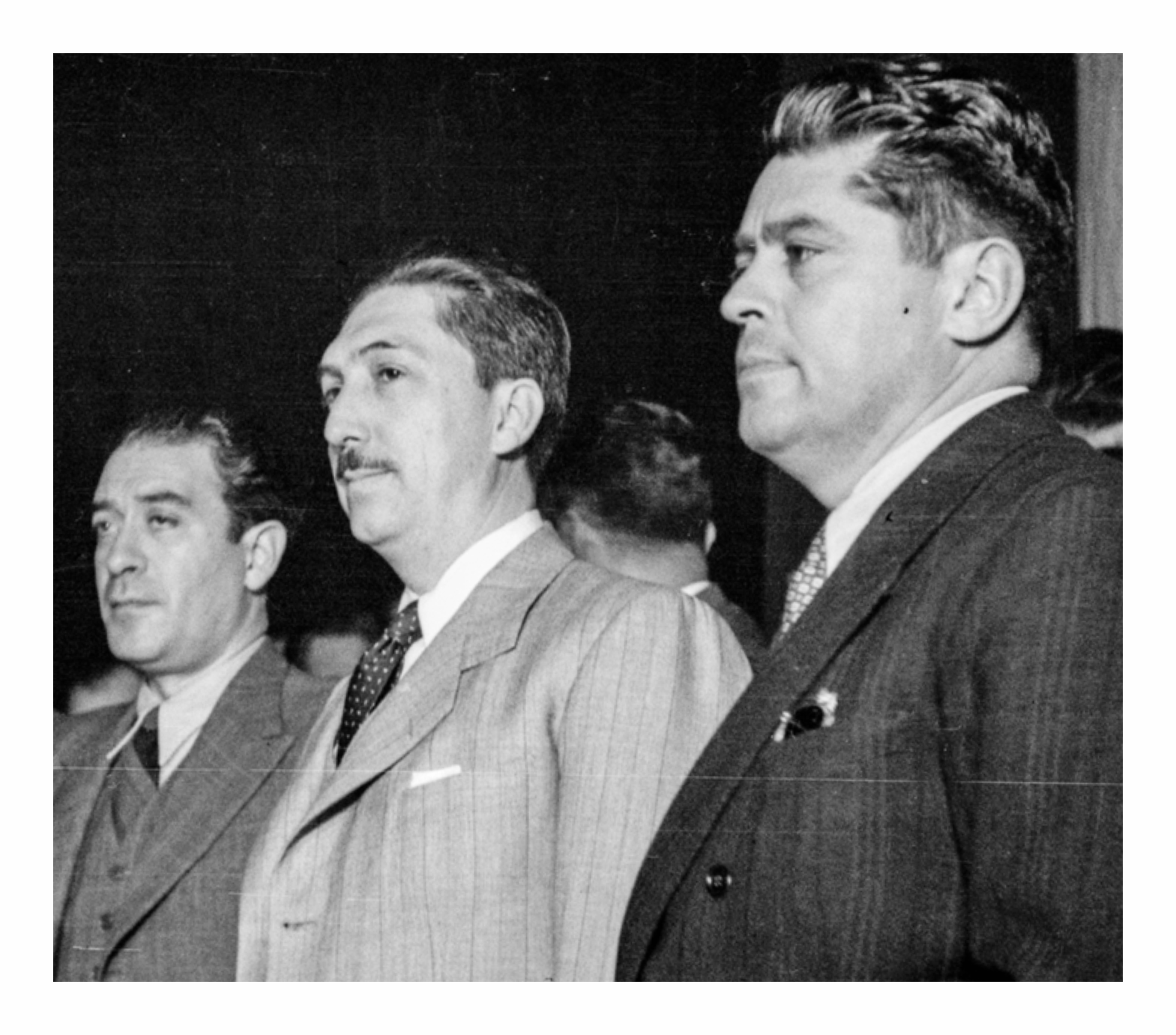
It was during the administration of Miguel Alemán Valdés, the first civilian president and known as the “puppy of the Revolution,” that the DFS, the regime’s political police, was created. Alemán entrusted its leadership to his friend, Colonel Carlos I. Serrano, who was already facing accusations of embezzlement and accepting bribes. Later, allegations surfaced regarding the use of DFS networks for drug trafficking.
“Although the DFS’s primary objective was to track and gather information on leftists in order to intimidate them, it also had another interest: drug trafficking. In that arena, Serrano took the reins,” writes Benjamin T. Smith in The Dope: The Real History of the Mexican Drug Trade. “During the presidential campaign, he accepted bribes from border smugglers imprisoned for drug trafficking. In the first months of Alemán’s administration, he paid the bail for a Mexican socialite pimp who was arrested for selling cocaine, as her inner circle knew that Serrano used her brothel to gather information on political rivals and later blackmail them.”
The Origin of the DFS
The same investigation indicates that, in early 1947, Serrano opened the doors of the DFS to a group of corrupt former police officers, many of them from the anti-narcotics squad of the Department of Health. Several had been expelled precisely for corrupt practices.
“Three of these agents stood out: Marcelino Iñurreta de la Fuente, a former debt collector for the Mexico City police and an enthusiastic supporter of Alemán’s political campaign; Colonel Manuel Mayoral, a former Mexico City police officer dismissed on drug-related charges who, at the DFS, was ‘in charge of marijuana sales in the city’; and another former police officer, who was also the uncle of the driver of the Cadillac in Laredo, Juan Ramón Gurrola. These three agents, who reported directly to Serrano, occupied the highest positions in the DFS. And their mission was to integrate the organization into the protection networks.”
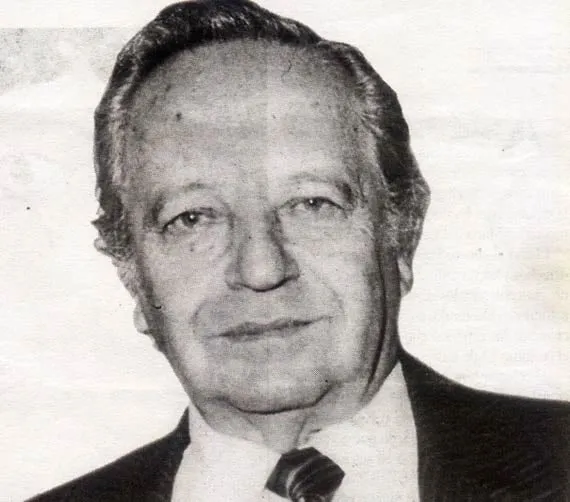
Years later, under the command of Miguel Nazar Haro (1977-1982), the DFS “played a crucial role in the history of the US government’s tolerance and support for international drug trafficking,” note Peter Dale Scott and Jonathan Marshall in Cocaine Politics: Drugs, Armies, and the CIA in Central America.
“US authorities knew since the early 1970s that the DFS was involved in serious drug trafficking, and yet they continued to defend and protect the agency. This pattern reappears during the Contra period in Nicaragua, and in fact, some drug traffickers protected by the DFS and involved in the Contra effort trace their roots back to Nazar’s tenure in Mexico.”
Scott and Marshall’s investigation recalls, for example, how Nazar Haro provided protection to Cuban drug trafficker Alberto Sicilia Falcón, who claimed to have participated in CIA commando raids against Cuba and was also identified by one of his close associates as a conduit for CIA arms shipments to Central America during the 1970s.
“Sicilia also had extensive support from high-ranking politicians, intelligence agents, and law enforcement officials in Mexico. One of the most important was the head of the powerful Federal Security Directorate, Miguel Nazar Haro. After Sicilia was recaptured following a prison escape, Nazar intervened to protect him from torture and possibly prevent him from revealing compromising information,” the authors write.
Scott and Marshall further argue that the government of Luis Echeverría Álvarez maintained indirect ties with Sicilia Falcón and networks involved in heroin trafficking in Europe through his wife’s relatives. During his six-year term (1970-1976), the so-called “Operation Condor” was launched, officially presented as a strategy to “eradicate marijuana and poppy crops” through the massive use of herbicides dropped from airplanes over the so-called “Golden Triangle” of Sinaloa, Durango, and Chihuahua. However, the authors document how the operation was exploited by drug traffickers colluding with security agencies to eliminate the competition.
The Barbarians of the North
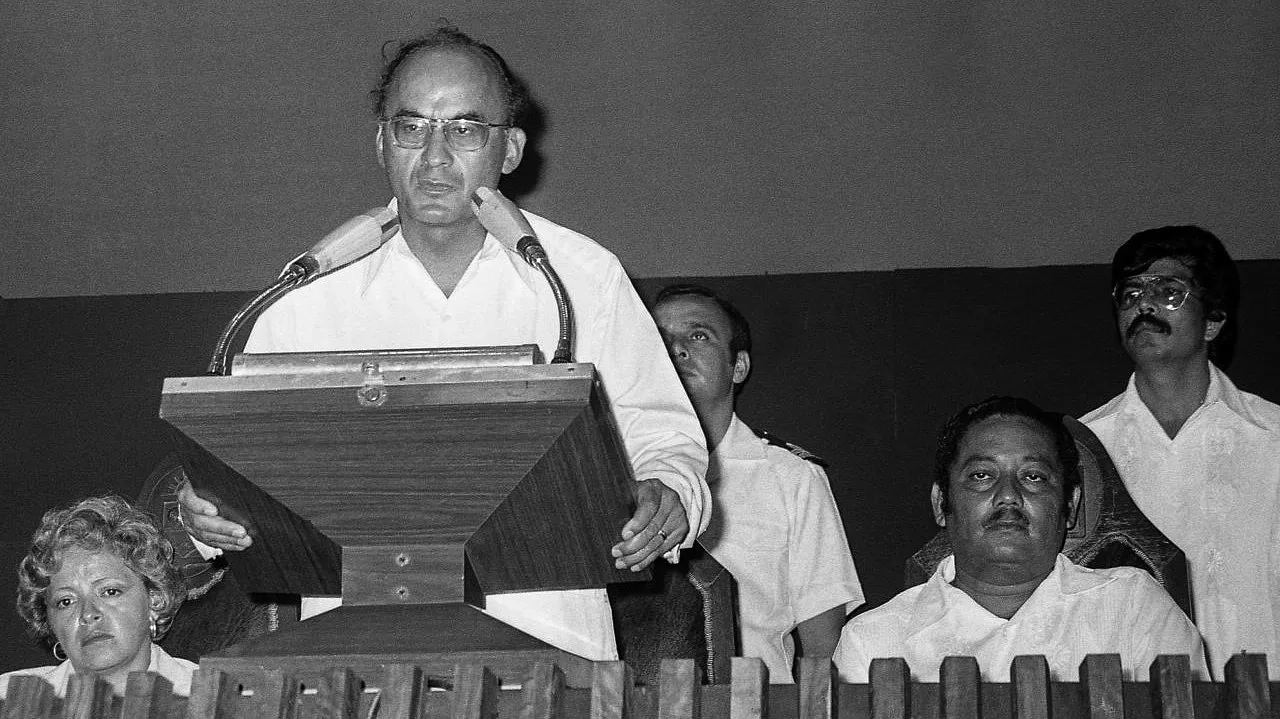
In that same decade, José López Portillo (1976-1982) placed the so-called Bárbaros del Norte (“Barbarians of the North”) in charge of the main security and law enforcement agencies. The group consisted of the former governor of Chihuahua, Óscar Flores Sánchez, appointed head of the Attorney General’s Office; the former hitman from Ciudad Juárez, Raúl Mendiolea Cerecero, appointed head of the Federal Judicial Police; and Arturo “El Negro” Durazo Moreno, former head of security at the capital’s airport, who assumed the directorship of the Mexico City Police.
Benjamin T. Smith explains how the Mexican secret service concluded that, as governor of Chihuahua, Flores Sánchez had headed a vast protection network. The author quotes an official report: “Although we have no evidence to prove that Flores is involved in this business, we do have ample evidence that some of his closest associates were and are currently involved, directly or indirectly, in drug trafficking. We also believe it is impossible that Flores was unaware of these past and present activities.”
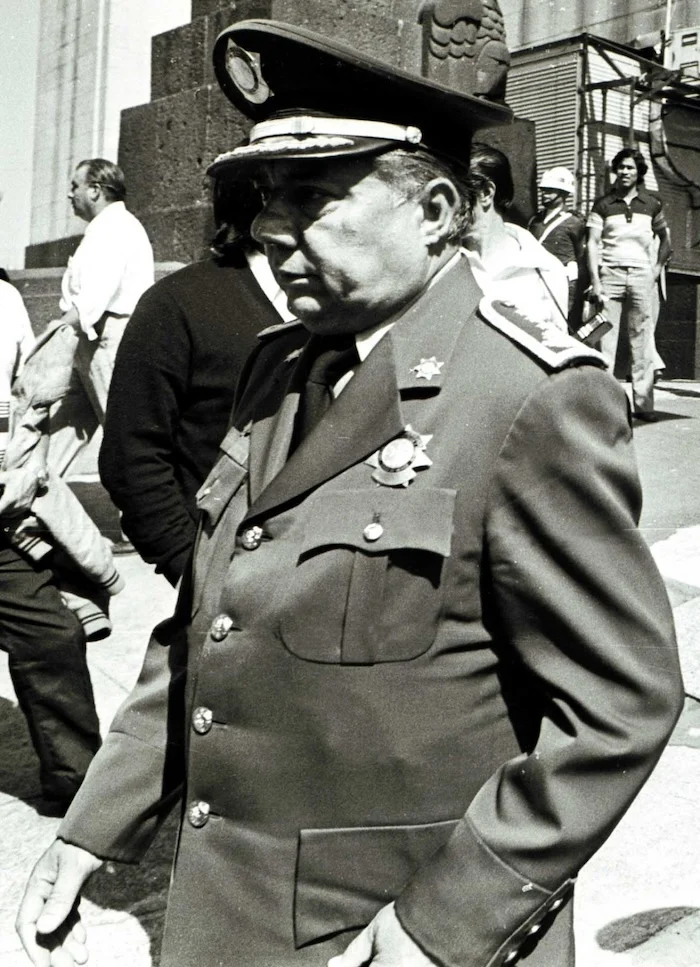
Regarding Mendiolea, Smith states that he organized the massacre of Enrique Fernández’s drug gang in Ciudad Juárez in the early 1930s and later moved to Jalisco, where he was in charge of police reserves and helped protect local heroin traffickers.
“He worked at the state-owned food company, where he was accused of stealing more than 250,000 pesos a month in expenses. Later, he moved to Mexico City, where he rose from head of special operations to deputy chief of the capital’s police force. There, he was accused of running the capital’s prostitution ring, extorting drug dealers, supporting a quasi-fascist student organization, and organizing the repression of urban squatters, railway workers, and political opponents.” Smith adds that, once in charge of the Federal Judicial Police, Mendiolea ordered commanders not to arrest drug traffickers without his prior authorization.
For his part, Arturo “El Negro” Durazo Moreno, as Mexico City police chief, was accused of protecting drug traffickers and participating in drug trafficking operations. “The Americans had an extensive file on him. In April 1972, he organized the importation of 400 kilos of cocaine and transported it to the United States in refrigerated trucks. And in June 1974, he received $60,000 from Culiacán drug trafficker Jorge Favela Escobosa in exchange for protecting another 32 kilos of cocaine.”
“By 1974, the Americans had even managed to infiltrate an informant into Mexico City’s airport. He explained in detail how Durazo’s protection network operated. The traffickers sent drugs to the airport using three mules: two carried kilos of the product, while the third carried only a few grams. Durazo would order his men to arrest the smallest mule, announce a major seizure, and inflate the operation by adding a couple of kilos of powdered milk. Meanwhile, the other two mules would quickly cross customs and hand their briefcases to Durazo’s men,” Smith recounts.
Operation Condor
Peter Dale Scott and Jonathan Marshall, for their part, mention how the years of Nazar Haro’s reign in the DFS (1977-1982) were praised by US anti-drug control officials and State Department spokespeople as the golden age of the Mexican anti-drug fight.
“In retrospect, such assessments were not merely ridiculously wrong; they represented one of the biggest cover-ups in the history of U.S. drug enforcement. Government officials knew the Mexican effort was a sham, but chose to disguise that fact until the brazen murder of DEA agent Enrique Camarena in February 1985,” they state.
The DEA and other agencies, Dale and Marshall say, knew for most of that time that the Mexican miracle was, in reality, a nightmare. As early as 1980, for example, the DEA knew that the city of Guadalajara had been taken over by drug traffickers like Miguel Ángel Félix Gallardo, Rafael Caro Quintero, and Ernesto Fonseca Carrillo, all from Sinaloa who had left the Golden Triangle to settle in this western city. U.S. officials, the authors elaborate, also knew that Mexico had replaced Colombia as the main supplier of marijuana to the United States and that it transshipped at least 30 percent of the cocaine consumed in the Americas.
Everything changed when, in November 1984, 10,000 tons of marijuana were discovered growing at Rancho Búfalo in Chihuahua, owned by Caro Quintero, whose dismantling would lead to the kidnapping and murder of Enrique “Kiki” Camarena in February 1985.
“The key to the public deception was the much-lauded Mexican anti-drug campaign known as Operation Condor,” Dale and Marshall say.
Operation Condor in Mexico involved not only the official participation of the United States State Department, but also the intervention of the CIA through companies historically linked to its air and logistics operations, such as Evergreen International Aviation and E-Systems.
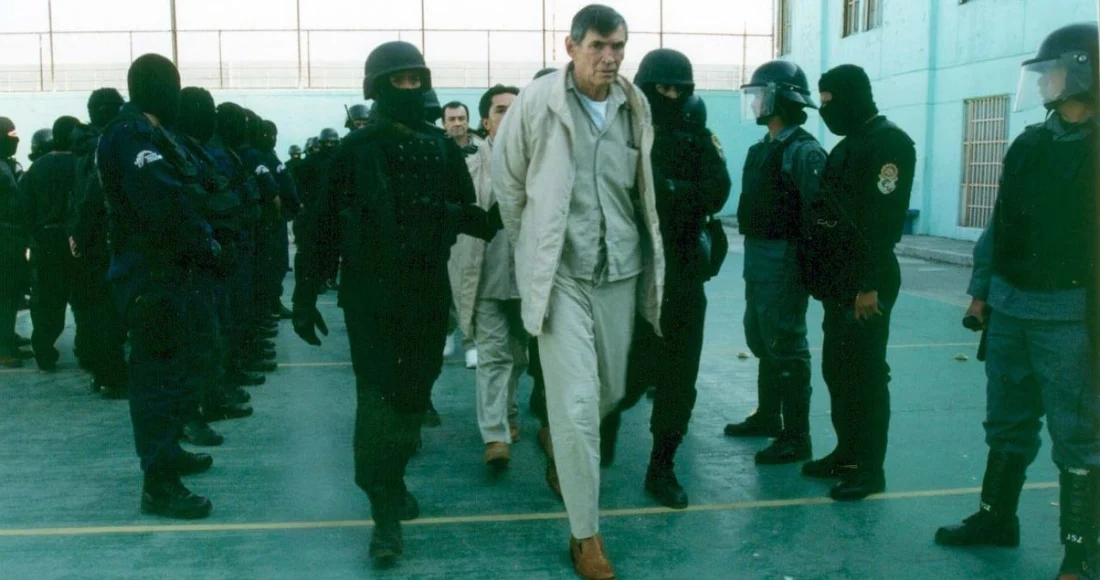
Although the program was presented as a successful offensive against drug trafficking, since the late seventies the DEA detected serious irregularities: pilots spraying water instead of herbicides, Mexican officials using aircraft for personal purposes, and corruption networks extorting growers in exchange for protection.
Following the murder of DEA agent Enrique Camarena in 1985, a U.S. Congressional report described the program as “a disaster,” noting the lack of controls, audits, and independent verifications regarding the supposed fight against drugs.
The text argues that the real problem with Operation Condor was not just incompetence, but structural corruption among politicians, security forces, and drug traffickers. Under the administrations of Luis Echeverría and José López Portillo, the Federal Security Directorate (DFS), headed by Miguel Nazar Haro, allegedly protected and consolidated the Guadalajara Cartel with the support of networks linked to the CIA. The DFS facilitated the relocation of traffickers, eliminated competitors, and organized smuggling operations like “La Pipa,” in which hundreds of trucks smuggled drugs into the United States with the support of corrupt officials. According to cited testimonies, the DFS acted as a “license to traffic,” providing armed protection, intelligence, and institutional cover to the major Mexican drug lords.
This collaboration between the DFS and the traffickers continued after Nazar Haro left the agency in 1982, with the change of Mexican administrations, as did the collaboration between the DFS and the CIA. “The CIA station in Mexico City maintained close contact with Nazar’s successor, José Antonio Zorrilla Pérez, despite overwhelming evidence of his agency’s responsibility for drug trafficking,” Dale and Marshall note.
“They don’t give a damn,” a DEA agent said of the CIA. “They turn a blind eye. They see their job as far more important than ours.”
Benjamin T. Smith argues that when President López Portillo left office in 1982, a new federal protection network attempted to control this unstable alliance. “The Barbarians and the PJF were no longer in charge. Now it was the DFS’s turn. Traffickers, hitmen, and spies worked together to meet the growing demand for cocaine and seedless marijuana in the United States.”
“To achieve this, the group expanded, developed, and integrated more vertically. Drug gangs encountered big-money operations. Labour was now hired internally. Traffickers no longer roamed the hillsides looking for a few tons of marijuana grown by farmers […] And they no longer hid their money in a few luxury homes, late-model cars, and thoroughbred horses. Now, banks assumed a crucial role in hiding and moving drug money.”
However, the historian elaborates, the DFS protection network, “like the barbaric system that preceded it,” was soon embroiled in conflict. “There was no mafia peace. These conflicts over the profits of the protection networks now pitted DFS agents against rival groups within the Army, the Federal Judicial Police, state governments, and local administrations.”
The Guadalajara Cartel
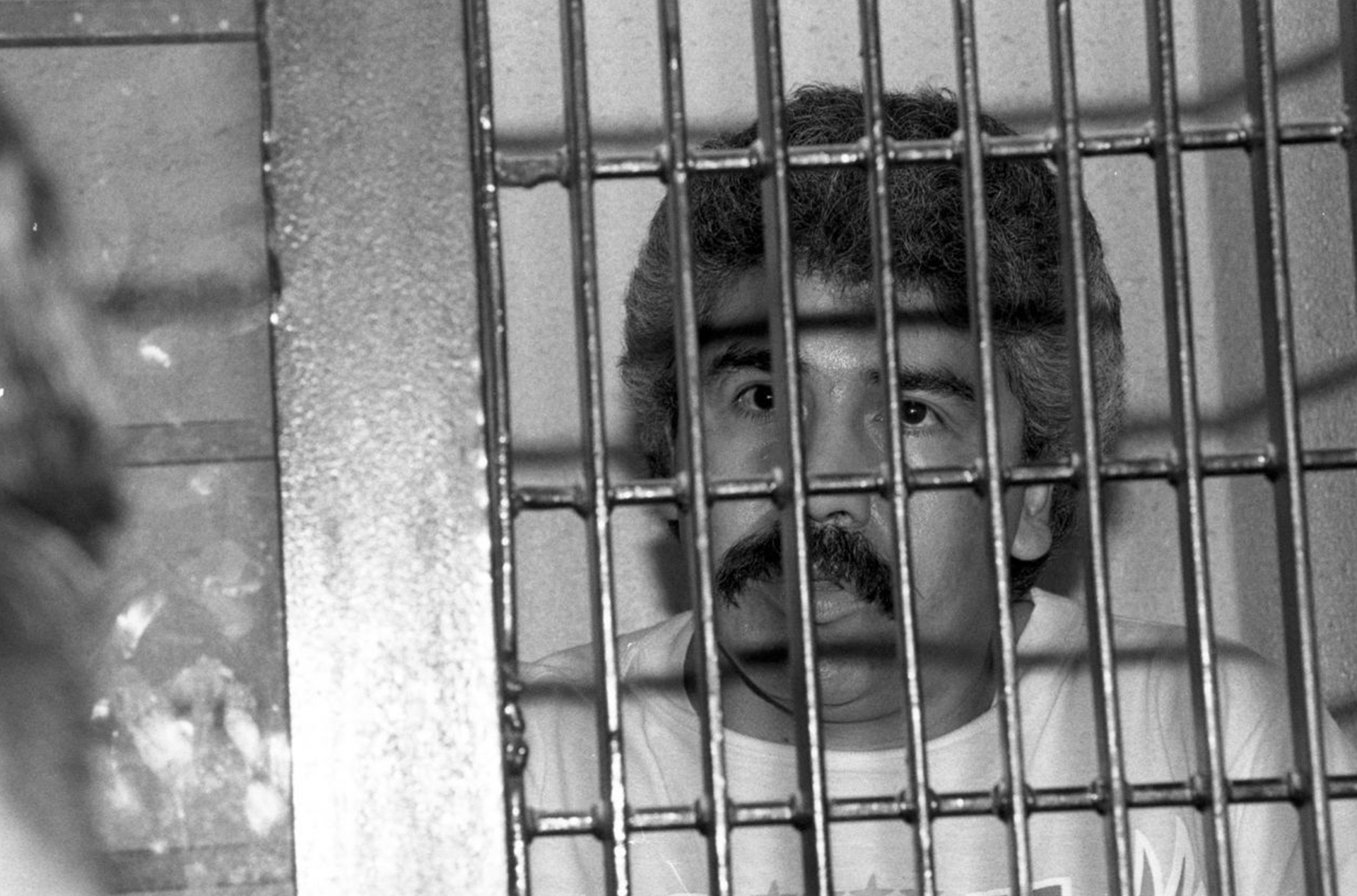
The Guadalajara Cartel, headed by Miguel Ángel Félix Gallardo, controlled drug trafficking in most of Mexico during the 1980s, during the presidency of Miguel de la Madrid. Rafael Caro Quintero and Ernesto Fonseca Carrillo, “Don Neto,” were also members of this organization.
The rise of the Guadalajara Cartel led the organization to forge ties with its counterparts in Colombia and traffic cocaine into the United States. However, its prosperity took a dramatic turn with the murder of DEA agent Enrique “Kiki” Camarena in February 1985.
The murder of the DEA agent prompted the United States to pressure Mexico to capture Caro Quintero and several leaders of the Guadalajara Cartel. At that time, “El Güero” Palma and Joaquín “El Chapo” Guzmán Loera were lieutenants of Félix Gallardo, alias “El Padrino.”
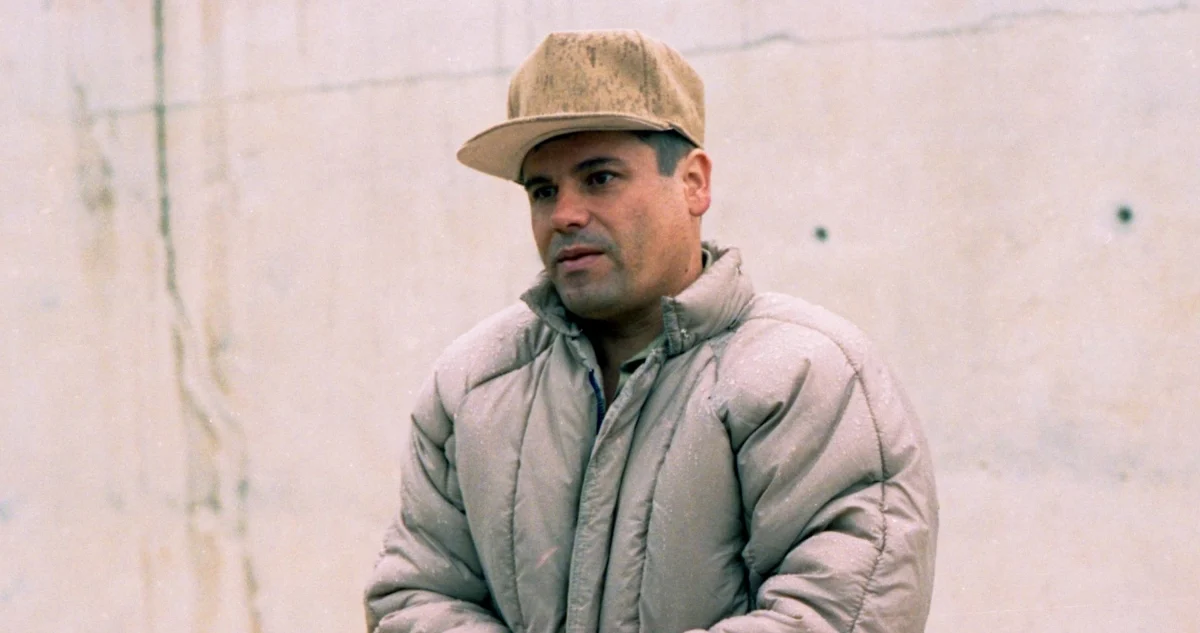
After the arrests of Caro Quintero (April 1985) and Félix Gallardo (April 1989), the Guadalajara Cartel split, leaving control of routes as follows: the Tijuana route (Tijuana Cartel), in the hands of his nephews, the Arellano Félix brothers; the Pacific Coast route (Sinaloa Cartel), in the hands of “El Güero” Palma and “El Chapo” Guzmán; the Ciudad Juárez route (Juárez Cartel), for Amado Carrillo Fuentes, alias “The Lord of the Skies”; and the Matamoros corridor (Gulf Cartel), for Juan García Ábrego.
Over the years, another branch broke away from the Sinaloa Cartel, with Ismael Zambada and “El Chapo” at the helm: the Beltrán Leyva faction.
Amado Carrillo Fuentes always envisioned forming a large organization that would unite the drug cartels in Mexico, but he never succeeded. It wasn’t until 2004 that his brother Rodolfo created the so-called “federation of cartels,” with the aim of pacifying the areas of influence of the various criminal groups operating in the country.
However, the murder of an operator for “El Chapo” Guzmán ended the negotiations and unleashed a new war for drug trafficking routes, according to high-ranking officials of the now-defunct Specialized Investigation Unit against Organized Crime (now SEIDO).
The “Capture of the State”
In the 1990s, coinciding with the weakening of the Institutional Revolutionary Party (PRI), criminal organizations stopped working for the authorities and began to capture the state. In 1995, for example, when federal authorities arrested Matamoros drug trafficker Juan García Ábrego, they discovered his little black book of bribes.
“The traffickers also expanded their payroll to include members of the country’s leading political families. One of them was allegedly President Salinas’s brother, Raúl Salinas,” writes Benjamin T. Smith about the brother of former President Carlos Salinas de Gortari.
In that regard, Fabrizio Mejía reported in SinEmbargo how, following the arrest in Switzerland of Raúl’s wife, Paulina Castañón, who attempted to withdraw money from her partner’s accounts using false passports, more details emerged. Mejía refers to the report by prosecutor Valentin Roschacher, the Swiss Attorney General, which states:
“Precisely during the period when witnesses observed a large number of drug money deliveries to Raúl Salinas, checks for millions of dollars were issued from Banca Cremi and Somex to Citibank Mexico.” The Swiss calculated that Raúl received $450 million from “drug traffickers” during his brother Carlos’s six-year term alone.
Drug traffickers also began bribing members of the military. In early 1997, during Ernesto Zedillo’s presidency, Mexico’s new drug czar, General José de Jesús Gutiérrez Rebollo, was arrested after only three months in office. “It was discovered that he had been living in one of Amado Carrillo Fuentes’ properties in Mexico City. Prosecutors revealed they had recordings of him discussing bribes with the drug lord. This was followed by further revelations. Someone leaked internal documents from the Secretariat of Defense that described open meetings between Carrillo and high-ranking military officers,” Smith notes.
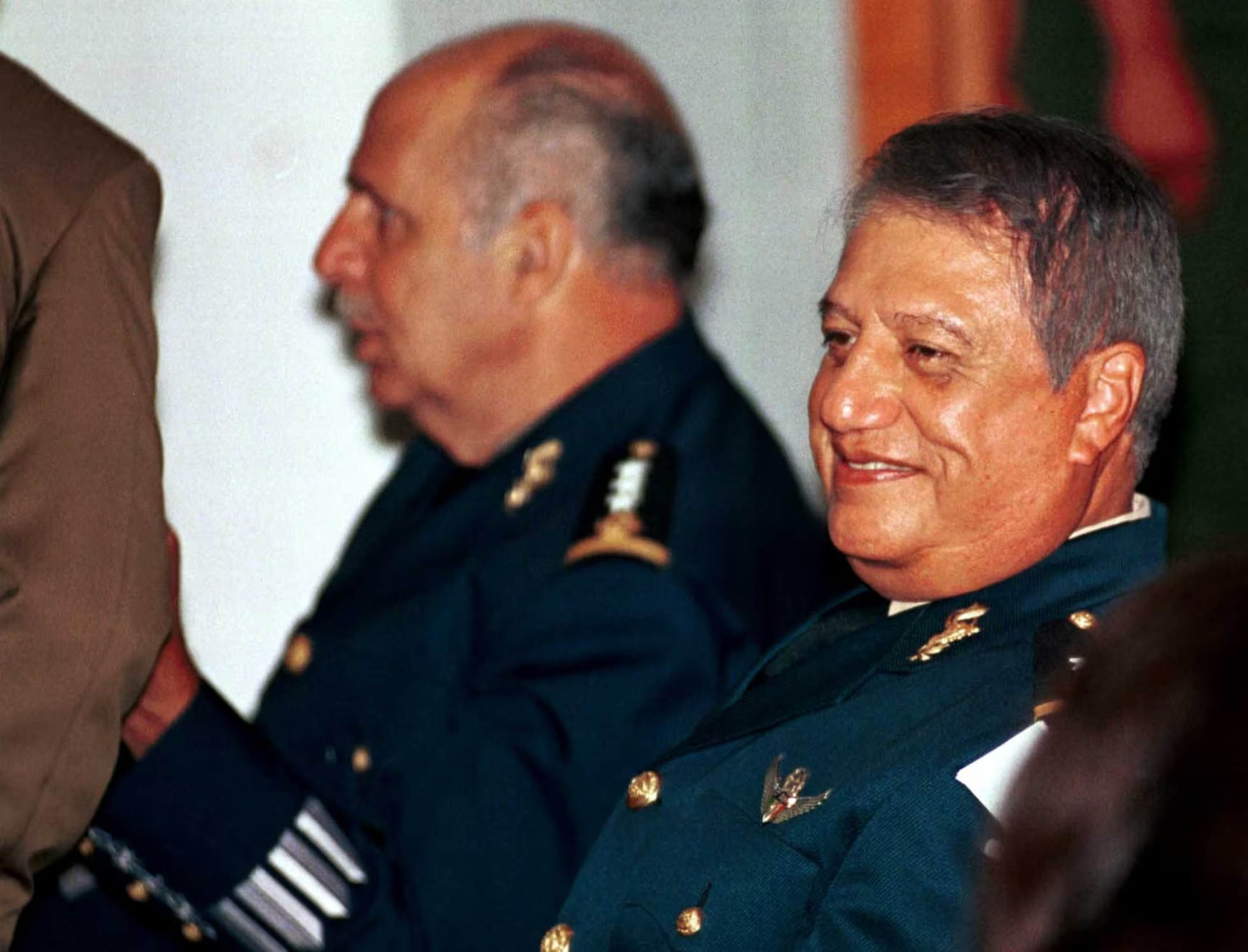
Three years later, at the end of Zedillo’s presidency and after the election of Vicente Fox Quesada of the PAN party, following 75 uninterrupted years of PRI rule, General Mario Arturo Acosta Chaparro, founder of the White Brigade, was arrested. The White Brigade was a paramilitary group that, in the 1970s and early 1980s, dedicated itself to exterminating urban and rural guerrillas. Acosta Chaparro was arrested along with General Francisco Quirós Hermosillo and tried by a court-martial on charges of having ties to drug trafficking.
However, journalist Marcela Turati reported, after his death in 2012 following a shooting attack in a workshop in the Anáhuac neighborhood of Mexico City, that since 1984 his name began to be linked to drug trafficking, first in documents from the DEA and the FBI, and later by the U.S. Department of Justice, when he was identified as a protector of alleged drug trafficking and money laundering destined for Mario Ruiz Massieu’s accounts at the Texas Commerce Bank, as published by Proceso.
Both Quirós Hermosillo and Acosta Chaparro appeared in the SC/003/99/E investigation of the Military Justice Prosecutor’s Office as alleged perpetrators of providing protection to the Juárez Cartel, then headed by Amado Carrillo Fuentes, “The Lord of the Skies”.
Despite this background, Acosta Chaparro was tasked by the Felipe Calderón administration with meeting with organized crime leaders between 2008 and 2009, including Joaquín “El Chapo” Guzmán, Heriberto Lazcano Lazcano, Jesús Méndez Vargas, “El Chango” or “El Chamula,” and Nazario Moreno, “El Pastor,” “El Chayo,” or “El Más Loco,” two of the leaders of La Familia Michoacana. Calderón Hinojosa always denied that his government had ordered these meetings.
Retired General Tomás Ángeles Dauahare told Los Periodistas in February 2023 how Juan Camilo Mouriño, Calderón’s first Secretary of the Interior, ordered General Mario Arturo Acosta Chaparro to meet with the main drug lords between 2008 and 2009.
“(General Acosta Chaparro) was instructed to speak with the drug lords to reduce the violence, and the first person he visited was Heriberto Lazcano Lazcano, the leader of Los Zetas, and Heriberto gave him the phone numbers of the other criminal figures. Mario Arturo told me this directly, sent of course by higher authorities,” Ángeles Dauahare told Los Periodistas, the program broadcast on the SinEmbargo Al Aire YouTube channel.
“Who gives you the instructions?” retired General Tomás Ángeles, who held the position of Undersecretary of National Defense between 2006 and 2008, was asked.
“Specifically, Juan Camilo Mouriño,” replied the military officer, who was falsely accused by the Felipe Calderón government of having links with the Beltrán Leyva Cartel and was arrested on May 16, 2012, and held in the Altiplano maximum security prison in Almoloya de Juárez, until he was exonerated 11 months later.
Calderón’s Super Cops
However, one of the clearest and most recent examples of collusion between organized crime and the authorities occurred with Genaro García Luna, a police agent trained at CISEN, who was entrusted with the Federal Investigation Agency (AFI) under Vicente Fox Quesada, a six-year term in which the Sinaloa Cartel was strengthened and in which the first escape of Joaquín “El Chapo” Guzmán revealed accusations of corruption against his government.
Starting with that six-year term, García Luna formed a group of supposedly elite police officers within the AFI who, over the years, were implicated and prosecuted for their ties to organized crime. This is the case of Luis Cárdenas Palomino and Ramón Pequeño García, who were accused of receiving bribes during the trial of the Secretary of Public Security under Felipe Calderón, who continued to operate during the administration of Enrique Peña Nieto.
According to U.S. prosecutors, both García Luna and Cárdenas Palomino—imprisoned at the Altiplano maximum-security prison for torture—”allowed the Sinaloa Cartel to operate with impunity in Mexico” for years. However, when both served as commanders in the now-defunct Federal Police, they were recognized by then-President Felipe Calderón, who entrusted his Secretary of Security with the strategy for his war on drugs.
The names of other agents came to light, such as that of Ramón Pequeño García, who remains a fugitive, and that of former high-ranking police officer Édgar Millán Gómez, a high-ranking commander accused of being an ally of a subgroup of the Sinaloa Cartel led by Guzmán Loera and who was killed in 2008.
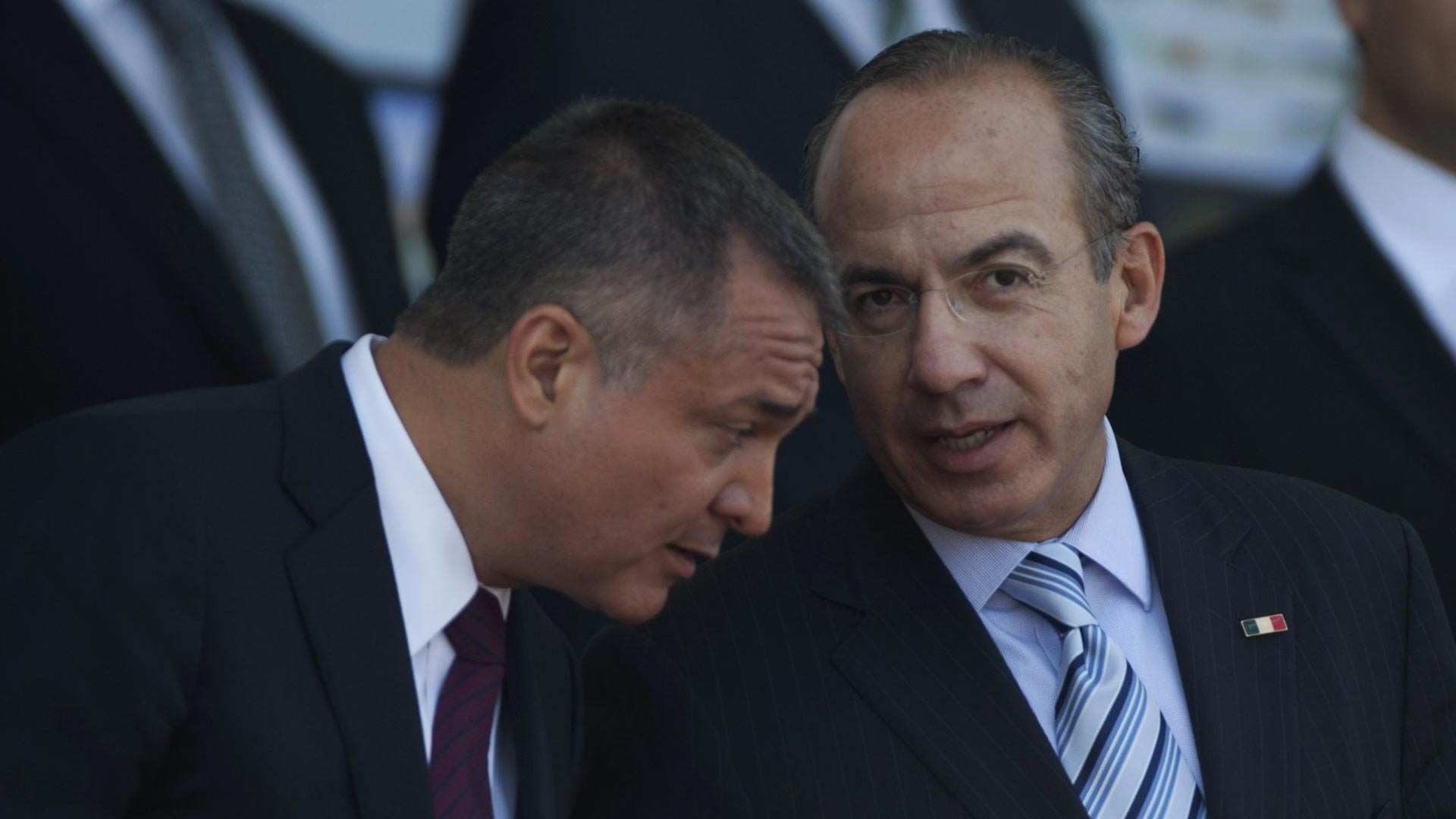
Genaro García Luna, Luis Cárdenas Palomino and Iván Reyes Arzate were three of the main members of the now-defunct Federal Police who implemented the security strategy in the government of Felipe Calderón Hinojosa.
Reyes Arzate pleaded guilty last October to receiving a bribe in exchange for assisting the El Seguimiento 39 drug cartel, associated with the Sinaloa Cartel —with the latter he is also presumed to have had links to García Luna—, to send cocaine from Mexico to the United States.
“By accepting thousands of dollars in bribes in exchange for information about law enforcement investigations into El Seguimiento 39, Arzate forged a deplorable alliance with drug traffickers,” said Breon Peace, U.S. Attorney for the Eastern District of New York, who noted that the former commander thus “betrayed” the “people of Mexico he had sworn to protect.”
Between January 2023 and October 2024, García Luna was tried in the United States, where he was sentenced to 38 years in prison for his ties to drug trafficking. The prosecution built its case against him based on the testimonies of criminal leaders such as Sergio Villarreal, “El Grande”; Óscar Nava Valencia, “El Lobo”; and Jesús “El Rey” Zambada, who, despite not having been in contact for years, corroborated each other’s accounts of clandestine meetings in which they claimed to have seen the former Secretary of Public Security, the millions of dollars they paid him in bribes, and how, in exchange, they received his assistance in trafficking drugs.
In the first testimony heard in court, “El Grande,” an associate of the Beltrán Leyva cartel, placed García Luna at meetings with major drug lords and asserted that he received bribes from Arturo Beltrán Leyva since his time as director of the Federal Investigation Agency (AFI). This was corroborated by “El Rey” Zambada, the last cooperating witness to testify, who admitted to paying García Luna five million dollars: one million during Vicente Fox’s presidency and another during Felipe Calderón’s. He also confirmed the former police chief’s relationship with Arturo Beltrán Leyva and spoke about how the cartel had Federal Police agents under its thumb. “El Lobo”—of the Milenio Cartel—also confirmed the payment of bribes, in his case for 10 million dollars, but above all, he indicated that information was leaked to them.
Obed Rosas is the editor of the Investigative Unit and head of the Books section at SinEmbargo, where he has also served as Desk Manager and Social Media Editor. He hosts Close UP and co-hosts Siete Días with Álvaro Delgado, both programs on SinEmbargo Al Aire. He has worked for other media outlets such as Expansión, Newsweek en Español, and Revista Zócalo. He holds a degree in Communication and Journalism from the FES Aragón at UNAM and also studied Hispanic Language and Literature at the Faculty of Philosophy and Letters at the same university.
-
People’s Mañanera October 21
President Sheinbaum’s daily press conference, with comments on Pemex, fuel theft, Jalisco’s water crisis, missing persons, and the lie detector.
-
Jáuregui’s Arrest Does Not Close the CIA Case in Chihuahua; Morena Demands Broader Investigations
Morena leader Ariadna Montiel holds Governor Maru Campos politically responsible and says ex-prosecutor Guillermo Zuany must also face justice.
-
Morena Accuses Violation of the Secular State Over Award Ceremony for Evangelicals in the Chamber of Deputies
A representative of Israel’s embassy attended the PRI-hosted event, and the group’s founder was arrested in the U.S. for drug trafficking in 2007, Morena deputies said.