Morena Can Win Elections But Lose Leadership
This article by José Romero originally appeared on April 27, 2026 at Intervención y Coyuntura. Revista de Teoría y Crítica Política. The views expressed in this article are the authors’ own and do not necessarily reflect those of Mexico Solidarity Media or the Mexico Solidarity Project.
Sheinbaum inherited the government, but she didn’t automatically inherit the leadership of the Obrador movement. She doesn’t need to break with it or invent a different project. She needs something more difficult: to manage the legacy she received, organize it, update it, and sustain it in a more adverse economic, territorial, and international context. Therein lies the problem: administering the power received is one thing, but transforming a political inheritance into effective leadership is quite another.
Claudia Sheinbaum governs a movement whose historical legitimacy remains anchored in Andrés Manuel López Obrador. This legacy is not a weakness: it is the foundation of her power. The problem is not that the President wants to distance herself from López Obrador’s movement, as is sometimes simplistically interpreted. Nor is it that she must build a project opposed to López Obrador’s. The problem is more complex: she must lead a movement she did not found, manage legacies she does not fully control, and confront a more challenging economic and international context than the one her predecessor faced.
There is no open break with the old political center. Nor is there an orderly continuity. What seems to exist is a multi-pronged strategy: containing networks, displacing figures, limiting autonomy, intervening in candidacies, reducing uncertainty, and building presidential authority within a movement whose social, territorial, and symbolic strength remains Obrador-led.
The sequence helps to understand it.
When a government doesn’t emerge from the heart of the movement it inherits, it can manage the apparatus, but it struggles to embody its popular strength.
First came the public exposure of López Obrador’s family circle. Andrés Manuel López Beltrán’s trip to Japan was presented as a contradiction to the government’s austerity measures, but politically it meant something more. It wasn’t just a trip; it was about placing a symbolic figure of the old Obradorista center under scrutiny. Andy isn’t just any activist. He’s the son of the former president and the Secretary of Organization for Morena. To target Andy was to target a part of the familial, territorial, and organizational continuity of Obradorismo.
Then came the political blow to Adán Augusto López’s inner circle. The case of Hernán Bermúdez Requena, former Secretary of Public Security of Tabasco, not only opened a legal case, but also had an immediate political impact on one of the most important figures in the López Obrador movement. Adán Augusto had been governor, Secretary of the Interior, a presidential hopeful, and a key legislative operative. Weakening him, or allowing him to be weakened, would have altered the internal balance of power within Morena. In this instance, the cost seemed manageable: Adán Augusto had influence, but not the same territorial and legislative capacity as other players in the coalition.
Then came the conflict surrounding candidacies, nepotism, and family networks. Herein lies one of the true cores of the problem. Candidacies are not an administrative matter nor a simple internal party dispute. They are the concrete means by which future power is distributed. Whoever controls candidacies controls governorships, congresses, mayoralties, budgets, territorial networks, and successions.
That’s why Luisa María Alcalde’s case must be carefully examined. It’s not simply a matter of whether or not she’s an Obrador supporter. If the leadership transition in Morena remains aligned with Obrador, then the problem isn’t ideological. The conflict seems to lie elsewhere: in who controls the negotiation of candidacies and from where power is being organized leading up to 2027. If candidacies are negotiated outside the presidential center, the problem ceases to be partisan and becomes one of authority.
My dismissal as director of CIDE can also be interpreted in this same light. Not because it is identical to partisan conflicts, but because it foreshadowed a broader atmosphere: the new era seems to have little tolerance for figures with autonomy, a public voice, and critical capacity. In some cases, political operatives are removed; in others, civil servants; in others, ideological cadres; in others, academics. The common logic is not necessarily open persecution, but rather an attempt to reduce uncertainty. Those in power want predictable figures.
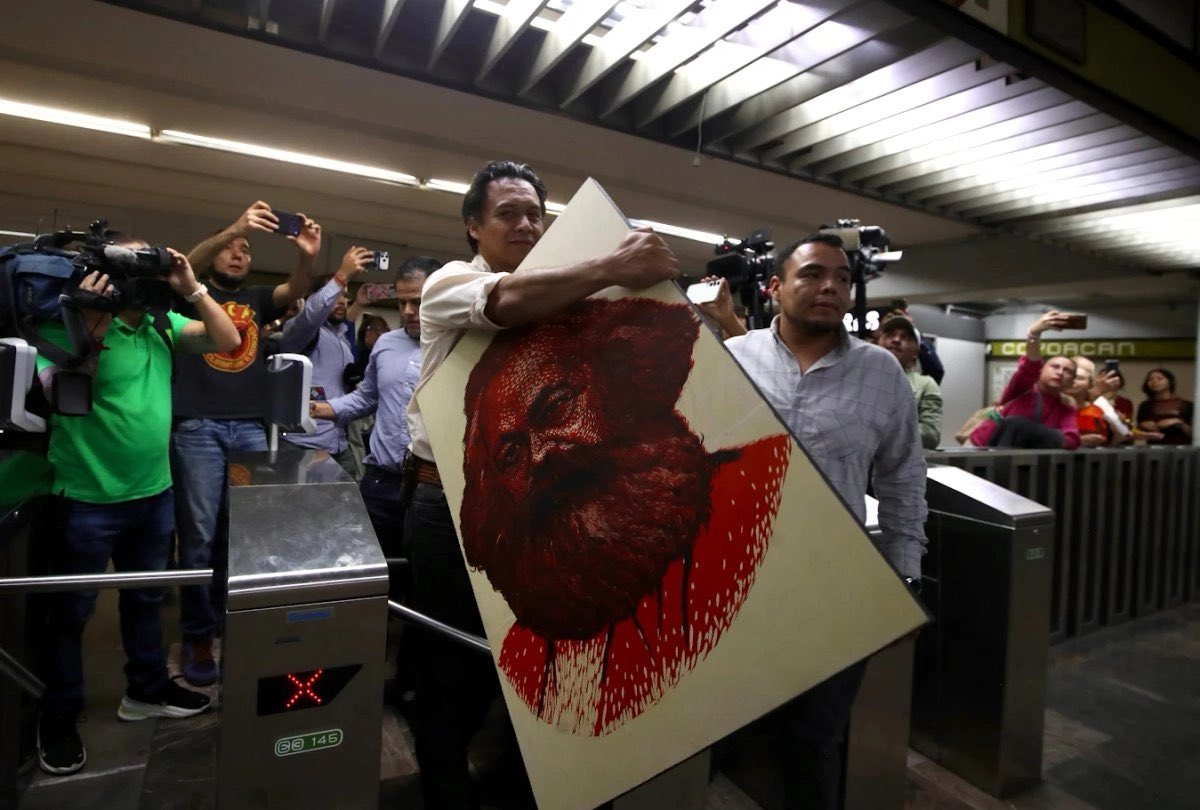
Later came the removal of Marx Arriaga from the Ministry of Public Education (SEP). It wasn’t a simple administrative change. Arriaga represented a part of the cultural battle of the Obrador administration: textbooks, the New Mexican School model, and the ideological confrontation with conservative sectors and parts of the traditional academic establishment. His departure marked the removal of an inconvenient figure from the previous administration. The message seemed to be that the new government wanted to move from ideological confrontation to a more manageable, technical, and controlled phase.
Then the conflict reached Marcelo Ebrard. The investigation into his son’s stay at the Mexican embassy residence in London opened a delicate front. The point is not to defend or condemn Ebrard prematurely. The point is the political moment. Ebrard is Secretary of Economy and a central figure in the relationship with the United States and Canada, just as the USMCA renegotiation is approaching. Publicly weakening him could serve to establish internal boundaries, but it could also affect the Mexican state’s negotiating power.
Ebrard’s situation is different from Adán Augusto’s. He doesn’t have the same territorial control as Monreal, but he does have international clout, negotiating experience, and a strong presence. That’s why trying to limit him is more complex. He can’t be removed without external costs. And in a context marked by the United States, migration, security, fentanyl, investment, energy, and the review of the USMCA, those costs could be high.
Almost simultaneously, the reconfiguration of the foreign policy front began. Roberto Velasco was appointed Secretary of Foreign Affairs, and Roberto Lazzeri was nominated for the Embassy in Washington. At first glance, the move might appear to be a selection of technical experts to manage relations with the United States. But it can also be interpreted differently: not as a search for the best possible candidates for a particular historical juncture, but rather as a recourse to the profiles already available within the government’s circle of acquaintances.
In a negotiation as complex as the renegotiation of the USMCA, with its relationship with Washington, migration pressures, security, fentanyl, investment, and technological disputes, simply knowing the administrative records isn’t enough. Political clout, negotiating experience, geopolitical acumen, authority with the Americans, and domestic support are essential. The question isn’t just who they appointed, but why those were the only names available.
This point reinforces the underlying thesis: the government needs its own leadership capacity, but it seems to be operating with a limited pool of personnel. It didn’t necessarily choose a new strategic elite; it chose what it knew, what was readily available, and what it could align.
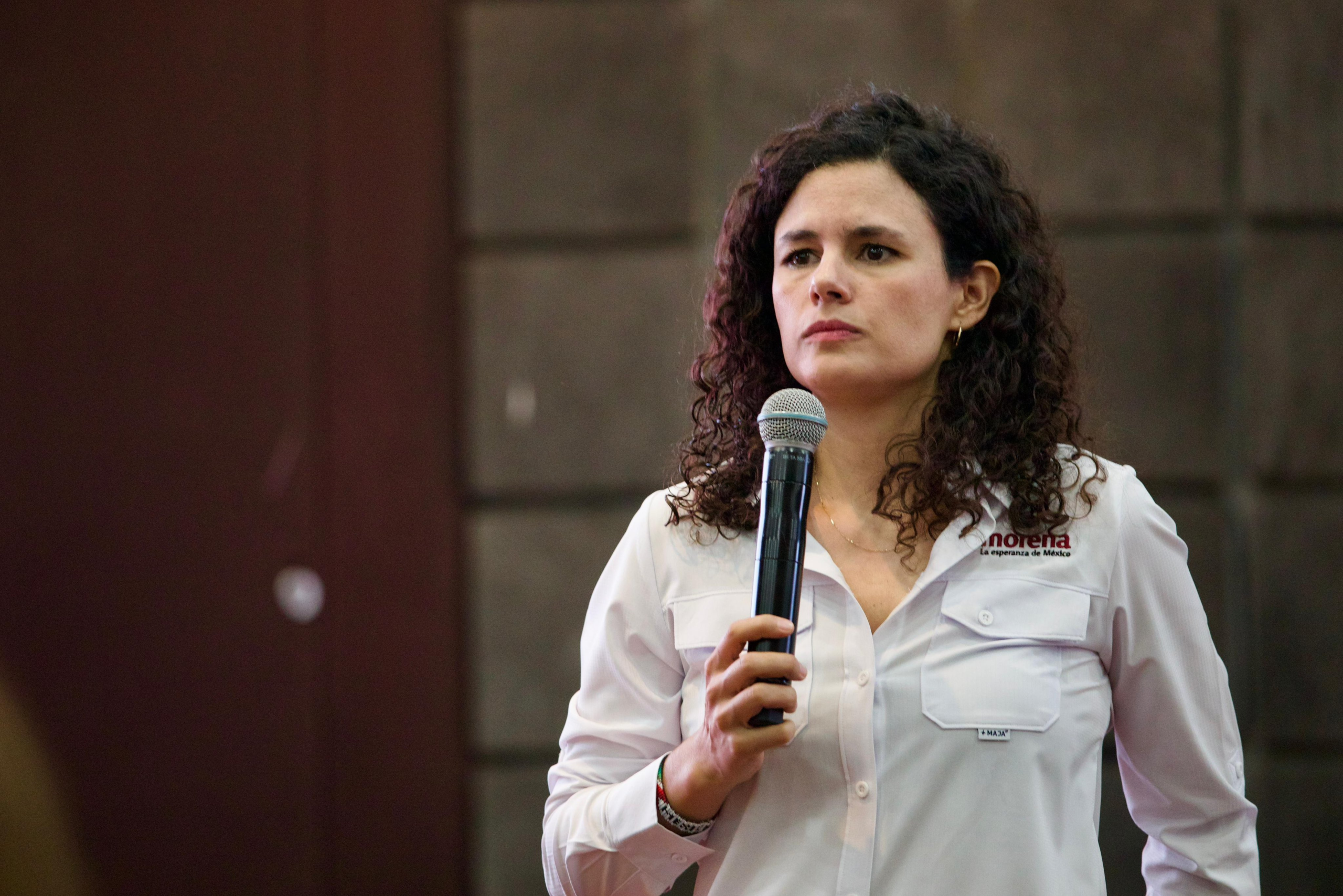
Then came the movement regarding Morena’s leadership. Luisa María Alcalde’s departure for the Legal Counsel’s Office of the Presidency cannot be interpreted merely as a change of position. It occurs as Morena begins to organize itself for 2027. And 2027 is not just any election: it is the moment when positions, candidacies, governorships, local congresses, and territorial control will be distributed.
Moving the national leadership at this moment means intervening in the party before the inherited networks, governors, and local groups have too much say on their own. But the fact that the change also comes from within the Obrador camp shows that there is no break with the original movement. There is a dispute within the same bloc. Obradorism is not being replaced; rather, there is an attempt to establish who is in charge within it.
The case of Ricardo Monreal illustrates the limitations of that strategy. Monreal cannot be treated like Adán Augusto. He wields regional power, legislative networks, negotiating skills, and control over a significant portion of the Chamber of Deputies. Removing him would be prohibitively costly. Therefore, he cannot be contained in the same way. This highlights one of the central constraints of Presidential power: formal power is not always sufficient to discipline real power.
Then Campeche appeared. Layda Sansores anticipated the national process and positioned Pablo Gutiérrez Lazarus as the local successor. This episode is important because it shows that the crisis isn’t just at the top. Governors want to inherit power, control the local party, protect their networks, and ensure their current power continues into the future. If the central government is slow to act, the regional branches move first.
But Campeche reveals something even more delicate: the ruling coalition can no longer be taken for granted. The Green Party (PVEM), which for years has functioned as a pragmatic ally of the dominant bloc, is beginning to operate according to its own logic. If in some states it can negotiate outside of Morena, even with forces that previously seemed defeated, then the problem is no longer just one of internal coordination. It is a problem of political control.
This changes the electoral landscape. Morena may remain the largest party, but that doesn’t automatically mean it will retain the territorial bloc that made it dominant. The Green Party isn’t an ideological force; it’s a pragmatic machine. When it senses strength, it aligns itself. When it senses weakness, it negotiates. And when allies stop behaving like allies and revert to behaving like parties, the electoral map shifts.
That’s why it’s no longer certain that Morena will continue winning with the same ease. The idea of an automatic victory rests on a premise that is beginning to erode: that the coalition will remain disciplined, that the governors will wait for instructions, that local groups will accept imposed candidates, and that smaller allies will remain subordinate to the central government. None of that is guaranteed. Territorial politics are moving faster than national leadership.
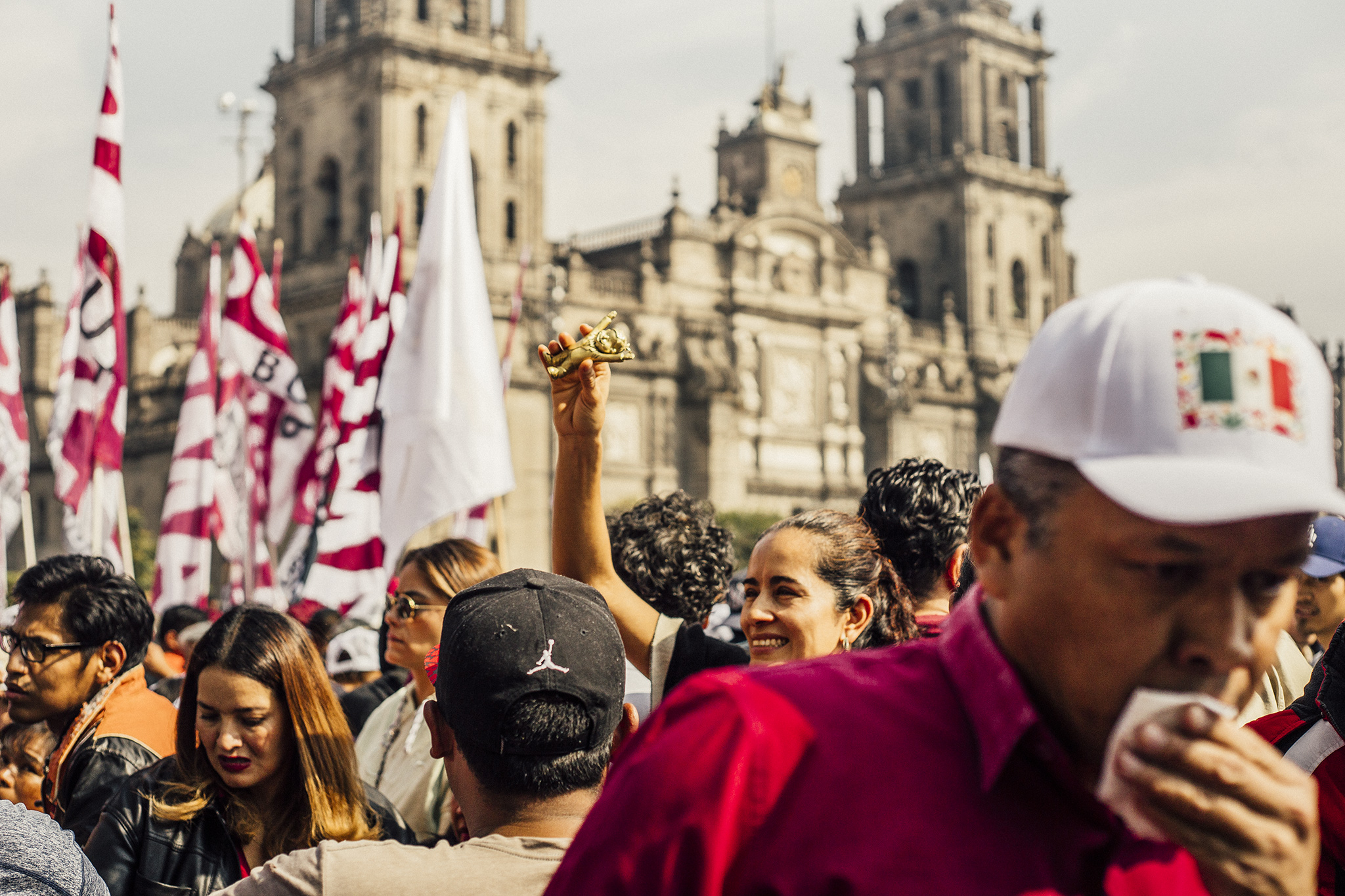
Here an uncomfortable word appears: misrule. Not in the sense of a total absence of power, but in a more precise sense: many actors are at work, but there seems to be no clear leadership to guide them. There are decisions, there are changes in personnel, there are messages, there are targeted attacks, there are attempts at control. But a coherent leadership structure is still nowhere in sight. Some are contained, others tolerated, some are sidelined, and still others are negotiated with. The result doesn’t seem like a comprehensive strategy, but rather a collection of piecemeal responses to problems that are already overwhelming the central government.
Then came Chihuahua, which opened up a more delicate dimension: sovereignty. The presence of US agents involved in security tasks without clear federal oversight showed that the problem wasn’t merely partisan. When state governments can create gray areas of cooperation with foreign agencies, the national government appears to be reacting after the fact.
Viewed sequentially, the story changes. First, the familiar symbol of Obradorism is targeted. Then, a central political network is weakened. Next, candidacies and territorial groups become strained. Later, an academic figure with autonomy and a critical voice is sidelined. Then, an ideological figure withdraws from the culture war. Next, an indispensable operative like Ebrard is curtailed. Later still, the external front is reorganized with a limited pool of personnel. Then, Morena is intervened in. Later, governors are put forward. Then, the allies begin to move according to their own logic. Finally, there are leaks of authority in security and sovereignty.
Each episode has its own explanation. But together they paint a more serious picture: the attempt to reorganize inherited power while signs of fragility, loss of control, and a lack of clear leadership accumulate regarding what is to be preserved, updated, and defended.
Faced with low growth, tax pressure, and a need for stability, investment—both domestic and foreign—is beginning to occupy a different place: not only as an instrument of strategy, but also as a possible partial substitute for it. The emphasis no longer seems to be so much on setting symbolic boundaries against capital and external powers
The problem isn’t that the President lacks an abstract project. That would be too simplistic. There may be programmatic continuity, social programs, Plan Mexico, investment, energy transition, and a discourse of well-being. The problem lies elsewhere: if all of that isn’t articulated within a clear historical framework, it appears more as an administration focused on stability than as the leadership of a transformative process.
There is no lack of formal power. There is no lack of decisions. There is no lack of announcements. What has yet to emerge is a unifying vision capable of integrating domestic policy, territorial succession, relations with the United States, economic strategy, sovereignty, and the cohesion of the movement in a single direction. When that doesn’t happen, the government may act a great deal but lead very little.
Herein lies a social tension that should not be ignored. Obradorism was built from the ground up, in public squares, addressing popular grievances, connecting with the heart of Mexico, and confronting the elites. AMLO could speak of poverty, abandonment, and dignity because these sectors recognized him as someone who had walked alongside them for decades. His legitimacy was not merely rhetorical: it was biographical, territorial, and emotional.
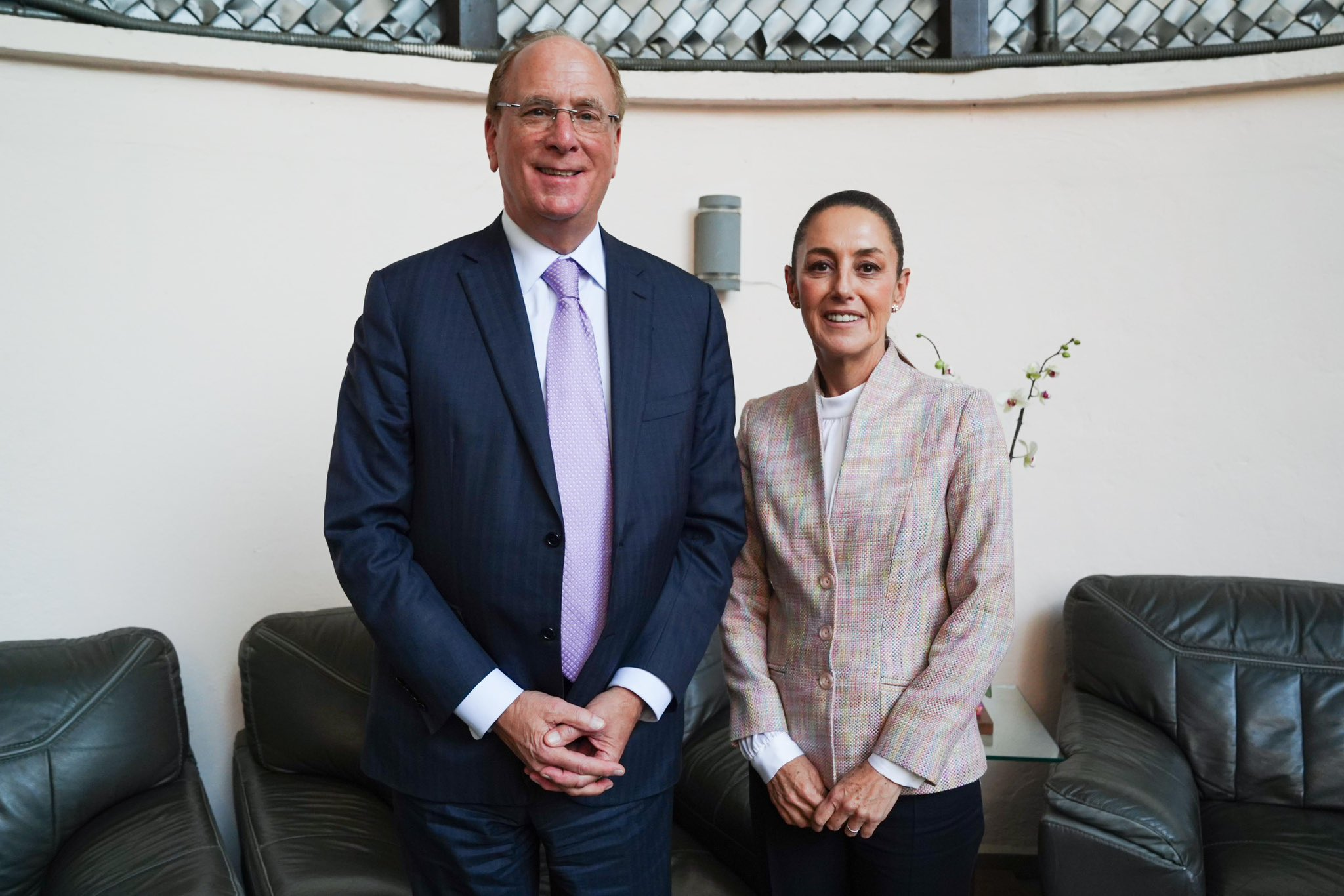
The new presidential circle seems to come from another world: more urban, academic, from the capital, institutional, and less connected to the movement’s grassroots base. This isn’t necessarily about explicit classism, but rather a social distance that has political repercussions. When a government doesn’t emerge from the heart of the movement it inherits, it can manage the apparatus, but it struggles to embody its popular strength.
That is one of the risks of this stage: replacing popular leadership with cabinet leadership; replacing legitimacy built on the ground with legitimacy based on institutional control; preserving the name of the 4T while weakening the relationship with the people who made it possible.
Added to this is a change in tone in relations with the world. López Obrador never rejected foreign investment, but he subordinated it to the idea of sovereignty: Mexico was not a territory to be conquered. Investment was welcome if it was integrated into a national project, not if it sought to dictate its terms to the Mexican state.
The new phase seems to operate according to a different logic. Faced with low growth, tax pressure, and a need for stability, investment—both domestic and foreign—is beginning to occupy a different place: not only as an instrument of strategy, but also as a possible partial substitute for it. The emphasis no longer seems to be so much on setting symbolic boundaries against capital and external powers, but rather on sending signals of confidence, normalization, and certainty.
The trip to Spain, presented as participation in a meeting of progressive governments, can also be interpreted in this light. It’s not just about diplomacy. After the pause in relations between López Obrador and Spain, prompted by the historical grievances of the conquest and the colonial period, this gesture of rapprochement has political significance. Where AMLO emphasized historical memory, sovereignty, and symbolic reparations, Sheinbaum seems to prioritize normalization, international dialogue, and the pursuit of stability.
While Obradorism as an electoral identity isn’t completely abandoned, some of its strongest features are toned down: the confrontation with elites, the criticism of foreign capital, the use of historical memory as a political tool, and the idea that Mexico should not be treated as territory available for foreign interests.
This is no small detail. It reveals a selective softening of Obradorism. While Obradorism as an electoral identity isn’t completely abandoned, some of its strongest features are toned down: the confrontation with elites, the criticism of foreign capital, the use of historical memory as a political tool, and the idea that Mexico should not be treated as territory available for foreign interests.
Control is not leadership. Control moves pieces, disciplines institutions, displaces officials, and dictates silence. Leadership requires a plan, a narrative, skilled personnel, reliable information, moral authority, and the ability to rally support. Morena may retain votes and positions, but lose its leadership. It may continue winning elections for a while and, at the same time, weaken the historical project that gave it meaning. But if the coalition fragments, not even that victory can be taken for granted.
All of this is happening under severe economic constraints. Mexico no longer has the oil revenue margin it enjoyed decades ago. PEMEX is under pressure, crude exports have fallen, public debt is rising, and growth isn’t enough to buy political time. Morena is governing from a position of scarcity, not expansion.
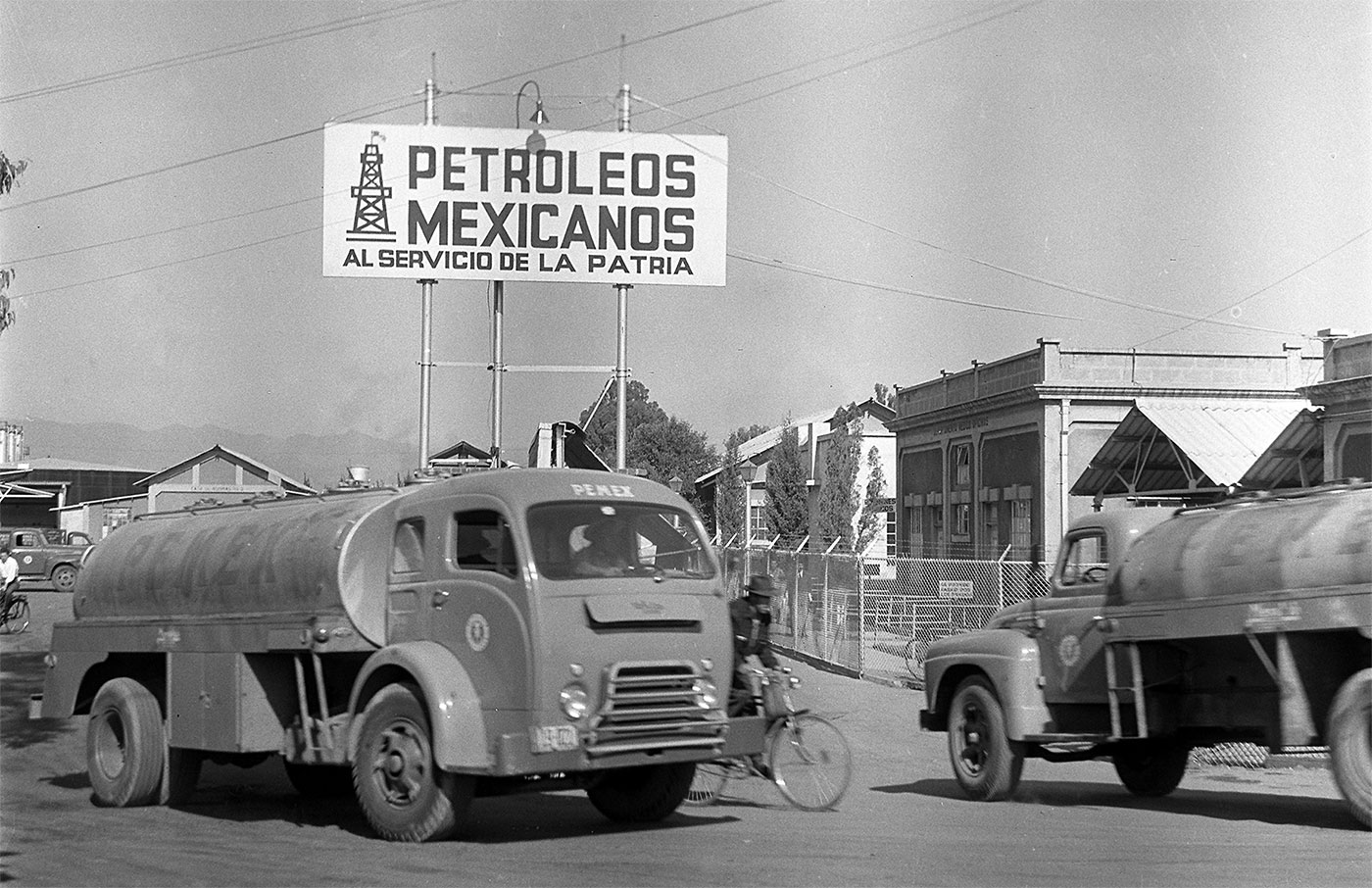
This is crucial. In an expanding economy, the government can compensate groups, distribute resources, postpone conflicts, and buy time. In a constrained economy, every decision leaves casualties. Supporting one group angers another. Protecting one priority means neglecting another. Allocating more money to sustain social or financial commitments leaves less room for public investment, industrial policy, or political negotiation. Scarcity exposes fractures that could previously be concealed.
That’s why the USMCA becomes the critical point. Faced with low growth, tax pressure, reduced energy efficiency, and the need to attract foreign investment, the government may be tempted to concede too much to guarantee immediate stability. Foreign investment can be useful if it is subordinated to a national strategy. But if it becomes a substitute for that strategy, it ceases to be an instrument and becomes external control.
The paradox is significant: a government that speaks of sovereignty can end up increasing dependency, not out of open neoliberal conviction, but out of political and economic necessity. It may cede decision-making power to attract capital; attract capital to sustain growth; sustain growth to avoid internal divisions; and avoid internal divisions to retain power.
Continuity with López Obrador wasn’t a weakness. It could have been a platform. The problem wasn’t relying on that legacy, but rather navigating it intelligently while adapting to a more challenging phase. Trying to get everything in order too quickly, without sufficient personnel, without effective local leadership, and without a clear strategic vision, may be the mistake of this stage.
Foreign investment can be useful if it is subordinated to a national strategy. But if it becomes a substitute for that strategy, it ceases to be an instrument and becomes external control.
A center of legitimacy cannot be displaced without another ready to take its place. Nor can a popular movement be led solely from the cabinet. Obradorism is not an office or an electoral label. It is a social, territorial, symbolic, and affective coalition. Anyone who fails to understand this can win elections and still lose sight of the project’s historical significance.
The Fourth Transformation (4T) may not yet be facing an open electoral crisis, but it can no longer assume its territorial hegemony is assured. Morena retains strength, votes, social base, and institutional control, but the coalition that sustained it is beginning to show cracks. Governors are making their moves, allies are negotiating, local groups are exerting pressure, and candidacies are becoming battlegrounds.
The question is no longer just whether Sheinbaum has formal authority. She does. Nor is it simply whether Morena retains votes. It does. The question is whether the ruling bloc maintains a strategic leadership capable of simultaneously managing its internal succession, disciplining allies, containing governors, negotiating with the United States, defending sovereignty, governing an insufficiently dynamic economy, and preventing the urgency to attract foreign investment from turning the USMCA into an instrument of subordination.
Morena may continue winning elections, but it should no longer take it for granted. Winning is not the same as leading. And when leadership weakens, even electoral victory ceases to be a certainty. Sheinbaum doesn’t need to abandon Obradorism or fabricate a new doctrine. She needs to demonstrate that she can lead the inherited legacy without disrupting it, without emptying it of meaning, and without turning it into a mere administration of power. If she fails to do so, she may retain formal power for a time, but lose the project, the coalition, and eventually the territorial control that made Morena dominant.
-
Mexico Does Not Have the Capacity to Confront the Cartels, Trump Says
Speaking at the White House, Trump claimed without evidence that cartels control Mexico and warned they have a deadline to “basically surrender.”
-
Mexico’s Secretary of Governance Announces Group of Experts Will Analyze National Registry of the Disappeared
Backed by the UN human rights office, Mexican and U.S. scientists will audit the registry, while 16,003 people reported missing have been located.
-
People’s Mañanera October 15
President Sheinbaum’s daily press conference, with comments on economic growth, neoliberalism, tourism, and Jalisco.