
REMA Rejects Canadian Mining Corporations’ “Sustainable Mining” Standards as Sham
This article by Alfredo Valadez Rodríguez originally appeared in the November 4, 2025 edition of La Jornada, Mexico’s premier left wing daily newspaper.
Zacatecas, Zacatecas. The Mexican Network of People Affected by Mining (REMA) rejected the statement called “Standard towards sustainable mining”, which was released by the Canadian Chamber of Commerce in Mexico (CanCham) “announcing it as if this were a great advance for the industry in Mexico and for the relationship between Canada and Mexico.”
This standard, REMA asserts, “is yet another simulation mechanism, allowing Canadian companies to be recognized by governments as ‘a positive force for communities, for the environment and for the long-term prosperity of our Mexico’ while they destroy lives and territories with impunity in different parts of the Mexican Republic,” as declared by the Canadian ambassador to Mexico, Cameron Mackay, when announcing this standard on October 24.
According to REMA, this is “a media stunt by Canadian mining companies and Canadian diplomacy in Mexico,” since the standard “is a mechanism created by the Mining Association of Canada that consists of nine protocols for the self-assessment of mining operations and that, for years, has been promoted by said Association, both within Canada and globally.”
In this mechanism, “the [Canadian] Embassy acts with omission and negligence in the face of the demands that governments, organizations and communities have made for decades from Mexico, to hold mining companies based in Canada accountable for human rights, environmental and health violations in various countries.”

This standard will not “guarantee that Canadian investment in the Mexican mining sector will continue to be, more than ever, a positive force,” as Ambassador Mackay stated.
“Rather, this standard promotes opacity and conflicts of interest by encouraging companies to self-regulate their own operations. It is a mechanism that does not penalize companies that fail to comply with the protocols, while preventing affected communities and mine workers from seeking justice and reparations when they lose water sources, their farmland is destroyed, they begin to get sick, or they face criminalization and violence for organizing and reporting violations of their rights.”
REMA also recalled that, “environmental organizations and Indigenous peoples in Canada have also pointed out the danger of this standard, because of the way in which the Mining Association of Canada and the government of the province of British Columbia, in this case, have used it to disguise mining as a ‘responsible’ activity, thus avoiding responding to the constant demands regarding the risks involved in tailings dams, and the weakness of the legislation and controls to manage water pollution generated by mining.”
-
“Washington Stole the Election from Me. It Happened in Honduras and It Can Happen in Mexico”
In an interview with Sin Embargo, the Honduran ex-candidate says Trump’s attacks and the Juan Orlando Hernández pardon were a planned operation, and urges the left to organize.
-
Defense of Sovereignty “Is Not Rhetoric, It’s Principles,” Sheinbaum Says
Sheinbaum recalled foreign pressure on Mexico in the 19th and 20th centuries and blamed the neoliberal governments and Calderón for opening the door to U.S. influence.
-
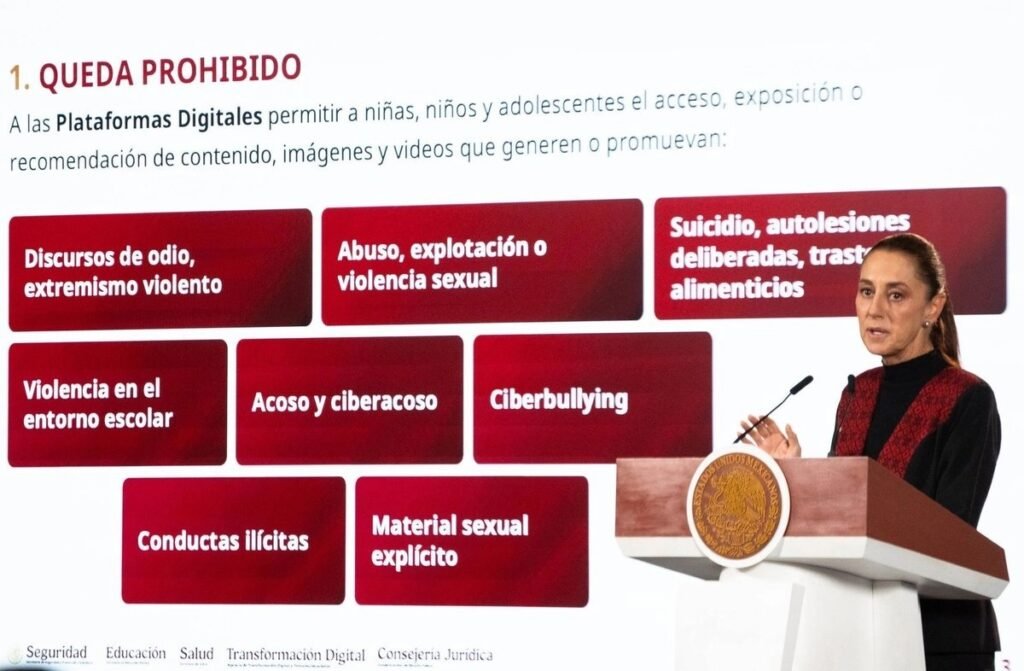
Sheinbaum Presents Draft Decree to Force Digital Platforms to Take Down Content That Incites Violence and Hate
No fines for now: the government will talk with tech companies before publishing the decree next week, a promise made after the Coahuila school attack.