US Ambassador to Mexico Conspires with Far Right, Sets CIA in Motion
This article by Obed Rosas originally appeared in the March 4, 2026 edition of Sin Embargo.
One year after his arrival in Mexico, US Ambassador Ronald D. Johnson has grown closer to the Mexican right wing—which has twice hosted dinners in his honor—and has spearheaded two episodes of interference: in one, he placed himself at the center of illegal CIA operations in Chihuahua, and in the other, he celebrated Washington’s accusations against Morena party Governor Ruben Rocha Moya for drug trafficking.
Ronald D. Johnson built a career over many years marked by his participation in international conflicts and intelligence operations. During the 1980s, for example, he was part of the U.S. military advisory team in the Salvadoran Civil War, where he collaborated with the Army in combating the insurgency and later served as Ambassador, tasked with combating gangs and migration.
Years after his role as a military advisor in El Salvador, he joined the CIA, participating in covert missions, counterterrorism, and unconventional warfare “in countries or settings hostile to national security interests.” Today, his role in Mexico has been marked by the support of the right-wing opposition and by these two episodes of interventionism in which he has actively participated.
Last May, for example, Johnson was the guest of honor at a dinner hosted by the far-right politician Eduardo Verástegui, whom he called “his brother.” Also in attendance were his wife, Alina Johnson, Carlos Slim Domit, and the singer Emmanuel. “May God bless you all. Thank you to Mexico, to my brother Eduardo, and to everyone present,” the Ambassador said during the gathering, as captured in a video of the dinner shared on social media.
Months later, in July, the American Society of Mexico organized a gala dinner in his honor, which was attended by members of the PAN party, Jorge Romero, Ricardo Anaya, Kenia López Rabadan, as well as other opposition figures such as Lorenzo Córdova, José Ángel Gurría, but also members of the MORENA party such as Sergio Meyer, Emmanuel Reyes Carmona, and the former leader of that party and current PT Senator Yeidckol Polevnsky.
The American Society of Mexico, a right-wing group sponsored by companies owned by Ricardo Salinas Pliego, organized the gala hours after Donald Trump announced 30 percent tariffs on Mexican goods shipped to the United States. “It’s not a threat, it’s a strategic alert. The 30 percent tariff that could be applied starting August 1 is a direct consequence of the lack of effective action on issues that impact not only trade, but also the health and national security of the United States and Mexico,” argued Larry Rubin, president of the organization.
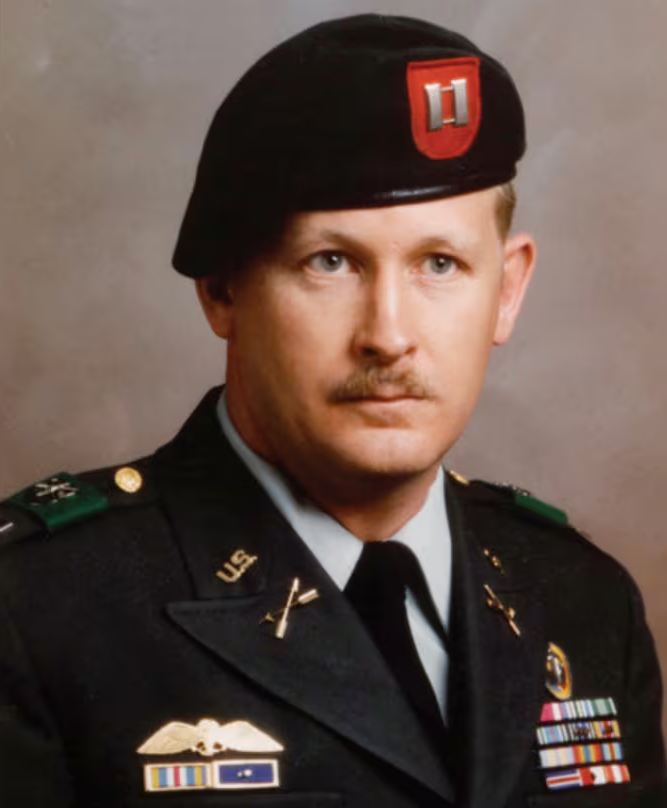
Colonel Ronald D. Johnson, a Green Beret who served in various armed conflicts around the world and worked for the CIA in espionage for 20 years, spoke about how the United States’ purpose is “to return to the path of freedom with rights, justice, and economic opportunity,” which he stated “will not be easy nor will it happen immediately.” He also spoke about how the new era under Trump is “driven by a very clear purpose: a shared responsibility and a commitment to a stronger, more secure, and more prosperous future for the United States, but also for our partners and allies.”
In recent days, Johnson provided more details about Washington’s objectives in Mexico. During an event in Sinaloa, Johnson shifted from discussing a multimillion-dollar investment in a methanol plant to questioning the impact of corruption: “Corruption not only slows progress, but it distorts it. It increases costs, weakens competition, and erodes the trust upon which markets depend. It is not a problem without victims,” he stated. “And it is a direct obstacle to growth, equity, opportunity, and the long-term success of projects like this one.”
The ambassador said that the U.S.-Mexico trade agreement “requires our governments to criminalize bribery and corruption and to enforce codes of conduct for public officials.” He then concluded by saying, “We may soon see significant steps in this direction. So stay tuned.”
Days after his message, the United States Department of Justice filed a criminal indictment against the Governor of Sinaloa, Rubén Rocha Moya; Senator Enrique Inzunza Cázares; and eight other current and former state officials, whom the United States accuses of collaborating with the Sinaloa Cartel to traffic drugs into U.S. territory.
“Combating corruption and transnational criminal activity is a shared priority for the United States and Mexico. Our countries are committed to strengthening transparency, enforcing anti-corruption laws, and upholding the rule of law. This is what our citizens on both sides of the border want and, as I have stated repeatedly, it is what they deserve,” he said shortly after the indictment was announced.
His stance, however, has contrasted sharply with his silence regarding the presence of CIA agents in the Sierra Madre Occidental mountains of Chihuahua, two of whom lost their lives on April 19. “We deeply regret the tragic loss of two members of the U.S. Embassy staff, the Director of the Chihuahua State Investigation Agency (AEI), and one member of that agency in this accident,” he wrote that same day. Since then, neither the Embassy, nor Washington, nor the CIA has explained the irregular presence of the agents, who were not authorized to operate in the country.
Mikel Vigil, a former international operations agent for the DEA, dismissed the idea that the US Ambassador to Mexico, Ron Johnson, was unaware of the presence of CIA agents in the country, because, according to protocol, he should be informed of any operations by agencies such as the DEA, the FBI, the CIA, etc.
“I was assigned to the American embassy when I was working for the DEA, and every morning we had a meeting with the Ambassador. All the agencies—for example, the DEA, the FBI, the CIA, the commercial section, and everyone—were there, and you had to inform the ambassador what each agency was doing. And he always said that he had to know everything, because otherwise it would be an embarrassment for him if they called him and he didn’t know what was happening in Mexico,” he explained.
In that regard, he argued that Johnson not only knew about the actions, but was “complicit in violating the national security law and the sovereignty of Mexico.”
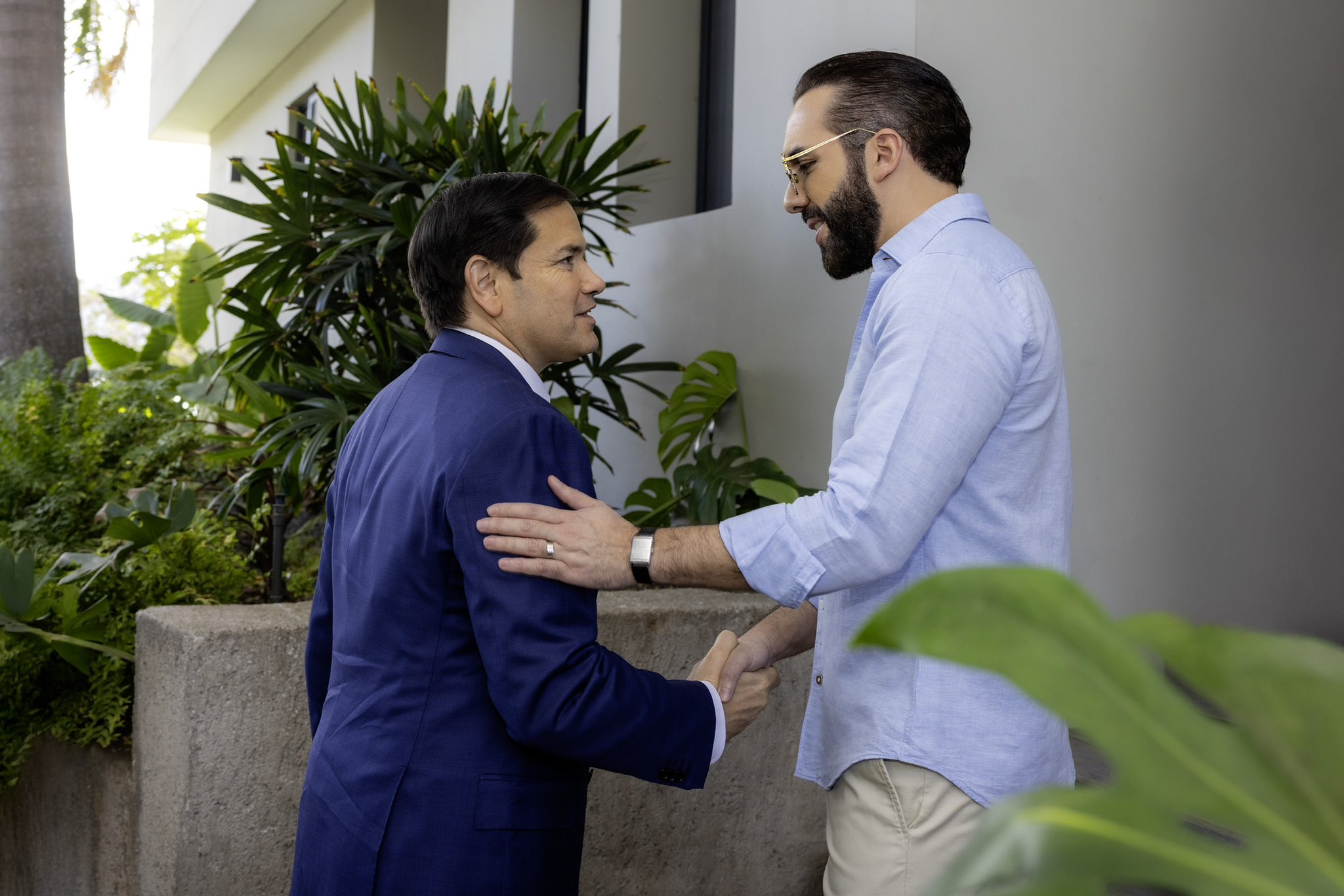
Mexico is the second country where Johnson has served as a diplomatic representative. In El Salvador, he worked with the authorities to reduce violent crime and immigration. Rubén Zamora, a left-wing politician who was El Salvador’s ambassador to the United States and to the United Nations, recounted in El Faro, El Salvador, how during his time in the country, Johnson’s strategy was to “get as close as possible to President (Nayib Bukele), offer him support, and stay away from anything that could be considered political opposition to the government.”
“Hence his repeated public appearances not only at official events, which are mandatory for the entire diplomatic corps, but also at other events, which he does not usually attend, especially if they are of a publicity nature or receive official publicity, such as the president’s press conferences or participation in purely private events, like the baptism of the president’s daughter,” Rubén Zamora noted at the time. During his time in El Salvador, where he served until 2021, he received the country’s two highest awards: the Grand Order of Francisco Morazán and the Grand Cross of Silver.
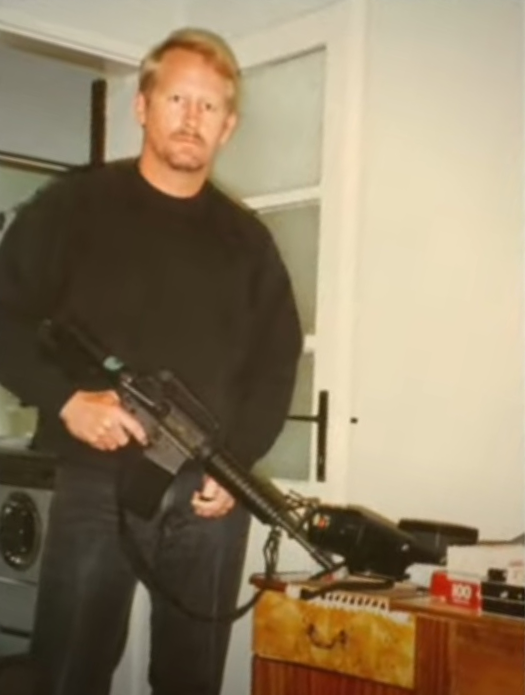
Before becoming Ambassador, in El Salvador he directed, for example, combat operations as one of the 55 authorized military advisors during the civil war in the 1980s, in which the U.S. government equipped the Armed Forces of El Salvador (FAES) to combat insurgent movements in the region, particularly the Farabundo Martí National Liberation Front (FMLN). As Ambassador, he also helped coordinate the fight against gangs and against migration.
Years later, he directed deployments to the war zones of Afghanistan and Iraq. These included air, land, and sea operations for the Central Intelligence Agency (CIA), where he worked for 20 years, and he was in charge of all the Agency’s parachute operations—espionage activities. Johnson has also served as an advisor to the commander of the U.S. Southern Command, the Washington arm responsible for conducting military operations in Central America, South America, and the Caribbean, which has been behind U.S. intervention, as seen in recent years when it backed Juan Guaidó as the legitimate president of Venezuela.
He was also deployed to the Balkans in the 1990s as a senior military officer on an integrated team from the Central Intelligence Agency, the National Security Agency, and the Special Missions Unit to apprehend individuals accused of war crimes. Following his military career, Johnson pursued a second career with the Central Intelligence Agency, participating in operational and combat deployments worldwide in integrated actions with special missions units.
One year after its arrival in Mexico, the operations of that same agency have begun, as demonstrated by what happened in Chihuahua.
-
US Lifts Restrictions on Mexican Airlines
Washington revoked Order 213-2, imposed in 2025 over cargo flights moved to AIFA, reopening new US routes from both Mexico City airports.
-
“Ingeniero,” CJNG Member Who Designed and Built Narco-Tunnels, Falls in Zapopan
The Defense Secretariat says Luis Manuel “N” built drug tunnels into the US from Tijuana and took orders directly from CJNG leader Juan Carlos Valencia González.
-
People’s Mañanera October 16
President Sheinbaum’s daily press conference, with comments on recovered assets, public education, security, and exports.