The USMCA Has A Project. Mexico Doesn’t.
This editorial by José Romero originally appeared here on May 19, 2026. The views expressed in this article are the authors’ own and do not necessarily reflect those of Mexico Solidarity Media or the Mexico Solidarity Project.
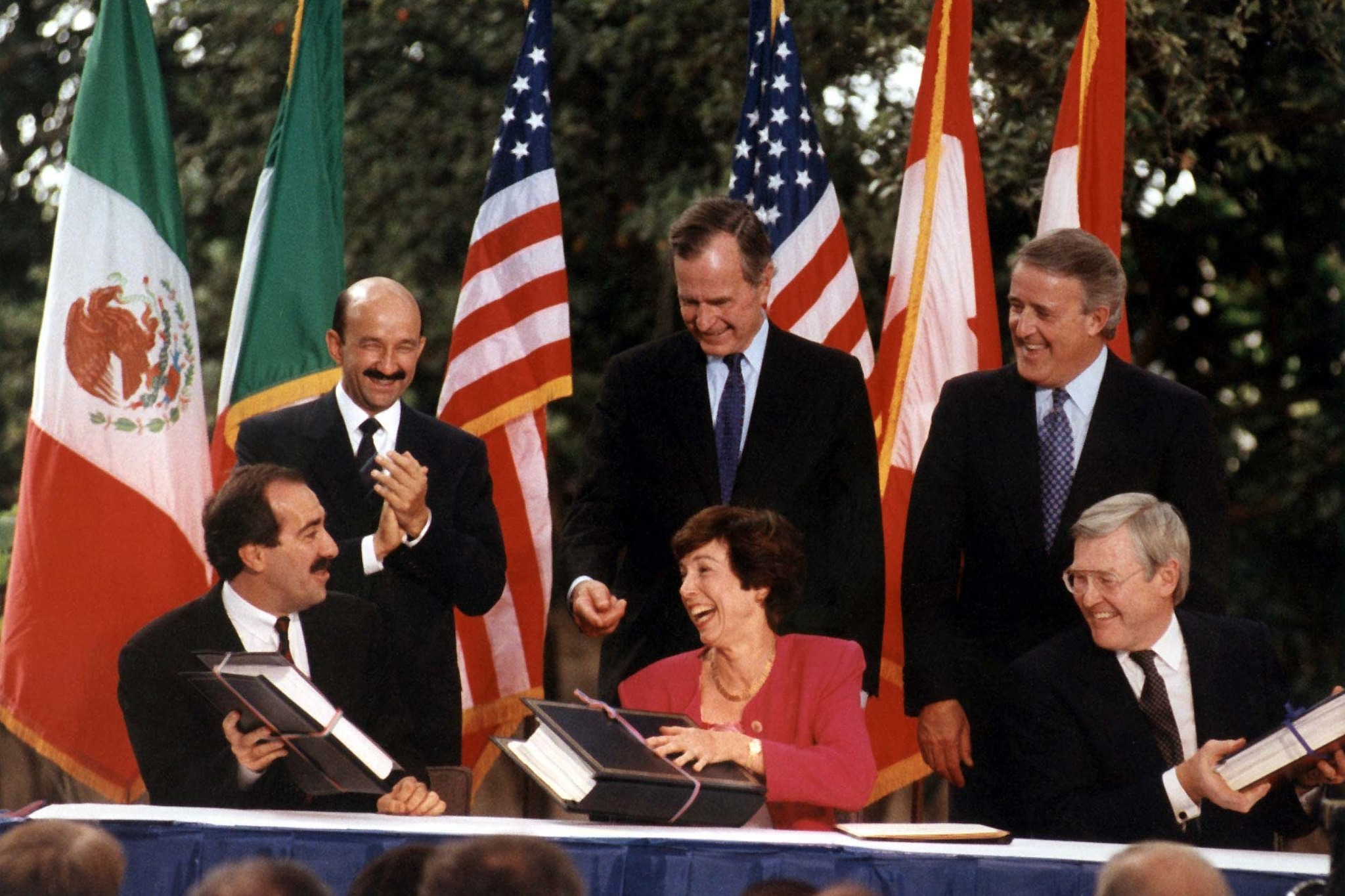
The National Association of Manufacturers’ recent document on the USMCA should be read in Mexico without naiveté. It is not simply a business report. It is a strategic declaration. It presents the North American trade agreement as a centerpiece of American industrial reconstruction. The USMCA, according to this view, must sustain U.S. manufacturing dominance, strengthen its supply chains, secure critical inputs, expand regional markets, and allow more production to bear the tangible mark of “Made in America.” The association itself describes it as the foundation of American manufacturing dominance and states that U.S. exports to Mexico and Canada support two million American jobs.
There’s no need to read between the lines. The strategy is written right on the surface.
The subject of the document is not North America. It is not Mexico. It is not Canada. It is the United States.
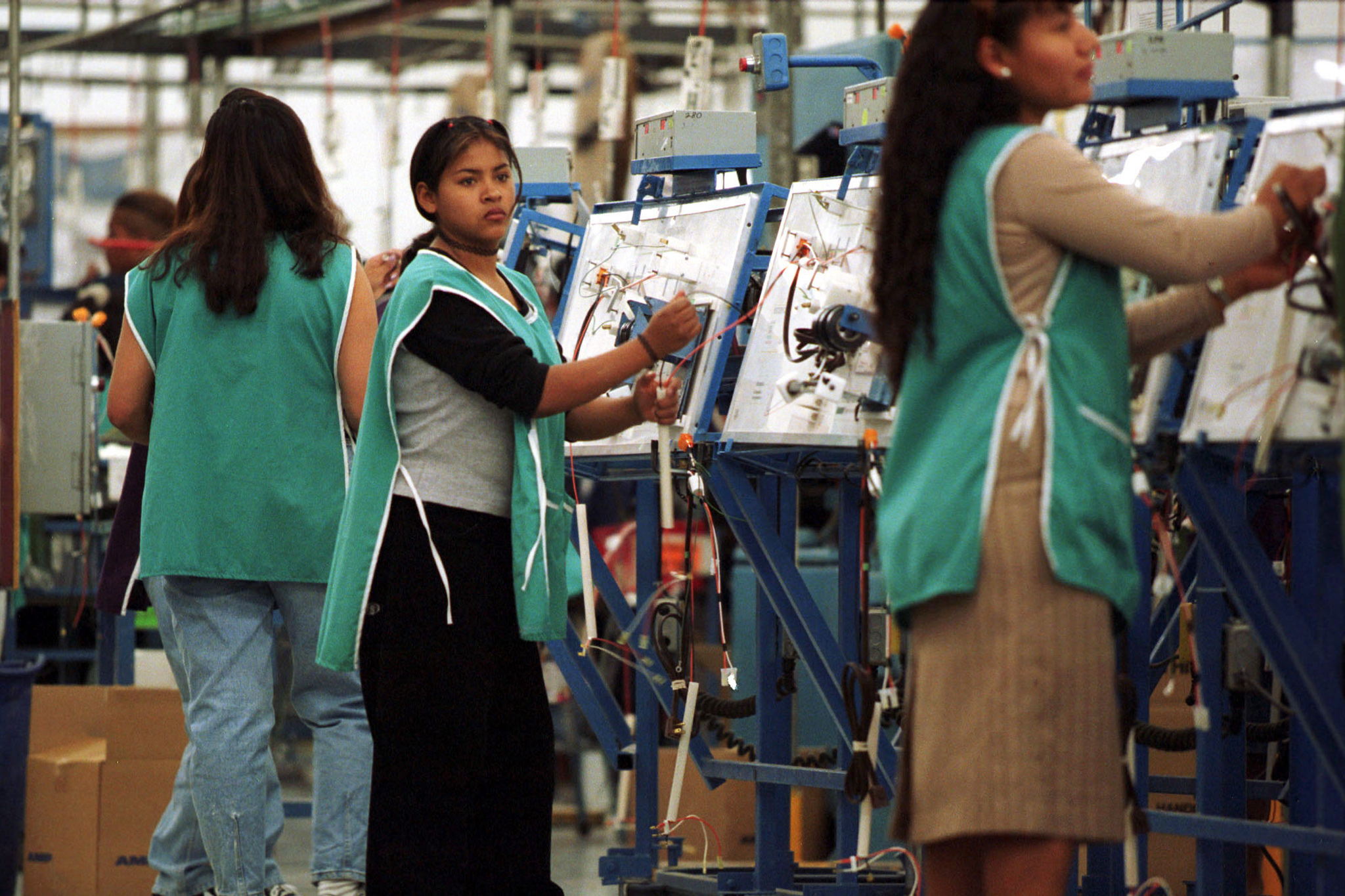
Mexico and Canada appear as functional pieces of a strategy whose direction, narrative, and appropriation belong to Washington. Canada contributes energy, minerals, aluminum, institutional stability, and market access. Mexico contributes territory, proximity, labor, assembly, logistics, domestic market, and operational discipline. The regional division of labour is clear: the United States retains corporate, financial, technological, regulatory, and symbolic control; Canada contributes strategic resources; Mexico operates as a production platform.
This is not a conspiracy. It is something simpler and more serious: a power structure.
Mexico doesn’t need to choose a master. It needs to build its own room to maneuver.
In that structure, Mexico does not appear as an emerging industrial power with the right to define its own technological destiny. It appears as the United States’ manufacturing rearguard. As a nearby, flexible, and inexpensive space. As a provider of labour, territory, cost absorption, and a captive market. As a piece for the US’ response to China.
The problem isn’t trading with the United States. That’s a false dilemma. Mexico shares a border, migration, supply chains, energy, water, security, finance, and economic history with the United States. It would be absurd to deny that reality. The problem is something else: confusing geographical proximity with historical destiny.
Proximity can be an advantage. It can also be a hindrance.
For decades, it was promised that trade integration would bring modernization, productivity, technology transfer, better wages, strong domestic suppliers, and global Mexican companies. Some things did happen. Mexico exported more, received foreign investment, and integrated into automotive, electronics, aerospace, medical, and auto parts supply chains. But it did not build a national technological base commensurate with its export volume. It did not develop enough world-class Mexican corporations. It did not consolidate its own industrial policy. It did not substantially reduce its technological dependence. It did not transform its export integration into productive sovereignty.
The extent of this integration is undeniable. In 2024, Mexico’s total exports reached $617.1 billion, with manufactured goods accounting for 89.8 percent of total exports. Furthermore, the United States acknowledges that over 80 percent of Mexican goods exports went to its market and that over 40 percent of Mexican goods imports originated in the United States.
These figures are often presented as proof of success. They can also be interpreted as a sign of vulnerability.
Mexico exports a lot, but decides little.
It produces sophisticated goods, but a substantial portion of the knowledge, patents, trademarks, design, financing, strategic decisions, and value capture remain outside the country. Mexico assembles, manufactures, transports, and supplies. But it doesn’t export enough, learn enough, finance enough, and capture the main value.
An economy can be highly integrated and yet have little sovereignty. It can produce for the world and, at the same time, depend on decisions made by corporate boards, banks, regulatory agencies, and foreign governments.
Nearshoring can replicate that same illusion under a different name. The rivalry between the United States and China presents a real opportunity for Mexico, but an opportunity is not a guarantee. If the country simply accepts factories, industrial parks, logistics warehouses, and low- or medium-wage jobs, without demanding training, domestic suppliers, technological content, productive financing, infrastructure, sufficient energy, and massive capacity building, nearshoring will not become a new Mexican industrialization.
It will be a new geopolitical factory.
Mexico cannot continue offering its territory, its labour, its market, and its savings so that others can rebuild their historical power while the country remains without its own project. It cannot limit itself to being a logistical buffer, a labour reserve, and a captive market for a power seeking to maintain its hegemony.
The dependency isn’t just in manufacturing. It can also be in food. In the 2024/2025 marketing year, Mexican corn imports reached a record 25.9 million tons; more than 99 percent came from the United States, and yellow corn accounted for about 97 percent of the total imported.
Mexico can be self-sufficient in white corn for basic human consumption and, at the same time, deeply dependent on imported yellow corn for livestock and industry. That distinction matters. A country that aspires to productive sovereignty cannot ignore its food security. There is no solid industrial autonomy on an abandoned rural base, a technologically backward agricultural sector, and a structural dependence on basic inputs.
The underlying reason for this reorganization is China. The United States is not seeking to strengthen North America out of integrationist generosity. It is doing so because it faces an industrial power that is no longer simply the country of cheap labour. China is now a rising manufacturing, technological, export, financial, and military force. Its productive base has changed the structure of global power.
In terms of gross domestic product measured by purchasing power parity, the IMF ranks China above the United States. And in manufacturing, the World Bank’s series on manufacturing value added illustrates the industrial dimension of that advantage: China not only has a huge economy; it has a manufacturing base of superior scale.
That is the fact that is reshaping world politics: China is not just growing. It is producing. It is scaling up. It is integrating. It is learning. It is dominating entire supply chains. It manufactures steel, machinery, chemicals, electronics, batteries, solar panels, electric vehicles, trains, ships, drones, telecommunications equipment, and strategic intermediate goods. It is not just a large economy. It is a material base of power.
That’s why the USMCA has become a cornerstone of American economic security. Washington knows it cannot confront China with Wall Street, the dollar, Silicon Valley, financial sanctions, and traditional military superiority alone. Modern military power also depends on manufacturing: sensors, satellites, semiconductors, batteries, drones, missiles, communications, shipyards, electronics, logistics, and industrial replenishment capacity. The US defense industrial strategy recognizes precisely the need for a resilient industrial base, robust supply chains, and productive capacity to respond to high-intensity conflicts.
That’s the key. The USMCA is no longer just about trade. It’s about industrial rearguard.
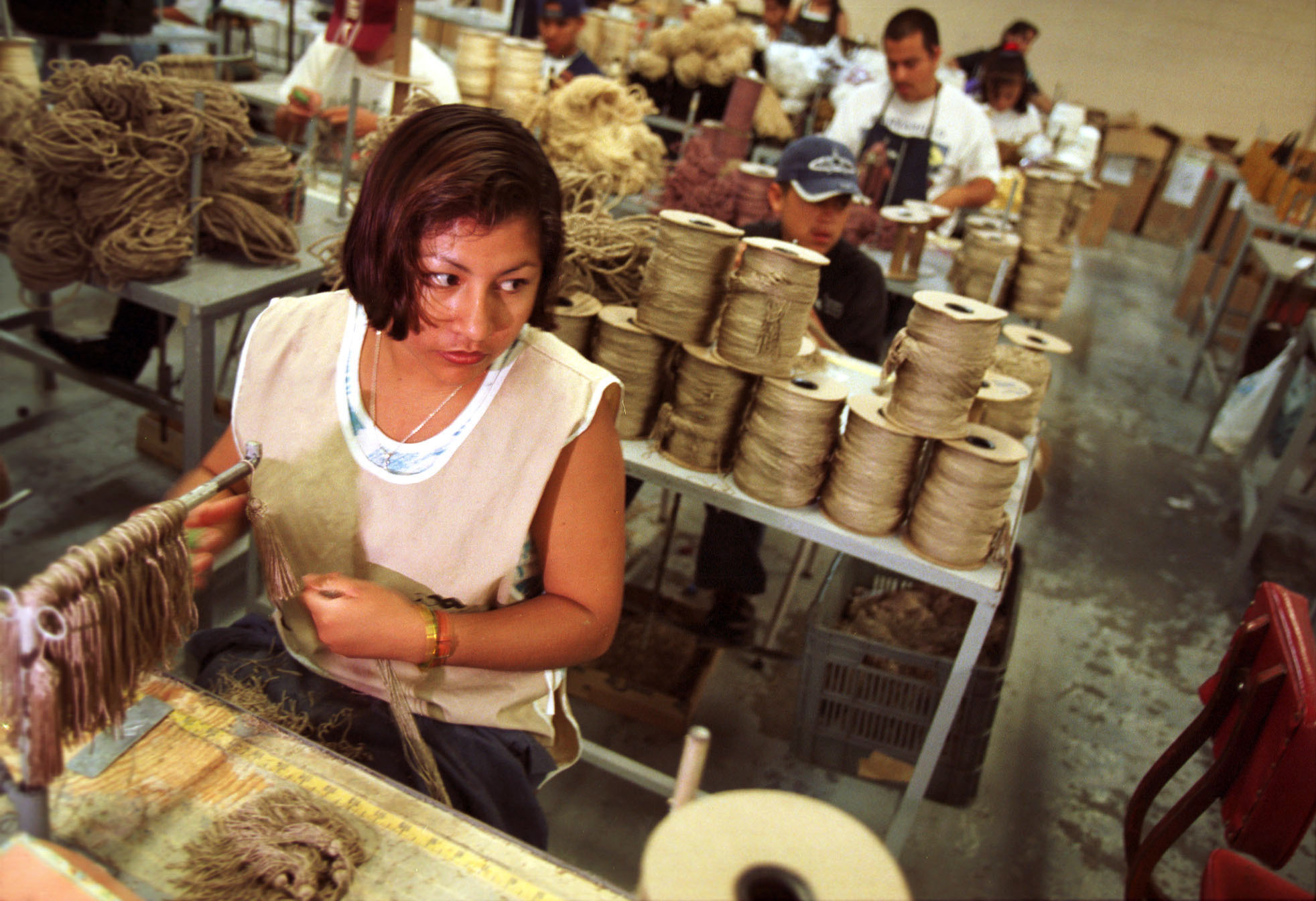
The United States needs North America to function as a production platform in the face of China’s rise. Canada contributes resources, energy, and stability. Mexico contributes labour, territory, proximity, manufacturing, and markets. The question is whether Mexico wants to be an instrument of that strategy or the subject of its own.
It’s best to avoid wishful thinking here. Mexico will not enter the USMCA review with any real power to impose conditions on the United States. The asymmetry is enormous. The United States has the market, the dollar, the technology, the corporations, the legal instruments, the political pressure, and control of a large part of the regional production chains. Mexico has location, a border, labour, industrial experience, and a growing strategic role. But it still lacks sufficient power to negotiate as a major power.
The Mexican problem will not be solved solely at the negotiating table. It will be solved before and outside of it.

A country doesn’t negotiate well simply because it has good speeches. It negotiates well when it has alternatives. When it can sell to other markets, finance its companies, produce strategic inputs, feed its population, generate energy, develop technology, train experts, and withstand external pressures without grinding to a halt.
Mexico cannot claim productive sovereignty if it depends on a single market. It cannot demand industrial respect if it lacks an industrial policy. It cannot speak of technological autonomy if universities, research centers, and businesses operate in isolation. It cannot aspire to food security while massively importing basic inputs for its livestock and industry. It cannot demand the status of a major power if it acts as a subordinate platform.
The USMCA is not set in stone. It is a historical structure, and like all historical structures, it depends on the balance of power that sustains it. Today, the United States retains enormous power. But that power is no longer absolute. Asia concentrates a growing share of industrial and technological dynamism. China possesses a superior manufacturing base. India is emerging as a demographic, technological, and productive hub. The Global South is seeking new bargaining power. Global supply chains are no longer organized solely for efficiency, but also for security, resilience, and diversification.
In that world, relying on a single market can become a strategic weakness.
Mexico must think in two timeframes. In the short term, it cannot ignore its dependence on the United States nor imagine that a heroic negotiation will correct thirty years of subordination. But in the medium and long term, it also must not act as if that subordination were irreversible. If the United States weakens relatively and other powers increase their economic weight, Mexico could open up options that today seem limited.
But the options are only useful to countries prepared to use them.
The national task is to prepare before the moment arrives. Not to passively await the weakening of the United States. Not to fantasize that China, India, Europe, or the Global South will solve Mexico’s problems. Not to replace one dependency with another. To build room for maneuver.
And for that, it’s not enough to talk about sovereignty. We need to create the instruments that make it possible.
Two are fundamental.
The first is to establish a genuine career civil service.

Mexico cannot aspire to negotiate strategically in a complex world if every six years it destroys technical expertise, institutional memory, and specialized personnel. A country that changes its economic, energy, regulatory, commercial, scientific, and diplomatic operators every six years fails to accumulate historical learning. It improvises.
The Mexican public administration cannot continue to function as an army of politicians waiting for a six-year presidential term to be handed out. That logic does not build a state. It builds quotas, favors, temporary loyalties, and technical mediocrity. A country that distributes positions like spoils cannot compete against powers that develop their personnel over decades.
Development demands experts. Experts in international trade, energy, banking, infrastructure, science, technology, artificial intelligence, agriculture, logistics, regulation, economic competition, intellectual property, critical minerals, semiconductors, water, food security, and geopolitics. Not untrained operators. Not officials who arrive to learn the subject after already taking office. Not disposable bureaucrats who disappear when the political group in power changes.
Without a civil service, there is no institutional memory. Without institutional memory, there is no strategy. Without a strategy, each government starts over. And a state that starts over every six years always negotiates from a position of weakness.
The second instrument is the gradual Mexicanization of commercial banking.
Do not nationalize. Mexicanize.
The difference is crucial. This isn’t about expropriating banks or closing the economy. It’s about creating conditions so that a growing portion of the banking system remains in Mexican hands and is linked to a national development strategy. Banking isn’t just another sector. It’s the nervous system of capitalism. It determines which projects survive, which companies grow, which sectors receive credit, which regions develop, and what kind of country becomes possible.
The Mexican banking system is highly concentrated. At the end of 2024, eight banks—BBVA, Santander, Banorte, Banamex, Scotiabank, Citi, HSBC, and Inbursa—held 75.3 percent of the sector’s total assets and 80 percent of its total loan portfolio. BBVA had the largest share of both assets and loan portfolio; Santander, another bank of Spanish origin, also held a central position.
This is not about hostility toward Spain or foreign capital. BBVA Mexico has been a central institution in the Mexican financial system and reports a dominant presence in assets, loan portfolio, and deposits; Santander is a global bank founded in Spain with a broad presence in Europe and the Americas. The point is not xenophobic. It is strategic.
The savings generated in Mexico should increasingly serve the development of Mexico.
A policy of Mexicanizing the banking sector could have lower immediate geopolitical costs vis-à-vis Washington than other measures of economic sovereignty, precisely because a significant portion of the dominant foreign banking sector is not American. But the central argument is not diplomatic. It is productive. Credit is a tool of power. Whoever controls credit decides which sectors grow, which companies scale, which projects survive, and what kind of country is built.
Without a strong national banking sector, industrial policy remains incomplete. There may be plans, speeches, treaties, and opportunities, but there won’t be enough credit to transform the productive structure. Development requires long-term financing. It requires development banks, yes, but also commercial banks committed to domestic investment. It requires credit for production, not just consumption. It requires financing for Mexican companies that want to scale up, innovate, export, substitute strategic imports, develop suppliers, modernize agriculture, build housing, invest in energy, and compete in higher value chains.
The Mexicanization of banking should not devolve into crony capitalism. It’s not about replacing foreign rent-seeking with domestic rent-seeking. It’s not about changing shareholders’ passports to maintain high commissions, expensive credit, oligopolistic concentration, and easy profits. It’s about linking ownership, regulation, competition, development banking, and productive credit to a national project.
A Mexican banking system without a productive project would just be an oligarchy with a flag.
A Mexican bank linked to development could become a historical lever.
The correct policy would not be to close the door to foreign capital, but to open a serious door to long-term Mexican capital: pension funds, institutional investors, national entrepreneurs, development banks, public offerings, strategic partnerships, and regulatory mechanisms that favor greater Mexican ownership without destroying competition or financial stability.
Mexicanizing is not about decreeing sovereignty out of anger. It’s about building sovereignty through credit.
The professional state is the brain. Development-oriented national banking is the muscle. Industrial policy is the movement.
Without brains, muscle is wasted. Without muscle, brains only produce diagnoses.
These two transformations—a professional civil service and an increasingly Mexicanized banking system—would not solve all of Mexico’s problems. But they would create permanent instruments for future administrations: technical continuity, institutional memory, strategic planning, productive financing, and long-term state capacity.
That would be a huge step forward.
Mexico needs more than just good governments. It needs institutions that allow good projects to outlast administrations. It needs capabilities that aren’t subject to the whims of each six-year presidential term. It needs a state that learns, remembers, finances, coordinates, and executes. Without that, any industrial policy will be fragile. Any negotiation will be defensive. Any historic opportunity will become just another wasted promise.
Regional integration can be meaningful if Mexico enters with a national project. Without a project, the USMCA functions as a tool for co-optation. With a project, it can become a catalyst. The difference lies not in the treaty itself, but in the Mexican state’s capacity to organize development.
The market alone will not determine a sound productive structure for Mexico. The market allocates resources based on private profitability, not national sovereignty. Transnational corporations locate processes where it benefits their parent companies, not where it benefits the overall development of the host country. Foreign investment seeks efficiency, not emancipation. Trade expands flows, not necessarily capabilities.
Without a state, without national credit, and without a historical vision, integration reproduces hierarchies.
Mexico doesn’t need to choose a master. It needs to build its own room to maneuver. It must trade with the United States without becoming a servant of Washington. It must engage with China without falling into a new dependency. It must forge ties with Asia, India, Europe, Latin America, and the Global South. It must use its geographic position as a negotiating advantage, not as a shackle.
The Mexican dilemma is not integration or isolation. It is subordination or strategy.
This isn’t about abandoning the USMCA or rejecting trade with the United States. It’s about ceasing to think like a grateful assembly plant and starting to act like a nation with the right to development.
The United States knows what it wants: a North America organized around its industrial leadership in the face of China. It wants inputs, energy, minerals, manufacturing, markets, intellectual property, common rules, and strategic control. It wants a region that serves its historical needs.
The question is whether Mexico knows what it wants.
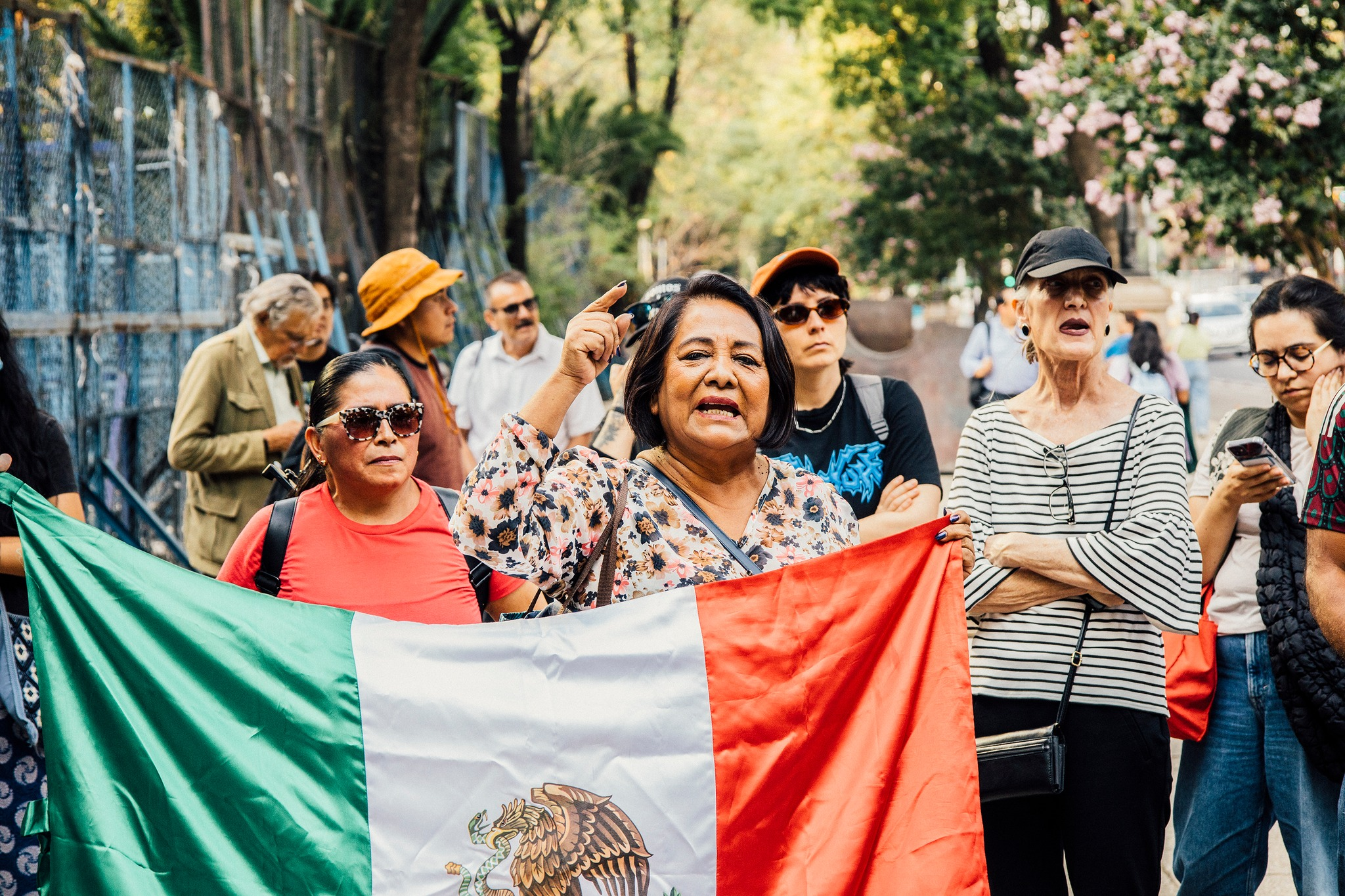
If Mexico answers that it wants investment, jobs, and exports, the answer will be insufficient. It already wanted that for thirty years. The question must be higher: Does it want to build productive power? Does it want national companies? Does it want its own technology? Does it want a Mexican banking system? Does it want a professional civil service? Does it want food security? Does it want national suppliers? Does it want universities connected to strategic sectors? Does it want to decide its relationship with China, Asia, Europe, and Latin America from its own position?
Mexico cannot continue offering its territory, its labour, its market, and its savings so that others can rebuild their historical power while the country remains without its own project. It cannot limit itself to being a logistical buffer, a labour reserve, and a captive market for a power seeking to maintain its hegemony. It cannot relinquish its position in the most dynamic centers of the global economy because Washington has decided that its rivalry with China should dictate the fate of all.
The USMCA should be a tool, not a prison. Geographical proximity should be an advantage, not a burden. Integration with the United States should be an instrument, not an identity.
But none of that will happen through American goodwill or Mexican rhetoric. Either Mexico builds its own state, credit, technology, businesses, experts, and productive capacity, or it will continue managing an integration designed by others.
Because if Mexico doesn’t define its project, the USMCA already has one built in. And in that project, Mexico is not a protagonist. He is a supplier.
José Romero was previously Director General of the Centro de Investigación y Docencia Económicas (CIDE), appointed by former President Andrés Manuel López Obrador. CIDE is a publicly-financed social sciences research center aiming to impact Mexico’s social, economic and political development.
-
Sheinbaum Presents Draft Decree to Force Digital Platforms to Take Down Content That Incites Violence and Hate
No fines for now: the government will talk with tech companies before publishing the decree next week, a promise made after the Coahuila school attack.
-
People’s Mañanera October 9
President Sheinbaum’s daily press conference, with comments on digital safety, IMSS-Bienestar, sovereignty, and the opposition.
-
Mexico’s Gas Reserves Would Last Only 3 Days
Cenagas director Cuitláhuac García revealed Mexico has no gas storage and imports 75% of what it consumes, after a US supply cut exposed the risk.